
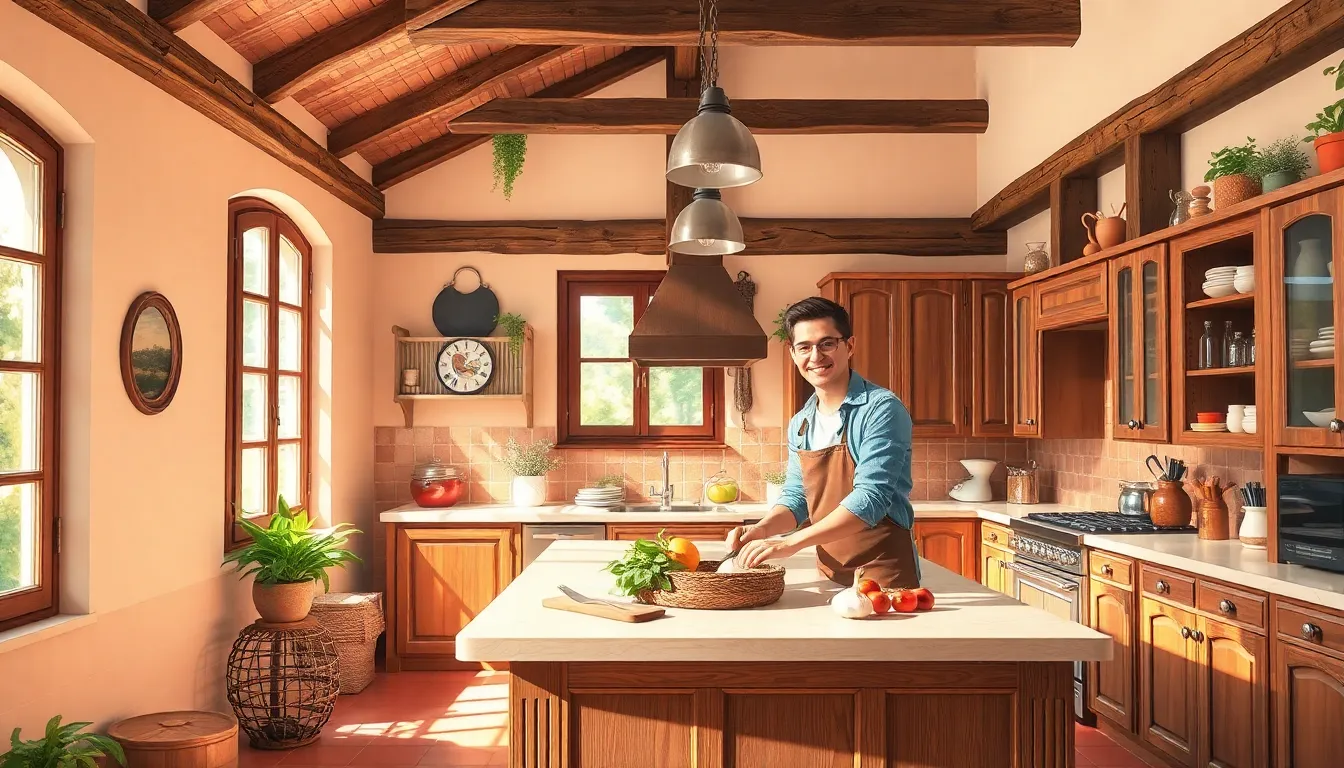
Italian kitchens are more than just a place to whip up a quick meal; they’re the heart and soul of the home. Picture this: sun-drenched walls, rustic wooden beams, and the tantalizing aroma of garlic and basil wafting through the air. It’s a culinary paradise where every dish tells a story, and every meal is a celebration.
Overview of Italian Kitchens
Italian kitchens serve as vibrant focal points in homes, reflecting warmth and community. Influences from regional styles shape their design, with rustic elements guiding aesthetics. Often, terracotta tiles adorn the floors, while wooden cabinetry adds a touch of authenticity.
Colors in Italian kitchens evoke a lively atmosphere. Bright reds, deep greens, and warm yellows create a cheerful backdrop for meal preparation. Natural light streams through large windows, enhancing the openness of the space.
Functional design plays a crucial role in these kitchens. Ample counter space accommodates various cooking activities, making it easy to create elaborate dishes. Innovative storage solutions help maintain organization while supporting a bustling kitchen environment.
Tradition intersects with modernity in many Italian kitchens. Contemporary appliances complement classic features, allowing for efficiency without sacrificing charm. Open layouts encourage interaction, making it simple for family and friends to gather during meal times.
Elements such as handcrafted pottery and beautiful cookware often serve as decor, showcasing culinary heritage. Herbs frequently grow in pots near windows, uniting aesthetics with usability.
An Italian kitchen embodies a heartfelt commitment to food and family, fostering cherished moments. Each meal prepared within its walls contributes to lasting memories, emphasizing the kitchen’s role beyond mere function. The overall atmosphere invites creativity, making cooking an enjoyable experience.
Key Features of Italian Kitchens
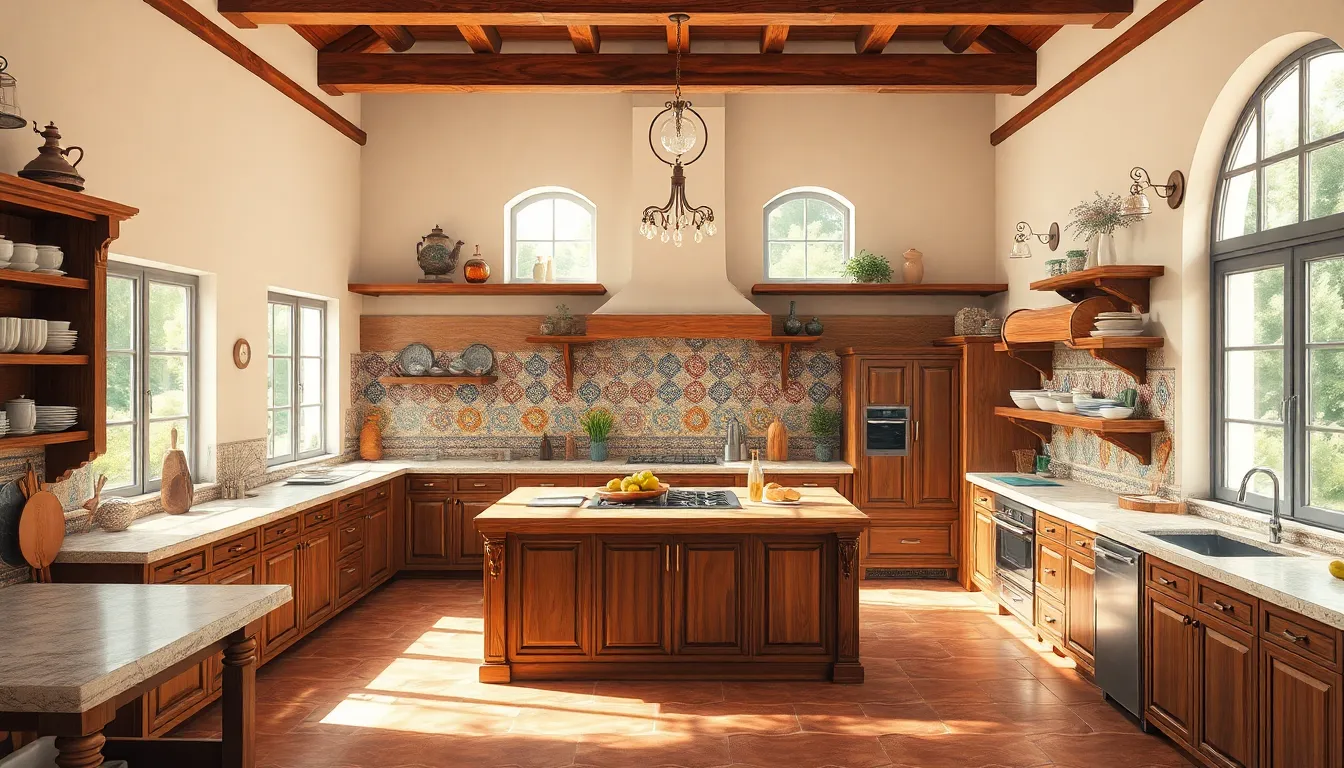
Italian kitchens boast a unique blend of tradition and functionality, showcasing characteristics that enhance both aesthetic appeal and everyday use.
Design Elements
Colorful accents breathe life into the space, often seen through vibrant wall finishes and decorative tiles. Open shelving allows easy access to essential kitchenware, encouraging a welcoming atmosphere. Large central islands serve a dual purpose, providing extra prep space while facilitating social interaction. Elegant lighting fixtures highlight key areas, adding warmth to the overall design. Windows allow natural light to flood in, brightening the kitchen and connecting it with the outdoors. Functional layouts ensure that everything needed for cooking is within reach, enhancing both efficiency and flow during meal preparation.
Material Choices
Natural materials dominate Italian kitchen designs, with wood, stone, and ceramics commonly used. Wooden cabinetry offers durability and timelessness, evoking a rustic charm. Stone countertops enhance beauty while ensuring resilience against wear. Terracotta tiles add a traditional touch, often found on floors or as backsplashes. Stainless steel appliances introduce a modern edge without overshadowing classic elements. Handcrafted pottery serves both practical and decorative purposes, showcasing regional artistry. Each material choice reflects an appreciation for craftsmanship and contributes to the kitchen’s inviting warmth.
Popular Styles of Italian Kitchens
Italian kitchens showcase diverse styles that reflect regional influences and culinary traditions. Each style offers unique elements, emphasizing functionality and warmth.
Contemporary Italian Kitchens
Contemporary Italian kitchens blend sleek design with cutting-edge technology. Clean lines and minimalistic aesthetics characterize these spaces, often featuring white or muted color palettes. Innovations like smart appliances enhance convenience, while open layouts promote social interactions. Glass elements and polished surfaces reflect light, creating an airy ambiance. Modern cabinetry often incorporates hidden storage solutions, maximizing space efficiency. Sustainability plays a role, with eco-friendly materials becoming increasingly popular. Overall, contemporary Italian kitchens exhibit a harmonious balance of elegance and practicality.
Traditional Italian Kitchens
Traditional Italian kitchens exude rustic charm, often adorned with vintage elements. Wooden beams and terracotta tiles evoke a sense of heritage, creating a cozy environment. Rich colors, such as deep reds and earthy browns, contribute to a warm atmosphere. Large wooden tables invite family gatherings, reinforcing the importance of shared meals. Decorative accents, like handcrafted pottery and copper cookware, emphasize artisanal craftsmanship. Open shelving displays cherished dishes, promoting a personalized touch. These kitchens prioritize functionality with space for meal prep and cooking, celebrating time-honored cooking traditions.
Color Schemes in Italian Kitchens
Color schemes in Italian kitchens create inviting environments and enhance the cooking experience. Warm tones often dominate these spaces, evoking a sense of comfort and connection. Colors like terracotta, burnt orange, and deep reds serve as staples, reminiscent of sun-kissed landscapes. These shades breathe life into the kitchen, encouraging gatherings and culinary creativity. Accents in golden yellows add brightness, promoting a cheerful atmosphere.
Warm Tones
Warm tones play a crucial role in Italian kitchens, fostering an inviting ambiance. Rich reds create a sense of warmth, while earthy oranges and warm yellows stimulate the appetite. These colors harmonize with natural wood elements, complementing rustic cabinetry and terracotta tiles. A well-placed splash of strong crimson on walls or cabinetry enhances visual interest, without overwhelming the room. Many homeowners incorporate warm tones through decorative accessories, such as tableware or textiles, enhancing the kitchen’s homey feel. Overall, these colors transform the kitchen into a welcoming gathering space for family and friends.
Neutral Shades
Neutral shades offer a balanced aesthetic in Italian kitchens, allowing colorful features to shine. Soft creams, grays, and taupes provide a calming backdrop, complementing vibrant accents. The serenity of these tones creates a sophisticated yet warm environment. Choosing natural materials like wood and stone further enhances the neutral palette, promoting a seamless transition throughout the space. Such shades foster an airy atmosphere, allowing light to reflect and bounce around the kitchen. Many Italian kitchens utilize whitewashed walls to maximize light and create an illusion of spaciousness. Ultimately, neutral shades serve as a timeless foundation for any Italian kitchen design.
Italian kitchens are more than just spaces for cooking; they embody a lifestyle rich in tradition and community. Their unique blend of rustic charm and modern functionality creates inviting environments that encourage family gatherings and culinary creativity. The thoughtful use of materials and vibrant colors enhances the heartwarming atmosphere that defines these kitchens.
With a focus on both aesthetics and practicality, Italian kitchens remain timeless. They reflect an appreciation for craftsmanship while promoting efficiency and social interactions. Whether embracing a contemporary or traditional style, these kitchens invite everyone to celebrate the joy of food and family.


