
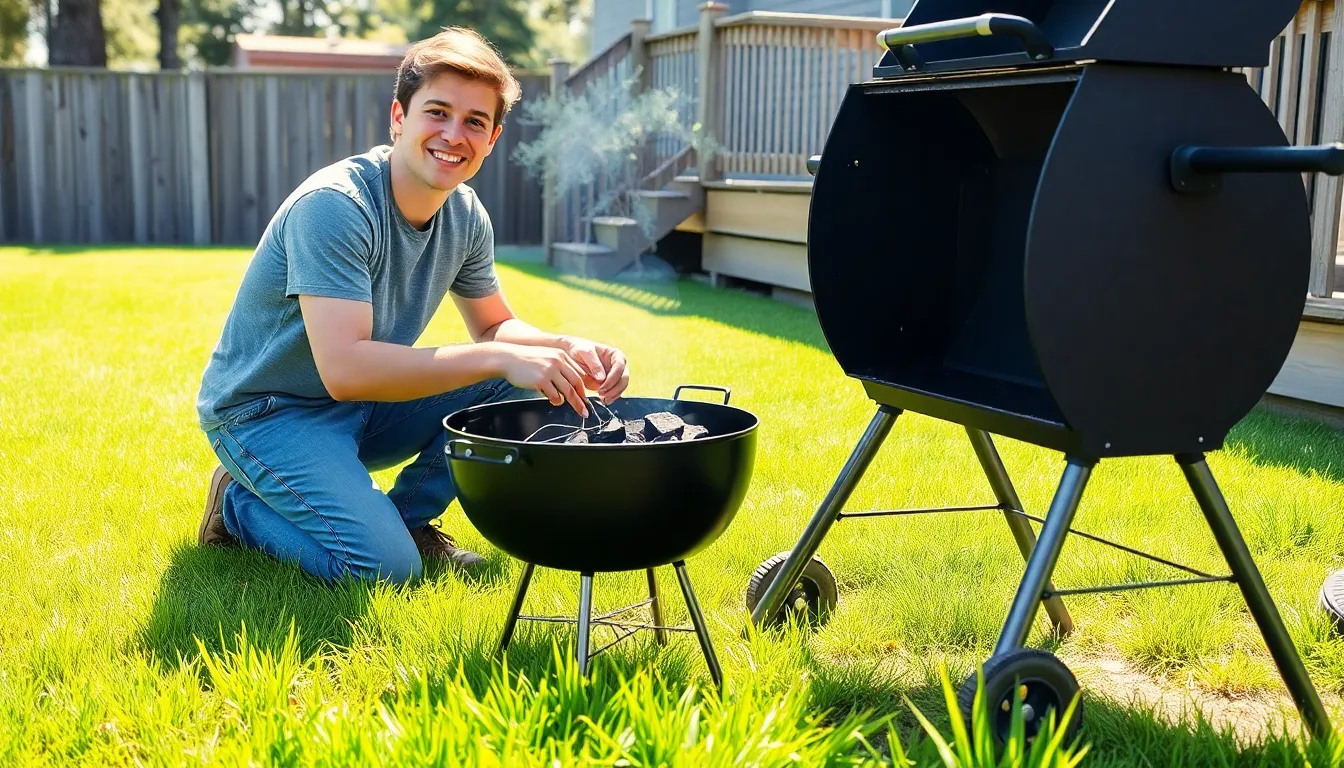
Picture this: you’re ready for a backyard barbecue, the sun’s shining, and your friends are eagerly awaiting those perfectly grilled burgers. But there’s one problem—your charcoal refuses to light without that questionable lighter fluid. Fear not! Lighting charcoal without lighter fluid isn’t just possible; it’s downright easy and can save you from smoky mishaps and questionable flavors.
Understanding Charcoal Lighting Methods
Lighting charcoal without lighter fluid involves various effective methods. Each technique has its own advantages and can lead to a better grilling experience.
Traditional vs. Modern Techniques
Traditional methods like using a chimney starter are popular for their efficiency. A chimney starter allows airflow, helping charcoal ignite evenly. Another classic approach is the pyramid method, where briquettes are stacked in a teepee shape, allowing heat to circulate. In contrast, modern techniques often utilize fire starters or electric poke devices. Fire starters create flames without harmful chemicals, while electric pokers provide a consistent heat source for quick ignition.
Benefits of Avoiding Lighter Fluid
Avoiding lighter fluid eliminates chemical flavors that can taint food. Charcoal ignited without lighter fluid often results in cleaner-tasting grilled dishes. Additionally, using alternative methods significantly reduces fire hazards. Smoke produced from lighter fluid can contribute to environmental pollution. Grilling without it promotes healthier cooking practices and a more enjoyable outdoor experience.
Popular Alternatives to Lighter Fluid

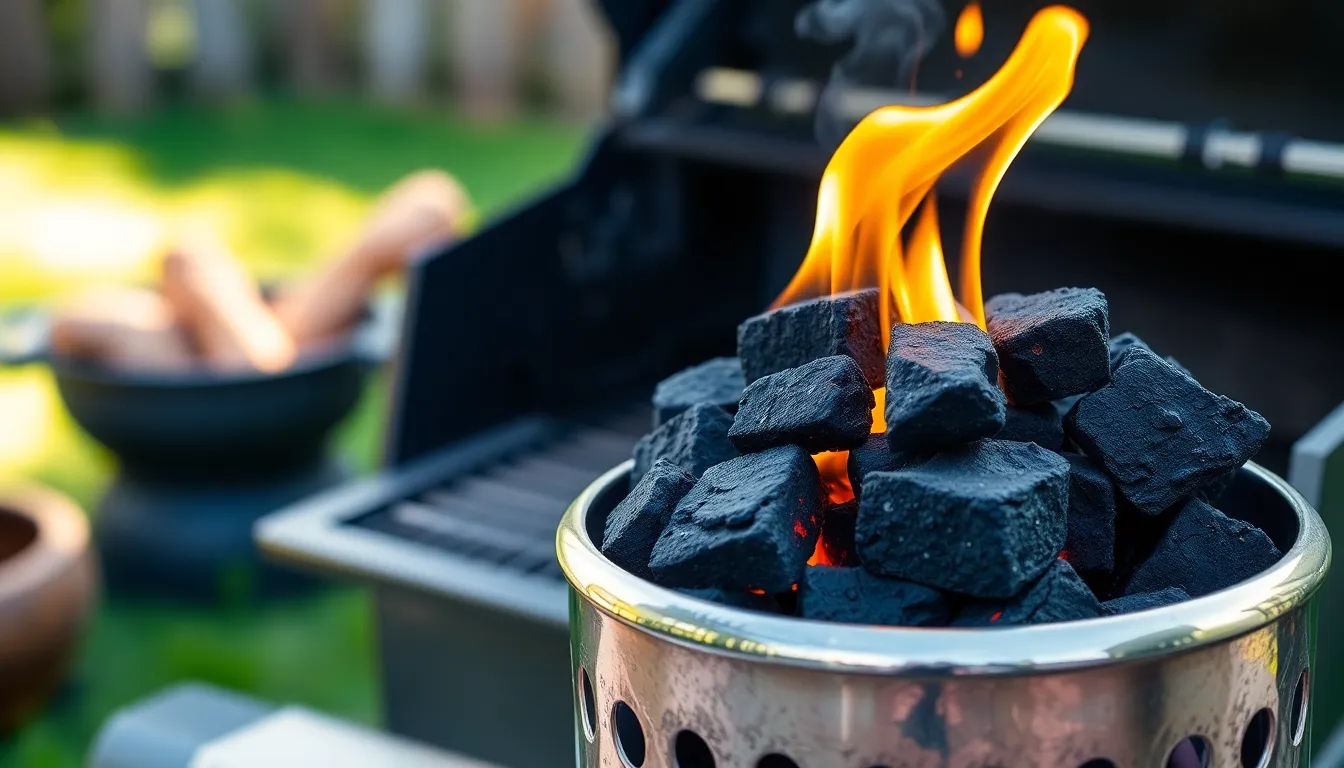
Grillers often seek effective ways to light charcoal without lighter fluid. Several alternatives exist that enhance the grilling experience, free from chemical flavors and hazards.
Natural Fire Starters
Natural fire starters make an excellent choice for lighting charcoal. Composed of materials like wood shavings, sawdust, or wax, these starters ignite easily and burn efficiently. Grillers appreciate their eco-friendliness and lack of artificial chemicals. Common brands of natural fire starters include eco-friendly products, which often come in compact designs for easy storage. One popular option consists of compressed sawdust blocks, which provide a consistent, slow burn, ensuring an even heat.
Using a Chimney Starter
Using a chimney starter offers a traditional method for lighting charcoal effectively. This device features a steel container that holds charcoal at the top and a paper or natural fire starter at the bottom. Grillers ignite the paper, allowing flames to rise through the charcoal, promoting even heating within minutes. Many chimney starters come with a handle for safe operation. This method avoids any lingering chemical tastes, allowing for cleaner grilling. Grillers can achieve optimal results by filling the chimney starter to the top for a robust fire.
Step-by-Step Guide to Lighting Charcoal
Lighting charcoal without lighter fluid involves simple yet effective techniques for success. Follow these steps for a smooth start.
Preparing the Charcoal
Select high-quality charcoal briquettes or lump charcoal for optimal results. Arrange the charcoal in a mound or pyramid shape for efficient airflow. Leave enough space at the center to add a natural fire starter. Use materials like newspaper, wood shavings, or even dryer lint to facilitate ignition. Maintain the right amount of charcoal to avoid overcrowding the grill, ensuring even heating and better cooking.
Igniting the Charcoal Safely
Place a fire starter in the center of the charcoal mound. Light the fire starter using a long-handled lighter or matches, ensuring safety from flames. Watch as the flame spreads to the charcoal, promoting even burning. Allow the charcoal to ignite fully, which typically takes about 10 to 15 minutes. Embrace patience here; waiting until the charcoal turns gray and ashy indicates that it’s ready for cooking.
Tips for Successful Charcoal Lighting
Successful charcoal lighting depends on optimizing airflow and monitoring temperature throughout the process. These tips ensure an efficient and effective grilling experience.
Ensuring Proper Airflow
Airflow significantly affects how well charcoal ignites. Arrange the charcoal in a mound or pyramid shape to promote ventilation. As air circulates, it feeds the flame and accelerates ignition. For a chimney starter, positioning the starter at the bottom enhances airflow, resulting in quicker lighting.
Choose natural fire starters like wood shavings or sawdust that ignite easily and support airflow. While lighting, maintain an open space around the mound to prevent smothering. Maximizing airflow allows for a hotter, more stable fire, critical for achieving the desired cooking temperature.
Monitoring the Temperature
Temperature control plays a vital role in charcoal grilling. Use a thermometer or the hand test, where holding a hand above the grill determines heat levels. Hold it about six inches above the charcoal for 2 to 4 seconds; intense heat will make it uncomfortable to keep your hand there.
When the charcoal turns gray and ashy, it indicates optimal heat for cooking. Adjusting the air vents on the grill directly impacts temperature; opening them increases heat, while closing them reduces it. Paying attention to temperature during grilling ensures food cooks evenly and safely.


