Table of Contents
ToggleOutdoor lighting transforms a yard from functional to inviting, but quality fixtures can strain a budget fast. That’s where Lowe’s clearance section becomes a savvy homeowner’s best friend. Throughout the year, the big-box retailer cycles through seasonal inventory, discontinued models, and overstocked items, slashing prices on path lights, wall sconces, landscape kits, and statement chandeliers by 50% or more. Knowing when to shop, where to look, and what to inspect before checkout can mean the difference between a backyard upgrade that costs $800 or $350. This guide walks through timing, strategies, fixture types, and installation basics so DIYers can light up their outdoor spaces without burning through savings.
Key Takeaways
- Lowe’s outdoor lighting clearance offers 50% or deeper discounts during predictable cycles: late summer through early fall, post-holiday January sales, and spring model-year transitions when stores clear seasonal inventory.
- Shop for clearance on mid-week visits (Tuesdays/Wednesdays) rather than weekends, and stack discounts by combining clearance prices with military, veteran, or credit card holder promotions for maximum savings.
- LED pathway kits, wall sconces, motion-sensor lights, and string lights are top performers in clearance sections, but always verify weather ratings (wet vs. damp location), completeness of hardware, and bulb compatibility before purchase.
- Inspect clearance fixtures in person when possible to confirm no defects, test switches or photocells, and verify all mounting hardware is included—clearance items are typically final sale with limited return windows.
- DIY installation of low-voltage landscape lighting is beginner-friendly, but hardwired 120V fixtures and security lights above 8–10 feet require a licensed electrician for code compliance and safety.
When Does Lowe’s Discount Outdoor Lighting?
Clearance timing follows predictable retail cycles. The deepest discounts typically hit in late summer to early fall (August through October) as stores clear seasonal inventory before holidays. Patio and landscape lighting that didn’t sell during spring installation season gets marked down 30–70%.
End-of-season isn’t the only window. Post-holiday sales in early January see substantial cuts on decorative string lights, LED icicle sets, and pathway kits. Spring clearance (late April into May) often coincides with model-year transitions, manufacturers release updated fixture lines, and retailers dump last year’s SKUs.
Mid-month visits often yield better selection than weekends. Stores restock clearance aisles and update pricing on Tuesdays or Wednesdays in many regions. Holiday weekends like Memorial Day, Fourth of July, and Labor Day trigger store-wide promotions that stack with existing clearance tags. During major 4th of July sales, outdoor lighting can see additional percentage-off markdowns on top of clearance prices.
Pro tip: Call your local Lowe’s and ask when they mark down clearance items. Some stores have set schedules: others discount opportunistically based on warehouse space.
How to Find the Best Deals on Outdoor Lighting at Lowe’s
Lowe’s doesn’t always broadcast clearance inventory prominently. Digging requires a mix of in-person scouting and digital savvy.
Online tools:
- Lowe’s website and app filter by “Special Offers” or “Clearance.” Toggle sort-by-price (low to high) to surface deeply discounted fixtures first.
- Set alerts for specific fixture types (e.g., “post lantern” or “LED wall pack”) in your Lowe’s account. Price drops trigger email or app notifications.
- Check the “Open Box & Clearance” section under Tools & Hardware > Lighting. Returned or display models often appear here at 40–60% off.
In-store hunting:
- Clearance endcaps sit at aisle ends in the lighting department, but overflow gets stashed in garden or seasonal sections.
- Look for orange or yellow “Manager’s Special” tags and red clearance stickers. Prices ending in .03 or .06 typically indicate final markdown, no further cuts coming.
- Scan barcodes with the Lowe’s app. In-store prices sometimes differ from online: the app shows both and lets you price-match on the spot.
In-Store vs. Online Clearance Strategies
In-store advantages: Inspect fixture quality, test switches or photocells, confirm all hardware is included (mounting plates, wire nuts, screws). Clearance items are often final sale, so hands-on vetting matters. You can also negotiate lightly damaged packaging, a dented box shouldn’t affect a wall sconce’s function.
Online perks: Broader selection, especially for discontinued lines that sold out locally. Ship-to-store is free and lets you inspect before taking it home. Online-only clearance codes (check Lowe’s emails or coupon aggregators) sometimes apply to already-reduced lighting.
Hybrid approach: Browse inventory online, note item numbers, then call the store to confirm stock and condition. If it’s a floor model or return, ask if further discount is possible before driving over.
Top Outdoor Lighting Types to Watch for on Clearance
Not all clearance is created equal. Some fixture categories offer better long-term value and easier DIY installation than others.
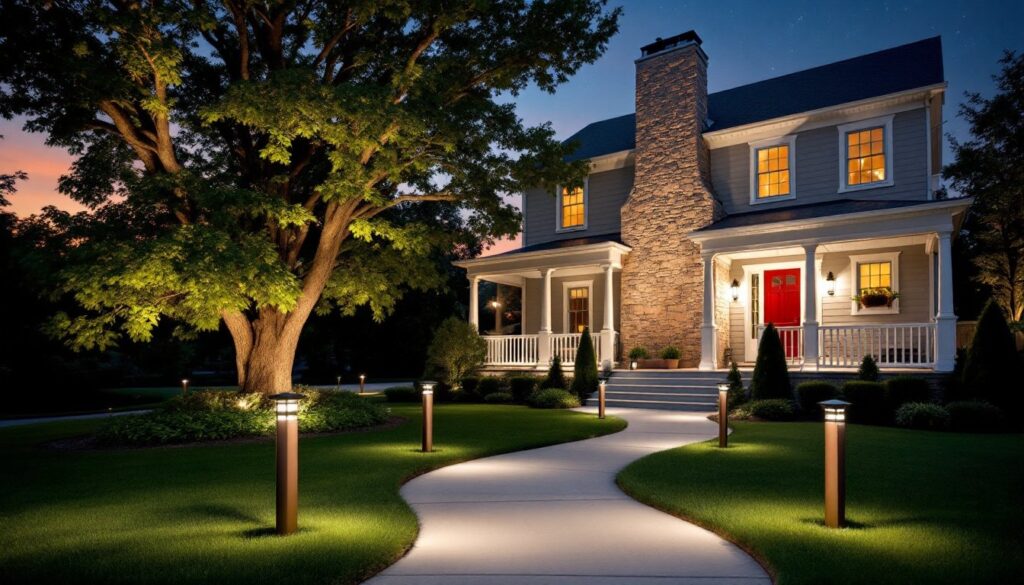
LED pathway and landscape kits: These low-voltage systems (usually 12V) are clearance staples. Kits include transformer, cable, and 6–10 fixtures. Look for metal housings (aluminum or brass) over plastic: they last decades. Brands like Hampton Bay and Portfolio often hit 50% off in fall.
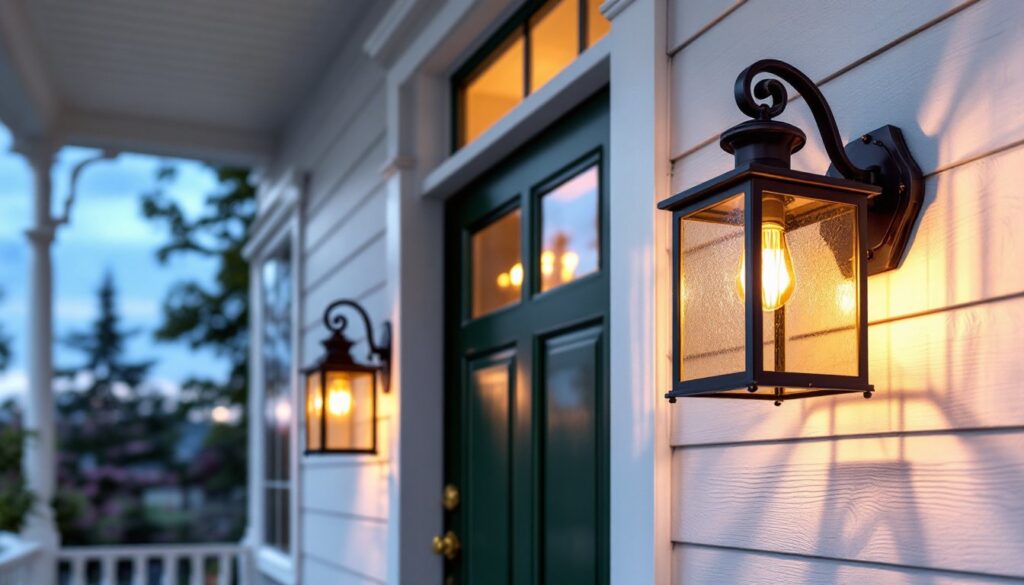
Wall-mounted sconces and lanterns: Timeless styles (carriage lanterns, modern geometric boxes) clear out when finishes change, oil-rubbed bronze gets replaced by matte black, etc. Function stays identical. Safety note: Hardwired fixtures require shutting off power at the breaker. If you’re not comfortable working with 120V wiring, hire a licensed electrician.
Motion-sensor floodlights and security lights: LED models with adjustable sensitivity and timer settings go on clearance when lumen output increases industry-wide (yesterday’s 1,800-lumen becomes today’s baseline 2,500). Older stock still provides solid security: just verify the photocell works before buying.
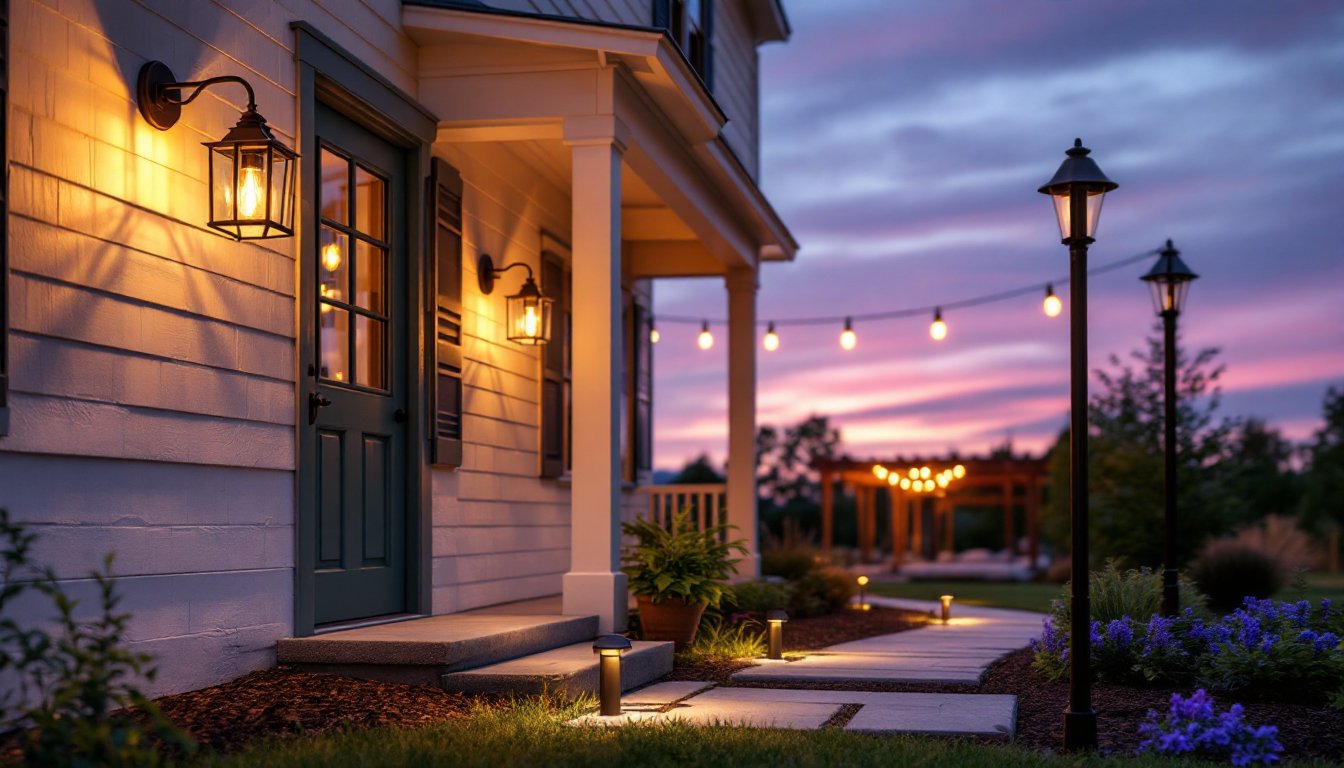
String lights and decorative LEDs: Patio café lights, Edison bulb strands, and color-changing RGB sets see deep seasonal cuts. Check for UL listing (wet or damp location rating) and replaceable bulbs. Integrated LED strings can’t be repaired if a section fails.
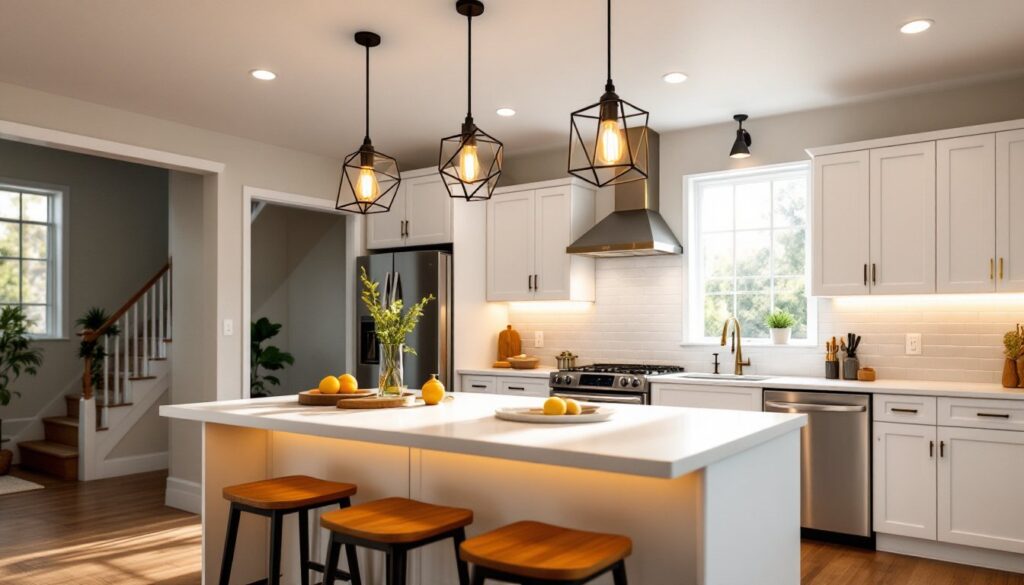
Pendant lights and chandeliers for covered porches: These make dramatic entryway or patio upgrades. Clearance often means last season’s finish or a discontinued glass shade. Measure your space first, an oversized fixture feels awkward, and undersized looks cheap. For covered outdoor areas, similar principles apply as seen in outdoor living design where proportion and weather resistance matter.
Solar-powered accents: Path markers, spotlights, and decorative stakes. Clearance solar is hit-or-miss: battery quality varies. Replace NiMH batteries with fresh ones if runtime is weak. Skip units with non-replaceable batteries.
Maximizing Your Savings: Tips for Buying Clearance Outdoor Lighting
Clearance pricing looks tempting, but smart buyers verify value before checkout.
Bulk buys pay off: Need six pathway lights? Buying a clearance 10-pack costs less per unit than purchasing singles at regular price. Extras become spares when a fixture eventually fails.
Mix and match finishes strategically: Matching every fixture isn’t necessary. A bronze wall sconce by the garage and a black pendant at the front door won’t clash if styles align (both traditional or both modern). This flexibility opens up more clearance options.
Stack discounts: Lowe’s occasionally runs percentage-off sales (10% off lighting department) that apply to clearance items. Military, veteran, and Lowe’s credit card holder discounts sometimes stack, too, ask at checkout.
Return policy matters: Clearance outdoor lighting is typically final sale or has a shortened return window (often 48 hours). Confirm the policy on your receipt. Defective items usually get exchanged even on clearance, but test promptly.
What to Check Before Buying Discounted Fixtures
Completeness: Open the box. Count mounting screws, wire nuts, gaskets, and any decorative finials or glass shades. Missing hardware derails installation: sourcing replacements eats into savings.
Weather rating: Verify UL wet location or damp location ratings. Wet-rated fixtures handle direct rain: damp-rated work under eaves or covered areas. Installing a damp-rated fixture on an exposed post invites rust and electrical faults.
Bulb compatibility and included bulbs: Some clearance fixtures include LED bulbs: others require separate purchase. Check wattage limits and base type (E26 medium base is standard: GU10 and E12 candelabra are less common). Integrated LED fixtures can’t have bulbs replaced, so test before leaving the store if possible.
Finish condition: Minor scratches on a matte black post lantern disappear outdoors. Deep gouges or chipped powder coating let moisture in. Reject those.
Glass or acrylic panels: Hairline cracks will spread. Inspect carefully under good light. Cloudy or yellowed acrylic on an outdoor sconce isn’t a dealbreaker if the price is right, but it affects curb appeal.
Corrosion resistance: Coastal or high-humidity climates demand marine-grade or powder-coated aluminum. Brass and copper patina naturally (desirable for some styles). Steel, even painted, rusts unless stainless. For broader guidance on durable outdoor materials and finishes, resources like The Spruce offer detailed comparisons.
Installing Your Clearance Outdoor Lighting: DIY Considerations
Scoring a deal means nothing if the fixture sits in the garage for months. Most outdoor lighting installs are beginner-friendly with the right prep.
Low-voltage landscape lighting (12V): Easiest DIY category. Run cable from transformer to fixtures, strip wire ends, connect with waterproof wire nuts or twist-lock connectors, and stake fixtures into soil. Transformer placement: Mount within 3 feet of a GFCI-protected outdoor outlet. Plug it in: don’t hardwire unless you’re comfortable with electrical codes. Bury cable 6–12 inches deep or run along fence lines.
Hardwired wall sconces and porch lights (120V): Requires turning off power at the breaker and verifying with a non-contact voltage tester. Remove old fixture, match wire colors (black to black, white to white, green or bare copper to ground), secure with wire nuts, tuck into junction box, and mount. Permit check: Replacing an existing fixture usually doesn’t require a permit, but adding a new circuit or outlet does in most jurisdictions. Consult local building codes (IRC and NEC set national standards, but municipalities amend them).
Motion-sensor floods and security lights: Install high enough (8–10 feet) to cover entry points without nuisance triggers from pets or traffic. Adjust sensitivity and timer dials after dark: daytime testing doesn’t reflect real-world performance.
String lights and café lighting: Use guide wires or rigid conduit for spans over 15 feet. Sagging strands look sloppy and stress sockets. Screw eye hooks or cable clamps into fascia or posts, not shingles or siding, which can’t bear the weight. Plug into GFCI outlets: outdoor extension cords must be rated for wet locations (look for a “W” on the jacket).
Safety warnings: Always wear safety glasses when drilling overhead. Use a fiberglass or wooden ladder near electrical work, never aluminum. If a project involves running new wiring through walls, adding a new circuit, or mounting fixtures above 12 feet, hire a licensed electrician. Clearance savings evaporate quickly if an improper install causes a fire or fails inspection.
Tool recommendations: A cordless drill/driver handles most mounting. Masonry anchors and a hammer drill are necessary for brick or stucco. Wire strippers, linesman pliers, and a headlamp make junction box work easier. A voltage tester is non-negotiable for any hardwired install.
Final tip: Test the fixture on a workbench or garage floor before climbing a ladder. Confirm bulbs light, motion sensors trigger, and photocells react to darkness (cover the sensor with your hand). Return windows on clearance are short: don’t discover a defect after installation.