Table of Contents
ToggleVictorian outdoor lighting doesn’t just illuminate a front porch, it anchors an entire home’s character. Whether restoring a Queen Anne or adding period detail to a Craftsman, the right fixtures telegraph craftsmanship and attention to historical detail from the curb. Authentic Victorian-era fixtures from the 1840s–1900s are increasingly rare, but high-quality reproductions and thoughtfully restored pieces deliver the same cast-metal heft, ornate glasswork, and gas-era proportions that defined the period. This guide walks through identifying genuine Victorian design language, sourcing the right fixtures, and installing them so they look like they’ve been there for a century.
Key Takeaways
- Authentic antique Victorian outdoor lighting features cast-metal construction, ornate glasswork, and gas-era proportions from the 1840s–1900s, with visible hardware and substantial visual weight that telegraph craftsmanship from the curb.
- Victorian fixtures fall into two main types: wall-mounted lanterns and sconces (ideal for entry doors and porches) and freestanding post lamps (perfect for marking driveways and property lines), each requiring different installation approaches.
- Match your antique Victorian outdoor lighting style to your home’s architectural detail—Queen Anne and Eastlake homes pair with ornate fixtures, while Gothic Revival benefits from pointed arches and darker finishes, and Italianate homes work with restrained sconces.
- Proper scaling and placement are critical: flank entry doors at 60–66 inches to center, space porch fixtures every 8–10 feet, and always mock up with cardboard templates viewed from the street to ensure proportions look right from a distance.
- Original Victorian fixtures require twice-yearly maintenance including glass cleaning and inspection for rust or corrosion; rewiring with modern outdoor-rated wire ensures code compliance and safety without sacrificing period authenticity.
- When installing on wood siding, anchor fixtures directly to studs using a stud finder, and on masonry use lead or sleeve anchors with polyurethane sealant to prevent water intrusion and ensure long-term structural integrity.
What Defines Authentic Victorian Outdoor Lighting?
Victorian outdoor lighting emerged during the gas-lighting era, when fixtures were designed to enclose open flames and later adapted for early electric bulbs. The aesthetic pulls from Gothic Revival, Eastlake, and Queen Anne influences, expect heavy ornamentation, cast iron or brass construction, and hand-blown glass panels with seeded, rippled, or beveled textures.
Key markers of authentic Victorian design include visible hardware (exposed screws, bolts, and hinges), decorative finials and scrollwork, and a substantial visual weight. Lanterns typically feature four to six glass panels held in metal frames with corner posts. Glass is rarely clear: frosted, amber, or textured glass was standard to diffuse the harsh light from gas mantles.
Original fixtures often show patina, verdigris on copper, rust bloom on iron, but structural integrity matters more than cosmetic aging. Look for solid castings (not thin stamped metal), mortise-and-tenon joinery in wooden components, and hand-applied solder joints. Reproductions stamped “UL Listed” indicate modern wiring, which is safer and code-compliant for exterior use. Many homeowners blend restored originals on primary entries with quality reproductions on secondary doors or along pathways to stretch budgets without sacrificing curb appeal. Homes in regions with strong architectural heritage often integrate these fixtures into porch designs that echo the era’s attention to craftsmanship.
Popular Types of Antique Victorian Outdoor Fixtures
Victorian outdoor lighting falls into two main categories based on mounting method and use case. Each serves a distinct architectural purpose and requires different installation considerations.
Wall-Mounted Lanterns and Sconces
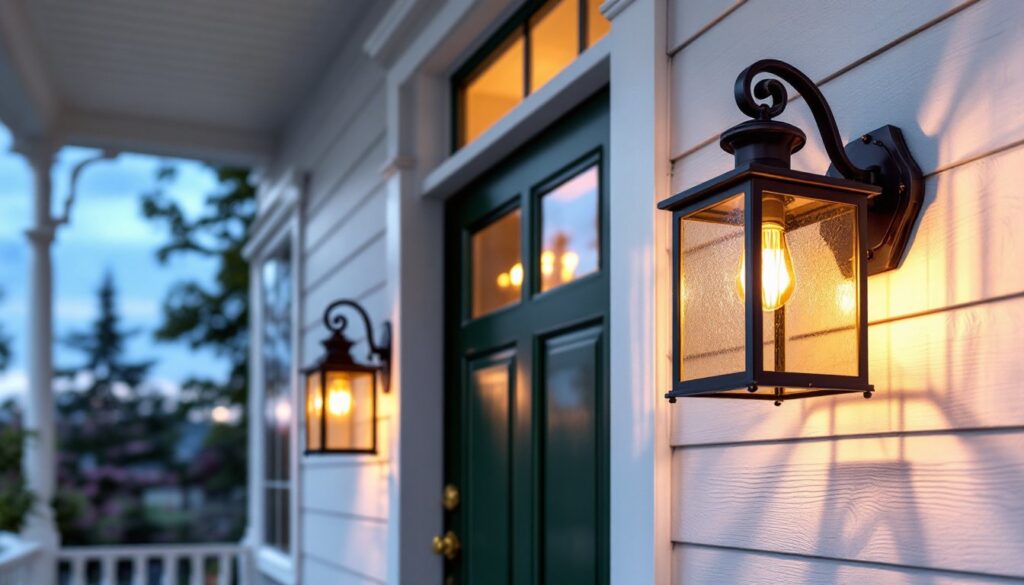
Wall-mounted fixtures flank entry doors, illuminate covered porches, and accent gable ends. Carriage-style lanterns, rectangular or trapezoidal with a single candle or bulb, are the most common. They mount on a backplate secured to exterior sheathing or masonry, with a swivel arm or fixed bracket extending 6–12 inches from the wall.
Sconces are more compact, often featuring a single glass shade and minimal projection. They work well on narrow sidelight trim or along covered walkways where a full lantern would overpower the scale. Many sconces use a gooseneck arm that curves upward, placing the light source at or above door-handle height for even illumination.
When selecting wall-mounted fixtures, match the backplate diameter to your door casing width. A fixture that’s too small looks like an afterthought: too large crowds the trim. For a standard 36-inch front door, aim for lanterns 18–24 inches tall. If the door sits within a larger porch colonnade, scale up accordingly.
Wiring wall-mounted fixtures requires a junction box anchored to a stud or solid blocking, not just siding. Exterior boxes must be weatherproof (NEMA 3R rating or better) and sealed with silicone or foam gaskets to prevent water intrusion behind the siding.
Post Lamps and Lamppost Fixtures
Freestanding lampposts define property lines, mark driveways, and light garden paths. Victorian-era posts were typically cast iron, 7–9 feet tall, with a wider base, tapered shaft, and decorative capital supporting the lantern head. Reproductions often use aluminum or powder-coated steel to reduce weight and resist corrosion.
Lantern heads on posts mirror wall-mounted designs but are sized larger, often 16–20 inches in height, to maintain proportion atop a tall post. Four-panel or hexagonal configurations are most common, with a vented top cap to release heat from the bulb.
Installation requires a concrete footing extending below the frost line (check local frost depth: it’s 36–48 inches in northern climates). Dig a hole at least 12 inches in diameter, set a 4×4 pressure-treated post or metal sleeve, and pour 3,000 PSI concrete around it. Electrical conduit (schedule 40 PVC or rigid metal conduit) should enter the base below grade, running from a GFCI-protected circuit.
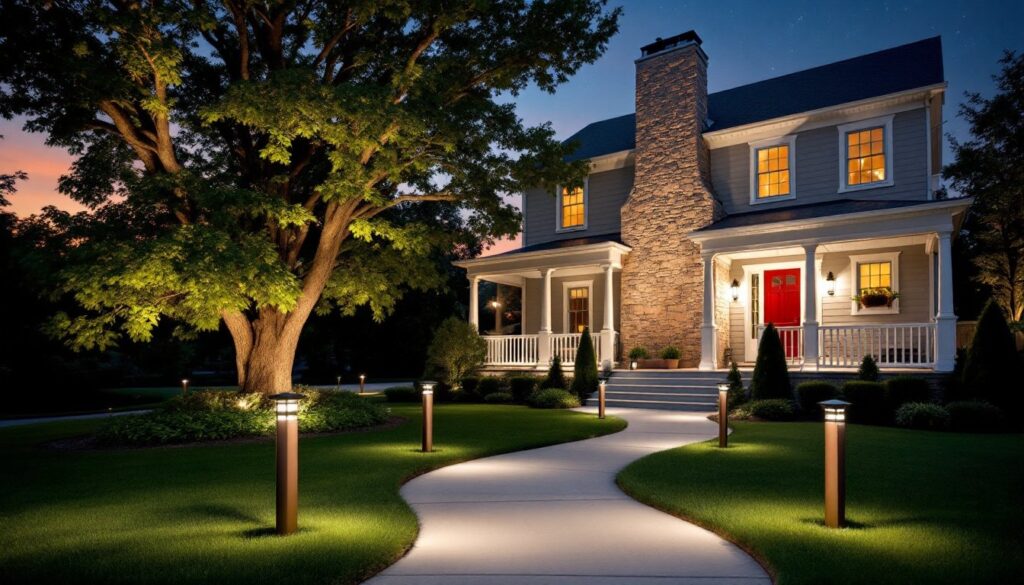
Some homeowners prefer bollard-style posts, shorter, 3–4 feet tall, for pathway lighting. These use the same design language but at a pedestrian scale. They’re less expensive to install since footings can be shallower, but they provide less dramatic impact than full-height lampposts that echo the lighting of period estates.
How to Choose the Right Victorian Lighting for Your Exterior
Matching fixture style to architectural detail prevents a disjointed look. Queen Anne and Eastlake homes pair well with ornate fixtures, filigree metalwork, turned finials, and multi-panel glass. Gothic Revival leans into pointed arches, quatrefoil cutouts, and darker finishes (oil-rubbed bronze, matte black). Simpler Italianate or Second Empire homes benefit from restrained sconces with minimal scrollwork.
Finish choice affects longevity as much as aesthetics. Powder-coated aluminum resists salt air and freeze-thaw cycles better than raw iron but lacks the heft of authentic castings. Solid brass develops a natural patina and can be polished or left to age: it’s the gold standard for coastal or high-humidity climates. Avoid thin plating over pot metal, it flakes within a season.
Glass selection impacts both light quality and maintenance. Seeded glass (with tiny bubbles) diffuses light softly and hides cobwebs or dirt. Clear beveled glass shows grime quickly but highlights decorative bulbs like vintage Edison-style LEDs. Amber or champagne glass warms the light output, which complements brick or stucco but may clash with cool-toned siding.
Bulb type matters. Vintage filament-style LED bulbs (2200–2700K color temperature) mimic gas-era lighting without the heat or energy draw. Avoid cool white (4000K+) LEDs, they look clinical against Victorian detailing. Dimmable LEDs allow adjustment for different times of day, though dimmer switches must be compatible (standard incandescent dimmers often cause LED flicker).
Scale fixtures to the home’s footprint. A 1,200-square-foot cottage overwhelmed by 30-inch carriage lanterns looks cartoonish. Conversely, undersized sconces on a three-story Second Empire read as an afterthought. When in doubt, mock up fixtures with cardboard templates taped to the wall and view from the street at dusk. Proportions that look right up close often shrink when seen from 50 feet away, especially on homes set back from the road as seen in many western estate designs.
Installation and Placement Tips for Maximum Impact
Victorian homes often feature asymmetric massing, turrets, bays, multiple roof lines, so lighting placement should reinforce entry points and architectural features, not necessarily follow a rigid grid.
For front entries, flank the door with matching wall-mounted lanterns at 60–66 inches to center (measured from the porch deck). This aligns the light source with the transom or upper third of the door. If the entry sits within a deep porch, add a ceiling-mounted pendant directly above the door to eliminate shadows.
On covered porches, space fixtures every 8–10 feet along the ceiling or frieze board. Use flush-mount or semi-flush fixtures with the same glass and finish as entry lanterns for visual continuity. Avoid recessed cans, they’re anachronistic and require cutting into historic ceiling materials.
Gable ends and dormers are often overlooked but benefit from upward-facing sconces or small lanterns that graze the wall and highlight decorative shingles or bargeboard. Mount these fixtures on a weatherproof box with a gasketed cover: water running down siding will find any gap.
When installing on masonry (brick, stone, stucco), use lead anchors or sleeve anchors rated for exterior use, not plastic expansion anchors. Drill pilot holes with a masonry bit, and apply a bead of polyurethane sealant behind the backplate to prevent water wicking between the fixture and wall.
On wood siding or shingle, locate studs with a stud finder or by measuring 16 inches on center from a corner. If the ideal placement falls between studs, install blocking from the interior or use a horizontal mounting plate that spans two studs. Never rely solely on toggle bolts through siding, they’ll pull loose under the fixture’s weight and wind load.
All exterior wiring must meet NEC Article 410 and local codes. Use outdoor-rated wire (UF-B or THWN in conduit), GFCI protection on the circuit, and waterproof wire nuts or direct-burial splice kits. If you’re not comfortable working with live circuits, hire a licensed electrician. Permit requirements vary: most jurisdictions require permits for new circuits but not fixture replacement on existing boxes.
Maintaining and Restoring Antique Victorian Outdoor Lights
Original Victorian fixtures require regular maintenance to prevent corrosion and keep glass clear. Twice yearly, spring and fall, remove glass panels and wash with warm water and dish soap. Avoid ammonia-based cleaners on antique glass: they can etch seeded or frosted finishes.
Inspect metal components for rust bloom or active corrosion. Surface rust on cast iron can be removed with a wire brush or fine steel wool, then treated with rust converter and a coat of exterior-grade metal primer followed by paint matched to the original finish. For brass or copper, use a brass polish if you want a bright finish, or let the patina develop naturally, many prefer the aged look.
Rewiring antique fixtures is often necessary for safety and code compliance. Original cloth-insulated wiring degrades and poses a fire risk. Replacing it requires disassembling the fixture, removing old wire, and threading new 18-gauge THHN or similar through the same channels. This is delicate work: ceramic sockets and thin-wall castings crack easily. If the fixture has historical or monetary value, consult a lighting restoration specialist.
Glass replacement is the most common repair. Specialty glass suppliers and antique lighting dealers stock period-correct panels in standard sizes (common dimensions include 4×6, 5×7, and 6×8 inches). Bring a broken panel or exact measurements: even 1/8-inch variance will cause fit issues. Secure new glass with glazing points and a bead of outdoor-grade glazing compound or clear silicone, never relying on the metal frame alone to hold it.
For fixtures with severe pitting or structural damage, restoration may cost more than a quality reproduction. Weigh the fixture’s provenance against your budget. If it’s original to your home or a rare design, restoration preserves value. If it’s a salvaged piece with no historical tie, a new reproduction often makes more sense.
Protective coatings extend life. Powder coating offers the best durability for repainted fixtures, but it requires professional application. Clear lacquer over brass or copper slows patina development, though it needs reapplication every few years. Paste wax on cast iron provides a thin barrier against moisture and is easy to renew during routine cleaning.