Table of Contents
ToggleCrystal vanity lighting brings high-end hotel aesthetics into the most functional room in your house. These fixtures combine reflective optics with decorative appeal, bouncing light off cut glass or crystal elements to eliminate shadows at the mirror while adding visual interest. Unlike basic bar lights, crystal fixtures layer ambient and task lighting through prisms and facets. Whether you’re updating a powder room or tackling a full bath remodel, crystal vanity lights deliver both performance and style, assuming you choose the right configuration and install them correctly.
Key Takeaways
- Crystal vanity lighting disperses light evenly through prisms and facets, eliminating harsh shadows while creating a sparkle effect that makes bathrooms feel brighter and larger.
- Choose fixture sizing based on 60–75% of your mirror width and aim for 75–100 lumens per square foot; a typical bathroom fixture should deliver 3,000–4,000 lumens with warm white LED bulbs rated 90+ CRI for accurate skin tone rendering.
- Crystal vanity lights require two types of installation configurations: horizontal linear bars for even wide-spread lighting over single vanities, or flanking sconce pairs for superior shadow control and theatrical dressing room aesthetics.
- Proper installation demands turning off power at the breaker, verifying the junction box is rated for weight, assembling crystals carefully (which can take 15–30 minutes), and leveling before final tightening to avoid mirror reflections of crooked mounting.
- Clean crystal fixtures every 4–6 weeks in high-use bathrooms using a vinegar-and-water solution sprayed on a microfiber cloth to prevent hazy film buildup that blocks light refraction and reduces output by up to 20%.
- Before installation, check NEC Article 410.10(D) for damp location requirements if your vanity is within 8 feet horizontally of a tub, and consider hiring a professional if adding new junction boxes, working with unfamiliar wiring, or your home contains aluminum wiring.
What Is Crystal Vanity Lighting and Why Choose It?
Crystal vanity lighting refers to bathroom light fixtures mounted above or beside mirrors, featuring crystal or glass elements that refract and diffuse light. These can range from simple linear bars with crystal accents to elaborate multi-arm sconces dripping with faceted pendants.
The practical advantage: crystal disperses light more evenly than opaque shades. When you’re applying makeup, shaving, or checking the back of your hair, you need shadow-free illumination across your face. Crystal prisms scatter the bulb’s output in multiple directions, reducing harsh shadows that single-point sources create.
The aesthetic payoff is obvious, crystal catches light throughout the day, creating sparkle even when the fixture is off. In smaller bathrooms with limited natural light, this reflective quality makes the space feel larger and brighter.
Be aware: crystal fixtures require more cleaning than simple glass globes (more on that later). They also tend to weigh more, which matters during installation. If you’re replacing an existing fixture, verify your junction box is rated for the weight, most standard plastic boxes handle 50 lbs, but heavier chandeliers may need a ceiling-rated metal box and brace bar.
Types of Crystal Vanity Light Fixtures
Linear Bar Fixtures vs. Multi-Light Sconces
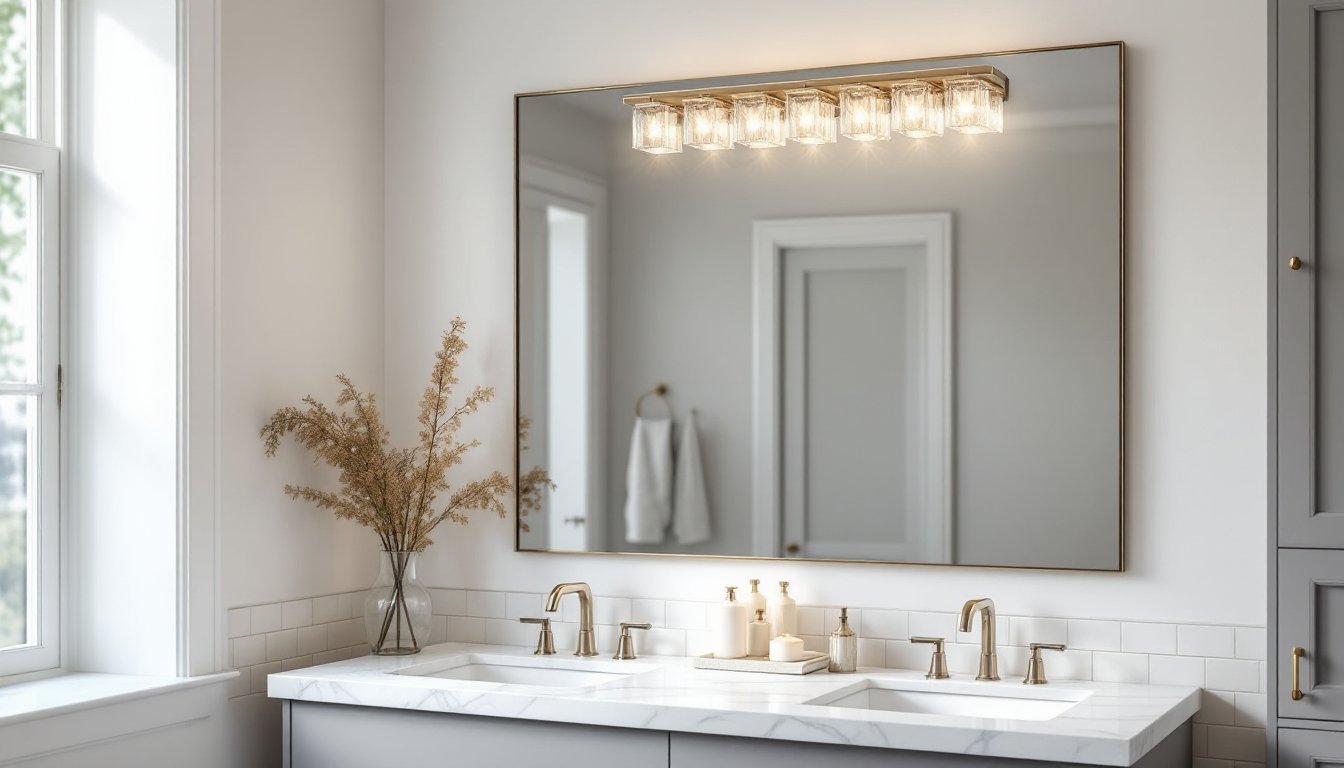
Linear bar fixtures mount horizontally above the mirror, typically spanning 24″ to 48″ in length. They house multiple bulbs (usually 3 to 6) behind or within crystal shades arranged in a row. These work best over single or double vanities where you need even, wide-spread light.
Pros: predictable installation (one junction box, straightforward leveling), uniform light distribution, modern or transitional aesthetic.
Cons: less design flexibility if your mirror is unusually tall or if you want asymmetrical lighting.
Multi-light sconces install as pairs flanking the mirror at roughly 60″ to 66″ off the floor (eye level for most adults). Each sconce may have one to three arms with crystal shades or dangles. This configuration mimics theatrical dressing room lighting and reduces shadows under the chin and brows.
Pros: superior shadow control, works with any mirror shape, adds architectural detail.
Cons: requires two junction boxes (or surface wiring, which looks DIY-sloppy unless you fish wire through the wall), doubling install complexity.
Tool note: If you’re adding new boxes for sconces, a drywall saw and fish tape are essential. A non-contact voltage tester prevents you from cutting into live wire. If your bathroom has tile, hire a pro or plan box locations before tile goes up.
Modern Minimalist vs. Traditional Ornate Designs
Modern minimalist crystal fixtures use clean geometric frames (polished chrome, brushed nickel, matte black) with simple crystal rods, cubes, or spheres. Think straight lines, integrated LED modules, and restrained sparkle. These pair well with floating vanities, frameless mirrors, and monochrome tile.
Example materials: clear K9 crystal (affordable, machine-cut, good clarity) or recycled glass for an eco-conscious option.
Traditional ornate designs feature antiqued metal finishes (bronze, brass, pewter), scrollwork, and layered crystal teardrops or beads reminiscent of chandeliers. These suit classic or transitional baths with marble counters, framed mirrors, and wainscoting.
Example materials: lead crystal (higher refractive index, more prismatic effect) or Swarovski elements if budget allows.
Neither style is inherently better, it’s about matching your vanity’s finish, faucet hardware, and overall design language. Mixing metals is fine (a nickel fixture over a brass faucet works if you repeat nickel elsewhere, like towel bars), but mixing design eras without intention looks accidental.
How to Choose the Right Crystal Vanity Light for Your Space
Start with measurements, not aesthetics. Measure your vanity width and mirror width. A common rule: the fixture should be 60% to 75% the width of the mirror to look proportionate. A 36″ mirror pairs well with a 24″ to 30″ bar light. Undersized fixtures look lost: oversized fixtures crowd the wall and may interfere with medicine cabinets.
Next, determine bulb count and wattage. The Illuminating Engineering Society recommends 75 to 100 lumens per square foot for task lighting in bathrooms. For a 5′ × 8′ bathroom (40 sq ft), aim for roughly 3,000 to 4,000 lumens total. If your fixture holds four bulbs, that’s 750–1,000 lumens per bulb.
Most crystal fixtures use E26 medium-base sockets and work with LED, CFL, or incandescent bulbs (though incandescent is inefficient and generates excess heat). LED bulbs rated 2700K to 3000K (warm white) render skin tones more naturally than cool daylight bulbs. Check the Color Rendering Index (CRI), aim for 90+ to avoid makeup mismatches when you step outside.
Consider dimming. Many luxury lighting designs look better at 60–80% brightness. Install a compatible dimmer switch (LED bulbs require LED-rated dimmers: older rotary dimmers cause flicker). Verify the fixture isn’t hardwired to a bathroom fan switch, an easy mistake during rough-in that leaves you toggling lights with exhaust.
Finally, check clearance codes. The National Electrical Code (NEC) Article 410.10(D) requires luminaires in tub/shower zones to be rated for damp or wet locations if within 8 feet horizontally and 3 feet vertically of the tub edge. Most vanity lights above sinks are outside this zone, but double-check your layout. If in doubt, choose a UL Damp-rated fixture for peace of mind.
Installation Tips for Crystal Vanity Lighting
Safety first: Turn off power at the breaker, not just the wall switch. Use a non-contact voltage tester on the wires in the junction box to confirm zero voltage.
Tools you’ll need:
- Wire strippers and wire nuts (yellow for 14-gauge, orange for 12-gauge)
- Screwdriver set (Phillips and flathead)
- Drill/driver with bits for wall anchors if mounting a heavy fixture without a stud
- Level (a 9″ torpedo level works in tight spaces)
- Ladder or step stool rated for your weight plus fixture weight
- Safety glasses (crystal shades can slip during assembly)
Step-by-step:
-
Remove the old fixture. Unscrew the canopy, disconnect wire nuts, and lower the fixture. Note the wire colors: black (hot), white (neutral), bare copper or green (ground). If you see something else, like red or multiple blacks, take a photo before disconnecting.
-
Inspect the junction box. It should be securely fastened to a stud or blocking, not just drywall. If the new fixture weighs more than 10 lbs, confirm the box is metal and fan-rated or use a remodel brace to anchor it properly.
-
Assemble the fixture per manufacturer instructions. Many crystal lights ship with crystals detached to prevent breakage. This step takes longer than you expect, budget 15–30 minutes for multi-tier designs.
-
Connect the wires. Match black to black, white to white, ground to ground. Twist wires clockwise with pliers before securing wire nuts, then tug gently to test. Tuck connections into the box neatly so the canopy sits flush.
-
Mount the fixture. Most use a crossbar screwed to the junction box, then a center finial or side screws to attach the canopy. Have a second person hold the fixture while you tighten hardware, crystal fixtures are awkward and front-heavy.
-
Level before final tightening. A fixture that’s 1/8″ off-level looks drastically crooked when reflected in the mirror.
-
Install bulbs and test. Restore power, flip the switch, and check for flicker or buzzing (signs of a loose connection or incompatible dimmer).
When to call a pro: If your bathroom has no existing junction box where you want sconces, if you’re uncomfortable working with live voltage, or if your home has aluminum wiring (common in 1960s–70s construction and a fire hazard if mishandled).
Cleaning and Maintaining Your Crystal Fixtures
Crystal’s sparkle dulls fast in bathrooms. Soap scum, hairspray, and steam leave a hazy film that blocks light refraction. Clean fixtures every 4–6 weeks in high-use bathrooms, every 2–3 months in guest baths.
Quick cleaning (while mounted):
- Turn off power at the breaker and let bulbs cool.
- Mix 1 part white vinegar to 3 parts warm water in a spray bottle, or use a commercial crystal cleaner.
- Spray a microfiber cloth, never spray directly onto the fixture, which can drip into sockets.
- Wipe each crystal element, metal frame, and bulb (yes, dusty bulbs reduce output by up to 20%).
- Buff dry with a clean cloth to prevent water spots.
Deep cleaning (fixture removed):
For heavily soiled fixtures or those with intricate crystal strands, remove the fixture following the reverse of installation steps. Disassemble crystals and soak them in warm soapy water (a few drops of dish soap per gallon). Rinse in clean water with a splash of vinegar for extra shine, then dry on a lint-free towel. Clean the metal frame separately with appropriate cleaner (brass polish for brass, stainless cleaner for chrome).
Avoid: Ammonia-based cleaners on antique or coated crystals (they can cloud the finish), abrasive sponges, and dishwasher cycles (even “delicate”), temperature swings can crack crystal.
Longevity tips: Run the bathroom fan during and after showers to reduce moisture buildup. If you notice tarnish on metal components, address it early, corrosion spreads and can weaken mounting screws. Replace any cracked or chipped crystals promptly: most manufacturers sell individual replacement pieces, or you can find generic crystal prisms online by measuring the pinhole diameter and drop length.