Table of Contents
ToggleFlos pendant lights aren’t just fixtures, they’re sculptural statements that define a room. Since 1962, this Italian lighting house has collaborated with master designers like Achille Castiglioni and Philippe Starck to create pieces that blur the line between function and art. Whether someone’s renovating a kitchen or freshening up a living space, a Flos pendant brings the kind of design credibility that cheaper knock-offs can’t match. But with price tags that often exceed four figures, choosing the right model requires understanding what sets these fixtures apart and how to install and maintain them properly.
Key Takeaways
- Flos lighting pendant fixtures use superior materials like hand-spun aluminum and mouth-blown glass with designer pedigree that justifies their $800–$3,500 price range over mass-market alternatives.
- Proper sizing depends on ceiling height and room dimensions: compact models suit 8-foot ceilings, while larger fixtures like the Skygarden work best in spaces with 10-foot ceilings or greater.
- Installation requires confirming your electrical box can support the fixture’s weight, using proper wire gauges and color codes, and hiring a licensed electrician for new circuits or complex modifications.
- Standard Flos pendant models integrate dimmer compatibility with TRIAC dimmers, but pair dimmers with dimmable LED bulbs and ensure the dimmer is rated for at least 20% more than total fixture wattage.
- Maintain your Flos pendant lighting every 3–6 months by dusting with microfiber cloths, avoiding ammonia cleaners, and replacing all bulbs simultaneously to preserve consistent color temperature.
- Authentic Flos pendants retain 40–60% resale value on design platforms when kept in original packaging with documentation, making them long-term investments rather than disposable decor.
What Makes Flos Pendant Lights Stand Out
Material quality separates Flos from mass-market fixtures. Most models use hand-spun aluminum, mouth-blown glass, or precision-molded polycarbonate, not the stamped sheet metal or injection-molded plastic common in budget alternatives. The weight difference is noticeable when unboxing: a genuine Flos Skygarden pendant weighs around 15 lbs due to its plaster interior, while imitators come in under 6 lbs.
Designer pedigree matters beyond aesthetics. Each Flos pendant is the result of iterative prototyping with architects and industrial designers. The 2097 chandelier, designed by Gino Sarfatti in 1958 and re-released by Flos, uses a calculated arrangement of 30 or 50 bulbs to create even, shadow-free illumination, something randomly positioned bulbs can’t achieve. That design intentionality shows in how the light performs, not just how it looks in photos.
Build precision affects installation and longevity. Flos fixtures use standardized electrical components with UL or ETL certification for North American markets. Canopy plates are typically 5 inches in diameter, machined to tight tolerances so they sit flush against ceilings without gaps. Suspension cables are aircraft-grade stainless steel, rated for the fixture’s weight plus a safety margin. Adjustable cord lengths accommodate ceiling heights from 8 to 12 feet without custom modifications.
The fixtures also integrate dimmer compatibility as standard. Most Flos pendants work with TRIAC dimmers when paired with dimmable LED bulbs, though ELV (electronic low-voltage) dimmers provide smoother performance with low-wattage LEDs. This isn’t always specified clearly in product descriptions, but it’s critical for mood lighting in dining or living spaces.
Most Popular Flos Pendant Light Collections
The Iconic Arco and IC Lights Series
The Arco, technically a floor lamp, often appears in conversations about Flos pendants because its arching design mimics a suspended fixture. The actual pendant variant, less common, uses the same white Carrara marble base aesthetic. What homeowners care about: the IC Lights series by Michael Anastassiades offers a cleaner pendant option with similar geometric simplicity.
IC Lights come in sphere or cone configurations, with opal glass diffusers that eliminate glare. The sphere models (S1 and S2) work over kitchen islands or dining tables where even downlight distribution matters. Cone models (C/W1 and C/W2) provide more directional light for task areas. All use E26 medium-base sockets, accepting standard bulbs up to 60W equivalent LED. The chrome-plated steel frame resists tarnishing better than brushed nickel alternatives, which can develop patina in humid kitchens.
Modern Favorites: Skygarden and 2097
Skygarden pendants feature a glossy exterior (white, black, or rust) with a hand-decorated plaster interior that reflects light in unexpected patterns. The interior detailing, baroque reliefs or geometric patterns, casts intricate shadows when dimmed. The fixture measures 23.6 inches in diameter, making it substantial enough for spaces with 10-foot ceilings but overwhelming in standard 8-foot rooms. Weight is a factor: at 15 lbs, it requires mounting to a ceiling joist or using a pancake box rated for 50 lbs.
The 2097 series scales from 18 bulbs (30-inch diameter) to 50 bulbs (35-inch diameter). According to features in Architectural Digest, it remains a favorite in high-end residential projects for its mid-century pedigree. Each socket holds a G9 bi-pin halogen or LED bulb (typically 20W halogen or 3W LED equivalent). Total wattage can hit 600W+ with halogen bulbs, so confirm the circuit can handle the load, most 15-amp bedroom circuits max out at 1,800W, but don’t load them beyond 80% (1,440W) per NEC guidelines.
Installation note: the 2097’s arms are pre-wired and non-adjustable. Unpacking requires two people to avoid bending the brass rods. A dimmer-compatible transformer is built into the canopy for low-voltage models, but confirm compatibility with existing dimmer switches before installation.
How to Choose the Right Flos Pendant for Your Space
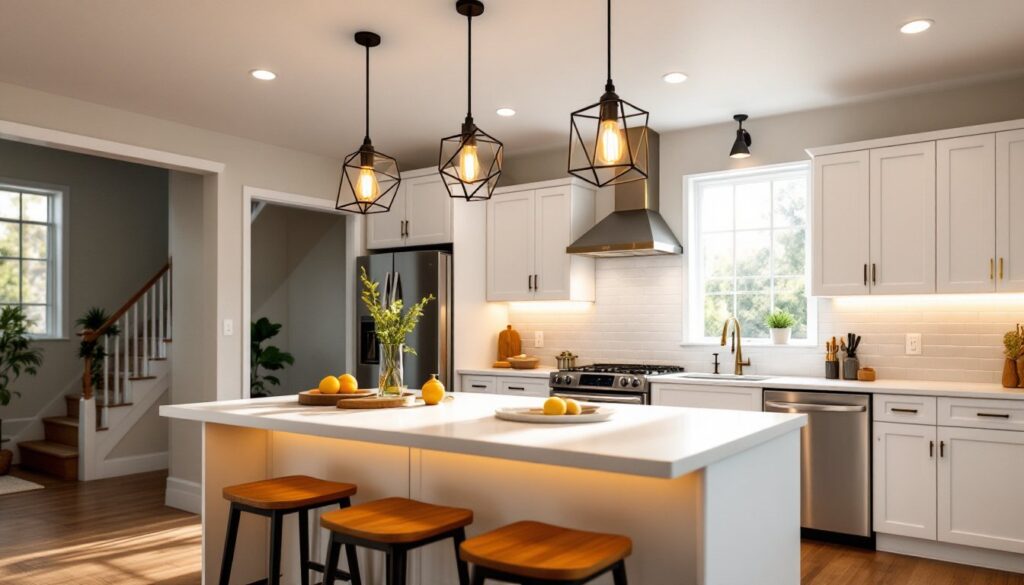
Ceiling height dictates pendant scale and suspension length. For 8-foot ceilings, choose compact models like the IC S1 (11.8 inches diameter) with the cord shortened to 24–30 inches. Over dining tables, the bottom of the fixture should hang 30–36 inches above the table surface to avoid glare in seated guests’ sightlines. For kitchen islands, aim for 30–40 inches clearance to prevent head collisions while maintaining task lighting effectiveness.
Room dimensions determine fixture size. A common rule: add room length and width (in feet), then convert to inches for minimum fixture diameter. A 12×14-foot dining room suggests a 26-inch minimum diameter fixture like the Skygarden. Smaller fixtures get lost in large spaces: oversized fixtures crowd small rooms. The Elle Decor archives show multiple examples of proportion failures where designers ignored this guideline.
Light output varies dramatically by model. The Skygarden uses a single E27 socket (up to 150W equivalent LED), producing 1,600–2,000 lumens, adequate for ambient dining room lighting but insufficient as the sole source in a 200-square-foot kitchen. The 2097/30 with thirty 20W halogens produces around 15,000 lumens, bordering on commercial brightness. For layered lighting plans, pair a statement pendant with recessed cans or under-cabinet strips to balance ambiance and task illumination.
Style coherence matters more than matching finishes exactly. Flos fixtures lean contemporary and minimalist, so they clash with heavy traditional moldings or rustic farmhouse aesthetics. They work best in spaces with clean lines, neutral palettes, and quality materials like natural wood, stone, or polished concrete. A brushed brass 2097 complements walnut cabinetry: a black Skygarden pairs with matte black hardware and white marble countertops.
Budget reality: expect $800–$3,500 per fixture for authentic Flos pendants in 2026, with the 2097/50 chandelier exceeding $5,000. Electrical installation by a licensed electrician adds $150–$400 depending on whether the box location needs moving or circuit upgrading. Knock-offs run $150–$400 but use inferior materials, lack UL listing, and offer no warranty. For the design-conscious on a budget, investing in one genuine Flos pendant as a focal point beats scattering multiple cheap alternatives.
Installation Tips and Best Practices
Pre-installation checklist: Confirm the existing electrical box is rated for the fixture’s weight. Standard plastic «old-work» boxes typically max out at 10 lbs. For fixtures exceeding that, replace it with a pancake box screwed directly to a ceiling joist or install a fan-rated box (50 lb capacity). Turn off power at the breaker, not just the wall switch, and verify it’s dead with a non-contact voltage tester.
Wear safety glasses when working overhead, drywall dust and debris fall constantly. If replacing an existing fixture, have a helper support the old one while disconnecting wires. Flos fixtures ship with detailed instructions, but the mounting hardware varies by model. Most use a crossbar that attaches to the electrical box, then a canopy that slides over the crossbar and locks with set screws.
Wire connections follow standard color codes: black (hot) to black, white (neutral) to white, and bare copper (ground) to green or bare ground. Flos fixtures sold in North America include grounding hardware. Use wire nuts rated for the gauge, typically 14 AWG or 12 AWG household wiring connects to 18 AWG fixture leads. Twist wires clockwise with pliers before threading on the wire nut, then tug-test each connection. Loose connections cause flickering and fire hazards.
Suspension adjustment requires patience. Most Flos pendants include a cord-locking mechanism in the canopy. Loosen the set screw, adjust the cord to the desired length, then retighten. For multi-pendant installations over a kitchen island, use a laser level to ensure all fixtures hang at identical heights, eyeballing it results in noticeable unevenness.
Permit requirements vary by jurisdiction. In most areas, replacing an existing fixture on the same circuit doesn’t require a permit. Installing a new circuit, moving a box, or upgrading service does. When in doubt, call the local building department. Hiring a licensed electrician costs $150–$400 but ensures code compliance, proper load calculations, and warranty protection. DIYers comfortable with basic wiring can handle fixture swaps, but new circuits or panel work should always go to a professional.
Dimmer installation: If adding a dimmer, ensure it’s compatible with LED bulbs (most modern dimmers are, but verify). The dimmer’s wattage rating must exceed total fixture wattage by at least 20%. A 2097/30 with thirty 3W LEDs (90W total) needs a dimmer rated for at least 110W. Install the dimmer on the hot wire (black) in the switch box, not in the fixture box.
Caring for Your Flos Pendant Lighting
Routine cleaning every 3–6 months prevents dust buildup that dims output. Turn off power at the breaker before cleaning, never clean a live fixture. For glass diffusers like IC Lights, use a microfiber cloth dampened with water and a drop of dish soap. Avoid ammonia-based glass cleaners on coated or tinted glass: they can strip finishes.
Skygarden’s plaster interior requires gentler care. Dust with a soft-bristle brush or microfiber duster. Don’t use water on the plaster, it can stain or soften the material. The exterior enamel cleans with a damp cloth. For the 2097’s brass arms, a brass polish like Wright’s Brass Polish restores shine, but many owners prefer the aged patina that develops naturally.
Bulb replacement timing depends on bulb type. LED bulbs rated for 15,000–25,000 hours last 5–10 years under typical use (3 hours/day). When replacing bulbs, match the original spec, wrong wattage or base type can overheat sockets or void warranties. For fixtures with multiple bulbs like the 2097, replace all bulbs simultaneously to maintain consistent color temperature. Mixing old and new LEDs results in noticeable color shifts between 2700K and 3000K.
Inspection points during cleaning: Check that all set screws remain tight, vibration from HVAC or foot traffic can loosen them over time. Inspect the cord for fraying near the canopy or strain-relief points. Look for discoloration around wire connections inside the canopy, which indicates overheating. If found, shut off power and consult an electrician.
Long-term preservation: Flos fixtures hold value if maintained. Keep original packaging, documentation, and purchase receipts. Authentic Flos pendants resell for 40–60% of retail on design resale platforms, versus near-zero for knock-offs. When moving, disassemble carefully and wrap glass components in bubble wrap. The 2097 requires its original box or custom crating to prevent arm damage.
For those exploring broader updates, understanding how light fixtures integrate into overall room design helps prioritize which upgrades deliver the most impact. Strategic lighting choices, whether Flos or complementary task lighting, shape a room’s functionality as much as its aesthetic. According to trends tracked by Design Milk, sculptural pendants continue dominating contemporary interiors, making a quality Flos fixture a long-term investment rather than a disposable decor trend.