Table of Contents
ToggleGreen pendant lighting brings a bold, nature-inspired accent to any room while offering practical illumination exactly where it’s needed. Whether it’s a soft sage fixture over the kitchen island or a vibrant emerald shade in the dining nook, pendant lights in green tones bridge the gap between functional task lighting and statement design. They’re versatile enough to anchor a room’s color palette or serve as an unexpected pop against neutral walls. With more homeowners leaning into biophilic design and earth-toned interiors, green pendants have moved from niche accent pieces to mainstream favorites in 2026.
Key Takeaways
- Green pendant lighting combines biophilic design with practical task illumination, offering homeowners a nature-inspired accent that bridges function and statement design.
- Choosing the right green shade matters—sage and olive work in transitional spaces, emerald and hunter green suit bold interiors, while mint and seafoam complement coastal designs.
- Kitchen islands are ideal for green pendant lighting; hang fixtures 30–36 inches above countertops and use two to three pendants for islands 6–8 feet long.
- Green pendant fixtures pair seamlessly with modern farmhouse, mid-century modern, industrial, and eclectic styles when coordinated with compatible hardware finishes and wall colors.
- Layer green pendants with recessed ambient lighting and accent lighting, and repeat the green accent color in textiles or decor using the 60-30-10 color rule for balance.
- LED-compatible green pendants cut energy consumption by up to 80% compared to incandescent bulbs and often feature sustainable materials like recycled glass and powder-coated steel.
Why Green Pendant Lights Are Trending in 2026
The shift toward green pendant lighting isn’t just about aesthetics, it’s part of a broader movement toward bringing natural elements indoors. Biophilic design principles, which emphasize connecting indoor spaces with nature, have dominated renovation and remodeling projects over the past few years. Green tones mimic foliage, moss, and forest canopies, creating a calming psychological effect that’s backed by environmental psychology research.
Sustainability plays a role too. Manufacturers are producing fixtures with recycled glass, reclaimed metals, and low-VOC finishes. LED compatibility is now standard, cutting energy consumption by up to 80% compared to incandescent bulbs. Many green pendants also use powder-coated steel or aluminum instead of plastic housings, extending lifespan and reducing waste.
From a design standpoint, green offers more range than neutral metallics. It pairs with warm woods, cool grays, brass accents, and even bold patterns without clashing. Interior designers on platforms like MyDomaine point to green as a bridge color, grounded enough to feel timeless but distinctive enough to make a statement. It’s a practical choice for homeowners who want personality without committing to high-risk hues like neon yellow or deep burgundy.
Choosing the Perfect Shade of Green for Your Space
Not all greens are created equal. The wrong shade can throw off a room’s balance, while the right one ties everything together.
Sage and olive greens work well in farmhouse, Scandinavian, and transitional spaces. These muted tones have gray or brown undertones, so they read as neutrals under most lighting conditions. They’re forgiving if wall colors shift or if the homeowner switches out textiles seasonally.
Emerald and hunter greens bring drama and depth. These saturated shades suit traditional, maximalist, and eclectic interiors. Pair them with brass or antique bronze hardware for a classic look, or contrast them against white subway tile for a crisp, modern edge. Be aware that darker greens absorb light, so they’re best used in rooms with ample natural light or layered with ambient lighting.
Mint and seafoam greens lean cool and airy. They’re ideal for coastal or contemporary spaces but can feel juvenile if not balanced with mature textures, think linen, concrete, or matte black accents. These lighter shades reflect more light, making them good candidates for smaller kitchens or powder rooms.
Forest and pine greens sit between muted and saturated. They’re earthy without being dull, making them a safe middle ground for homeowners hesitant to commit to a bold or pale shade. They complement natural wood tones, terracotta, and warm whites.
Test samples in your space before buying. Paint a poster board in your wall color and hold pendant photos or swatches against it under both daylight and evening artificial light. Color temperature matters, warm LEDs (2700K-3000K) will enhance yellow-green undertones, while cool LEDs (4000K+) can make greens look washed out or blue.
Best Rooms for Green Pendant Lighting
Green pendants aren’t one-size-fits-all, but certain rooms naturally lend themselves to the color.
Kitchen and Dining Areas
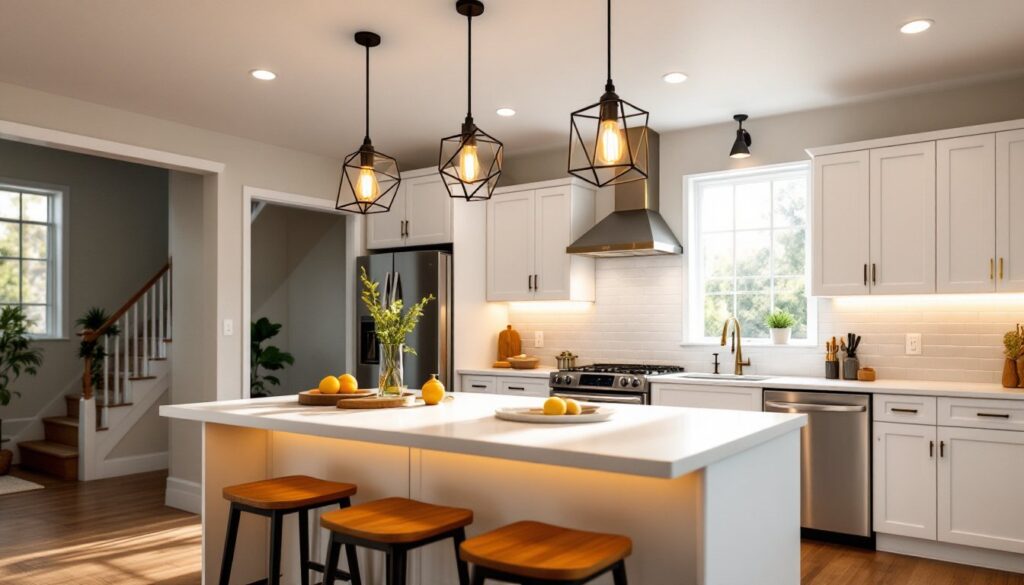
Kitchens are the top candidate for pendant lighting green fixtures. Task lighting over islands, peninsulas, or breakfast bars benefits from the focused downlight pendants provide. Standard practice is to hang them 30-36 inches above the countertop surface, measured from the bottom of the fixture. This height keeps them out of sightlines while directing light where prep work happens.
For islands 6-8 feet long, two to three pendants spaced evenly work best. Use fixtures with shades 10-14 inches in diameter to avoid a cluttered look. If the island is shorter than 6 feet, a single larger pendant (16-20 inches) can anchor the space.
Dining areas benefit from pendants centered over the table, typically 30-34 inches above the surface. Make sure the fixture’s diameter is at least 12 inches narrower than the table width to prevent head bumps when guests stand. Dimmable LEDs or incandescent bulbs (where still code-compliant) allow for flexibility between bright task lighting during meals and softer ambient lighting for gatherings.
Other strong candidates include home offices, bathrooms (especially over vanities or freestanding tubs), entryways, and bedside pendants in place of table lamps. Avoid using pendants in rooms with low ceilings (under 8 feet) unless they’re mini pendants designed for tight vertical clearances.
Design Styles That Complement Green Pendant Fixtures
Green pendants adapt to a surprising range of design styles, but certain combinations feel more cohesive.
Modern Farmhouse: Pair matte sage or olive green metal shades with black or weathered wood accents. Glass or ceramic green pendants with Edison-style LEDs add warmth without going full rustic.
Mid-Century Modern: Look for geometric green glass globes or conical metal shades in emerald or forest tones. Brass or walnut elements tie the fixture into the era’s material palette.
Industrial: Hunter green enamel shades with exposed caged bulbs or Edison filaments fit naturally. Pair with galvanized metal, concrete counters, and open shelving.
Coastal: Seafoam or mint pendants in blown glass or ceramic work well. Keep surrounding colors soft, whites, sandy beiges, and driftwood grays.
Transitional: Nearly any shade of green works here, but stick with simple silhouettes, drum shades, smooth domes, or bell shapes. Avoid overly ornate details that lean too traditional.
Eclectic/Maximalist: This is where bold emerald or deep pine pendants shine. Mix them with patterned tile, colorful textiles, and layered decor. Just ensure the green appears at least twice elsewhere in the room (in artwork, plants, or upholstery) to avoid a disjointed look.
Visual galleries on sites like Houzz showcase how different fixture shapes and finishes perform across these styles.
Installation Tips for DIY Homeowners
Installing pendant lights is a manageable DIY project if you’re comfortable working with electrical wiring. If not, hire a licensed electrician, most jurisdictions require permits for new wiring or junction box installations.
Tools and materials:
- Non-contact voltage tester
- Wire strippers
- Screwdrivers (flathead and Phillips)
- Drill with bits (if mounting new junction box)
- Wire nuts
- Pendant light fixture and mounting hardware (included with most fixtures)
- Step ladder
- Safety glasses
Step-by-step:
- Turn off power at the breaker, not just the switch. Use a non-contact voltage tester on the wires to confirm power is off.
- Remove the old fixture (if replacing). Unscrew the canopy, disconnect wire nuts, and lower the old fixture. Note how wires were connected.
- Check the junction box. It should be rated to support the pendant’s weight (most are rated for 50 lbs, but verify). If installing a heavier glass fixture, upgrade to a fan-rated box.
- Adjust cord length if the pendant has an adjustable cord. Most allow you to shorten excess cord inside the canopy. Don’t cut it unless the manufacturer’s instructions permit, some cords can’t be spliced per NEC Article 400.
- Connect wires: Match black (hot) to black, white (neutral) to white, and green or bare copper (ground) to the ground wire or box screw. Twist wire nuts clockwise until snug. Tug gently to confirm connections.
- Secure the canopy to the junction box using the provided screws or mounting strap.
- Install the bulb (if not pre-installed) and restore power. Test the fixture.
Safety notes: Wear safety glasses when working overhead. If the ceiling is plaster or older lath-and-plaster, work carefully to avoid cracking. For pendant lighting over sinks or tubs, ensure the fixture is rated for damp or wet locations per NEC guidelines.
If you’re adding pendants where no fixture existed, you’ll need to run new wiring from a switch and install a junction box, this typically requires an electrician unless you’re experienced with residential wiring and local code.
Pairing Green Pendants with Other Lighting and Decor
Green pendant lighting shouldn’t work in isolation. Layer it with other light sources and coordinate it with surrounding finishes for a cohesive result.
Ambient lighting: Add recessed cans, flush-mount ceiling fixtures, or track lighting to fill the room with general illumination. Pendants provide task or accent light but rarely enough coverage on their own.
Accent lighting: Under-cabinet LEDs, picture lights, or wall sconces add depth and highlight architectural features. Choose warm white (2700K-3000K) LEDs to match most green pendant tones.
Hardware and finishes: If the pendant has brass accents, repeat brass in cabinet pulls, faucets, or drawer hardware. Same goes for black, nickel, or bronze. Mixing metals can work but limit it to two or three finishes maximum.
Wall and cabinet colors: Green pendants pop against white, cream, or light gray walls. For a bolder look, pair emerald pendants with navy cabinetry or sage pendants with charcoal or black. Avoid green-on-green unless there’s strong contrast in saturation or value.
Natural elements: Live plants, wood cutting boards, woven baskets, and stone counters reinforce the organic feel of green fixtures. This is where biophilic design really pays off.
Textiles and upholstery: Echo the pendant’s green in seat cushions, dish towels, or area rugs, but don’t overdo it. A 60-30-10 color rule works well: 60% neutral base, 30% secondary color (like wood or gray), and 10% accent (the green).
For more guidance on selecting and coordinating light fixtures that transform a space, consider how finish, scale, and placement affect the overall design impact. Exploring ideas on platforms like Homedit can spark combinations you hadn’t considered, especially when layering different fixture types in open-concept layouts.