Table of Contents
ToggleFort Myers homeowners are discovering what smart home technology can do in Florida’s unique climate. Between hurricane season, year-round cooling demands, and rising energy costs, home automation offers practical solutions that go beyond convenience. Whether it’s controlling thermostats remotely during summer vacations or securing windows when storm warnings hit, automation systems are becoming essential tools for Southwest Florida living. This guide walks through the systems, installation considerations, and local factors that matter most to Fort Myers residents looking to upgrade their homes.
Key Takeaways
- Home automation in Fort Myers addresses climate control, hurricane preparedness, and energy costs, with smart thermostats cutting cooling costs by 15-30% in Florida’s year-round heat.
- Smart water sensors and leak detection systems are critical investments for Florida’s humid climate, preventing costly damage from AC condensate clogs and water heater failures.
- Popular platforms like Amazon Alexa, Samsung SmartThings, Control4, and Crestron offer varying levels of integration—choose based on whether you need DIY-friendly basics or whole-home professional systems.
- Hurricane season preparations benefit greatly from smart home technology including security cameras with battery backup, smart water shutoff systems, and generators with remote monitoring.
- DIY installation works for smart plugs, bulbs, and doorbell cameras, but whole-home integration, hardwired security, and electrical panel work require certified professionals following Florida building codes.
- When hiring installers, verify CEDIA certifications, Florida Department of Business and Professional Regulation licenses, and request local references to ensure quality work that lasts in harsh coastal climates.
Why Fort Myers Homeowners Are Embracing Smart Home Technology
The Southwest Florida climate creates specific challenges that make automation more than a luxury. Air conditioning runs nearly year-round in Fort Myers, and a programmable smart thermostat can cut cooling costs by 15-30% according to recent energy studies. That translates to real savings when electric bills spike during summer months.
Hurricane preparedness is another driver. Lee County residents know the drill: track storms, prep shutters, secure outdoor items. Smart systems let homeowners monitor properties remotely, receive alerts about power outages, and control security cameras from evacuation locations. During Hurricane Ian in 2022, many Fort Myers residents relied on smart home technology to check on their properties when access was restricted.
Energy management matters here. Florida Power & Light’s time-of-use rates make it worthwhile to shift heavy appliance use to off-peak hours. Smart plugs and scheduling features automate this without daily attention. Water leak detection is another practical feature, early warnings can prevent costly damage from AC condensate line clogs or water heater failures, both common in humid climates.
Property values are responding too. The advantages of home automation extend to resale appeal, with buyers in Southwest Florida increasingly expecting at least basic smart features like doorbell cameras and programmable thermostats.
Popular Home Automation Systems for Fort Myers Homes
Fort Myers homeowners have several solid platforms to choose from, each with different strengths. The key is matching system capabilities to Florida-specific needs.
Amazon Alexa and Google Home offer affordable entry points. Both work well for voice control, basic scheduling, and integrating third-party devices like smart plugs, lights, and thermostats. Cost runs $50-200 for starter packages. They’re ideal for DIY installation but lack professional-grade integration for whole-home systems.
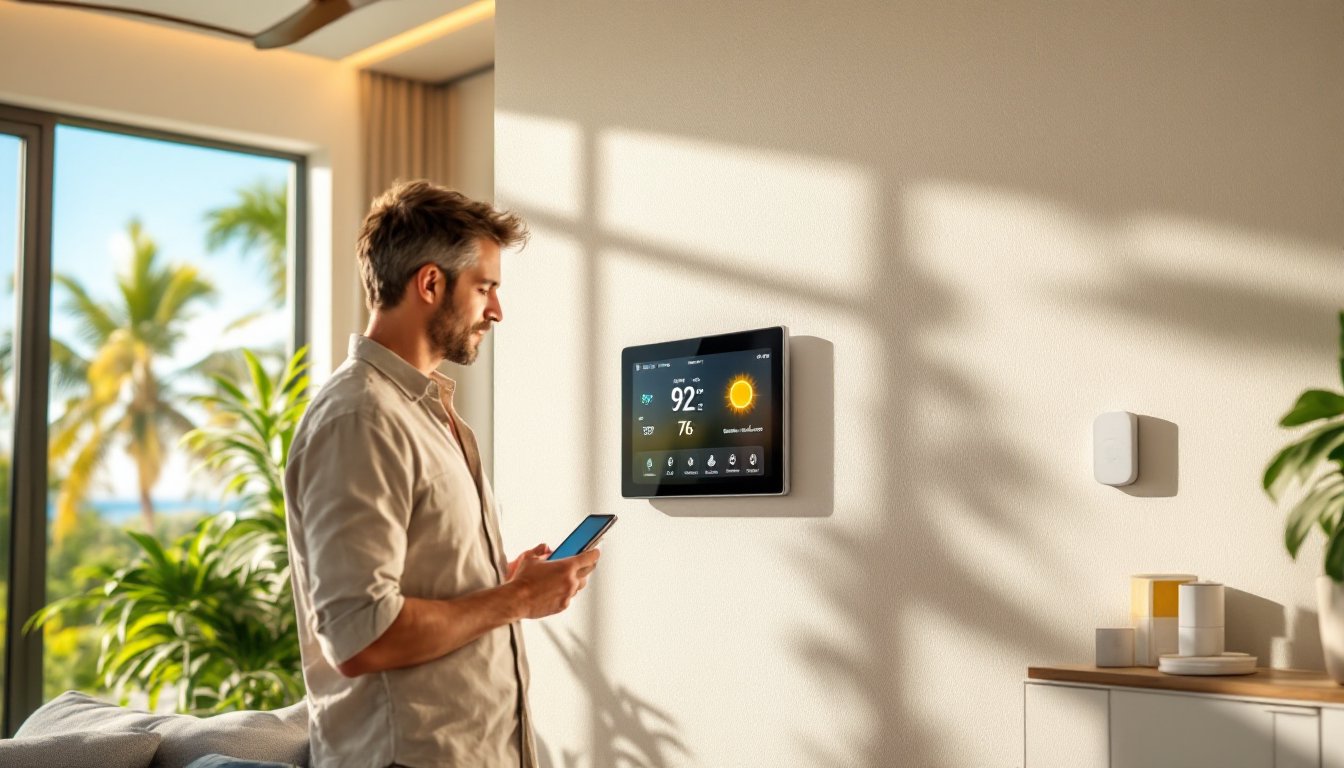
Samsung SmartThings provides stronger automation rules and supports Z-Wave and Zigbee protocols, important for reliable device communication in larger homes. Expect $100-300 for hubs and initial devices. The platform handles complex scenarios, like “if outdoor temperature exceeds 92°F and I’m away, close blinds and raise AC setpoint.”
For comprehensive systems, Control4 and Crestron dominate the professional installation market. These require certified installers but deliver seamless integration of lighting, climate, security, and entertainment. Costs start around $5,000-10,000 for basic whole-home setups. Many Fort Myers custom home builders include these systems in high-end properties.
Ring and SimpliSafe focus on security with expandable automation features. Both offer professional monitoring services, which matter during hurricanes when response times can lag. Monthly monitoring runs $10-25.
Smart Climate Control for Florida’s Unique Weather
Climate control makes or breaks comfort in Southwest Florida. Standard programmable thermostats are fine, but smart versions earn their keep through learning algorithms and remote access.
Ecobee and Nest Learning Thermostat lead here. Ecobee’s remote sensors solve a common Florida problem: temperature imbalances in homes with multiple HVAC zones. The sensors (around $40 each) let the system average temperatures across rooms instead of relying on a single hallway thermostat. Nest learns occupancy patterns and adjusts automatically, useful for snowbirds who split time between Fort Myers and northern residences.
Both integrate with humidity monitoring, critical in Florida. Indoor humidity should stay between 30-50% for comfort and mold prevention. Smart thermostats can trigger dehumidifiers when levels climb, protecting both health and building materials.
Ceiling fan integration is underrated. Smart switches like Lutron Caséta or GE Cync let homeowners schedule fans to run during cooler evening hours, reducing AC demand. Fans can lower perceived temperature by 4-8°F, meaningful savings when cooling costs dominate energy bills. Testing from CNET shows properly automated ceiling fans can reduce monthly cooling costs by 8-12% in humid climates.
For homes with pool equipment, smart controls for pumps and heaters prevent unnecessary runtime. Florida law requires pool pumps to run specific hours for filtration, but smart timers optimize scheduling around TOU electric rates.
Hurricane Preparedness Through Home Automation
Hurricane season runs June through November, and Fort Myers sits in a vulnerable zone. Smart home systems add layers of protection and peace of mind.
Smart water sensors should go near water heaters, under sinks, and along AC drain lines. Brands like Flo by Moen or Phyn detect leaks and can shut off main water supplies automatically. This matters when evacuating, a burst pipe during absence causes catastrophic damage. Sensors cost $50-150 each: whole-home systems with automatic shutoff run $400-700 installed.
Storm shutter automation exists but requires professional installation and substantial investment ($15,000-40,000 depending on home size). Most Fort Myers homeowners stick with manual shutters but use smart alerts to trigger prep routines.
Security cameras with battery backup and cellular connectivity let homeowners check properties when power and internet are down. Look for models rated IP65 or higher for weather resistance. According to reviews at Tom’s Guide, cameras with local storage options outperform cloud-only models during storms when connectivity fails.
Smart generators are gaining traction. Systems like Generac with mobile monitoring show fuel levels, runtime, and maintenance alerts. They auto-start when grid power drops and send status updates via cellular connection. Whole-home generators run $8,000-15,000 installed, but they’re often considered essential in coastal Lee County.
Smart locks with battery backup let evacuees grant access to friends or contractors checking on properties without physical key handoffs. Codes can be changed remotely if security concerns arise.
DIY vs. Professional Installation: What Fort Myers Homeowners Should Know
Skill level and system complexity determine whether DIY makes sense. Be honest about capabilities, redoing botched automation work costs more than hiring pros upfront.
DIY-friendly projects include smart plugs, bulbs, doorbell cameras, and single-room thermostats. These typically use Wi-Fi and mobile apps with guided setup. Total time runs 1-3 hours for basic systems. Anyone comfortable with smartphone apps and basic home network setup can handle these. Exploring home automation DIY ideas can provide practical starting points for self-installation.
Tools needed for DIY smart home installation: Wire strippers for smart switches, screwdrivers (both Phillips and flathead), voltage tester (essential for safety with powered circuits), ladder, and possibly a drill for mounting cameras or sensors. If you’re replacing standard switches with smart switches, turn off breakers at the panel and verify power is off with a voltage tester before touching wires.
Some projects sit in gray areas. Smart switch installation requires basic electrical knowledge. Florida follows the National Electrical Code (NEC), and while homeowners can do their own electrical work, it must pass inspection in many municipalities. Lee County requires permits for new circuits or substantial modifications. Replacing an existing switch with a smart version typically doesn’t require permits, but verify with local building departments.
When to call professionals:
- Whole-home integration across multiple systems (lighting, climate, security, entertainment)
- Hardwired security systems or cameras requiring outdoor cable runs
- Structured wiring or network infrastructure upgrades
- Any work involving main electrical panels or load calculations
- Systems requiring configuration of enterprise-grade networking (VLANs, dedicated subnets)
Professional smart home automation installation ensures proper integration and typically includes warranties on both equipment and labor. Rates in Fort Myers run $75-150/hour for certified installers, with whole-home projects taking 20-40 hours depending on scope.
PPE for DIY work: Safety glasses when drilling or working overhead, work gloves when handling rough edges or running cable, and insulated tools when working with electrical circuits even after power is confirmed off.
Finding the Right Home Automation Service in Fort Myers
Fort Myers has dozens of home automation installers, but quality varies. Here’s how to separate competent pros from sales-focused operations.
Certifications matter. Look for installers certified by manufacturers (Control4, Crestron, Lutron) or industry groups like CEDIA (Custom Electronic Design & Installation Association). These certifications require ongoing training and demonstrate commitment to the trade. Ask to see credentials, legitimate pros show them readily.
Check license status with the Florida Department of Business and Professional Regulation. Electrical contractors need an EC license for work involving wiring beyond low-voltage. Alarm system installers require specific state licensing. Verify these before signing contracts.
Project portfolios tell the story. Ask for examples of completed Fort Myers installations similar to what you’re planning. Good installers document their work and can show integration complexity, clean wire management, and finished results. Be wary of companies showing only stock photos.
Get multiple quotes on identical scopes of work. Lowest price often signals corners being cut, cheap Cat5e cable instead of Cat6, no conduit for outdoor runs, or bargain-brand devices that won’t last in Florida humidity. Technology from Digital Trends research indicates that quality components typically cost 20-30% more than budget alternatives but last 2-3 times longer in harsh climates.
Ask about post-installation support. Systems need occasional updates, troubleshooting, and expansion. Does the company offer service contracts? What are response times for issues? Local companies generally provide better ongoing support than national chains.
References from Fort Myers clients matter more than online reviews. Talk to 2-3 past customers about responsiveness, hidden costs, and whether systems still work as promised a year later. When evaluating home automation installation services, firsthand local references provide the most reliable insight.
Timeline expectations: Basic smart home installations take 1-3 days. Whole-home systems with structured wiring, multiple zones, and integration can run 1-2 weeks. Hurricane season affects scheduling, installers book solid in April and May as homeowners prep for storm season.
Conclusion
Home automation in Fort Myers addresses real challenges, hurricane prep, energy costs, and climate management, beyond the convenience factor. Start with high-impact areas like climate control and security, then expand as needs and budgets allow. Match system complexity to actual skills, and don’t hesitate to bring in pros for integrated systems or electrical work. The right setup pays for itself through energy savings and peace of mind, especially when the next storm warning arrives.