Imagine opening your kitchen cabinet and feeling like you’ve stepped into a well-lit wonderland instead of a dark, chaotic abyss. Inside cabinet lighting transforms that mundane experience into a delightful adventure, illuminating everything from your favorite spices to that mystery jar you forgot about. It’s like giving your cabinets a glow-up, making them the star of the show.
Not only does it add a touch of elegance to your space, but it also saves you from the dreaded “where’s that thing?” dance as you rummage through the shadows. Whether you’re a culinary wizard or just a takeout enthusiast, good lighting can make all the difference. Let’s dive into the world of inside cabinet lighting and discover how it can brighten up your home and your cooking game.
Understanding Inside Cabinet Lighting
Inside cabinet lighting enhances visibility and organization within kitchen cabinets and other storage spaces. This type of lighting simplifies finding items while adding a stylish touch to home interiors.
What Is Inside Cabinet Lighting?
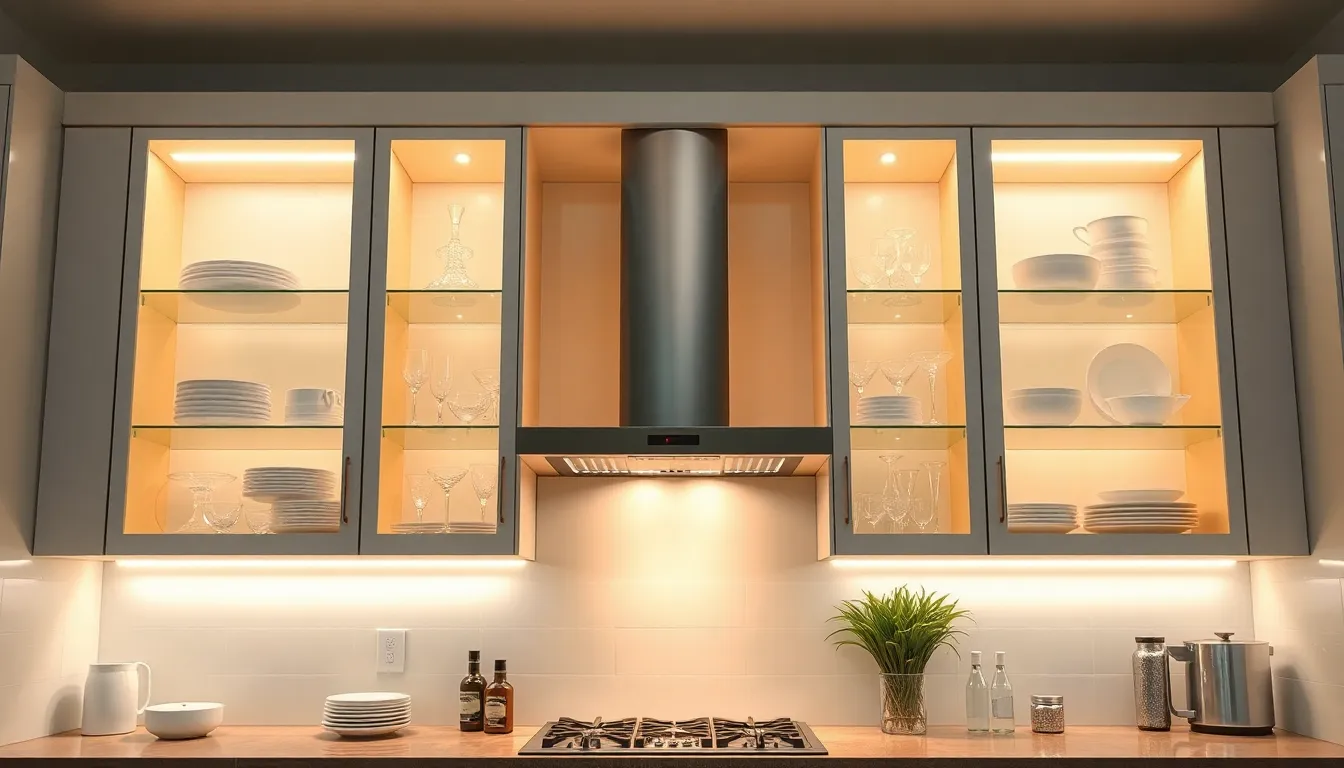
Inside cabinet lighting refers to illumination installed within cabinets, allowing for better visibility of shelves and contents. This lighting often utilizes LED strips or puck lights to ensure even and effective distribution. Fixtures can be activated with motion sensors, touch switches, or traditional on-off switches, offering convenience tailored to users’ needs. By focusing light within these spaces, individuals can highlight decorative items, eliminating dark corners that make it difficult to see everything clearly.
Benefits of Inside Cabinet Lighting
Inside cabinet lighting provides multiple advantages in home settings. First, this illumination enhances the aesthetic appeal of cabinets, showcasing dishes or glassware effectively. Second, efficient lighting improves organization, helping individuals locate items without hassle. Third, it fosters a safer environment by reducing the likelihood of accidents caused by poorly lit spaces. Fourth, this feature adds value to the home, appealing to potential buyers by demonstrating thoughtful design. Lastly, energy-efficient options like LED fixtures lower electricity costs while delivering high-quality light.
Types of Inside Cabinet Lighting

Inside cabinet lighting comes in various types, each serving specific needs and preferences. Understanding these types helps in selecting the best option for enhancing visibility and aesthetics.
LED Strip Lights
LED strip lights offer flexibility and versatility. These lights can be cut to fit any length, making them ideal for various cabinet sizes and shapes. Installation is simple, as they usually come with adhesive backs. Energy efficiency stands out, as LED technology uses less power and lasts longer than traditional lighting methods. Options for color temperatures let homeowners customize the ambiance to suit their kitchen style, creating an inviting atmosphere.
Puck Lights
Puck lights provide a more concentrated light source. These round fixtures offer focused illumination, perfect for highlighting specific cabinet areas. They can be surface mounted or recessed, making them adaptable to different cabinet designs. Battery-operated options provide easy installation without the need for hardwiring. Adjustable brightness settings allow users to control the light intensity, optimizing visibility while preparing meals or searching for items.
Cabinet Rod Lights
Cabinet rod lights create a sleek, modern look. Typically mounted along the top or bottom edges of shelves, these lights illuminate expansive areas without taking up visual space. Their design often incorporates diffusers, ensuring even light distribution. Many models come with adjustable lengths, fitting various cabinets seamlessly. Installation often requires minimal tools, making them accessible for DIY projects or professional installation alike.
Installing Inside Cabinet Lighting
Installing inside cabinet lighting enhances the kitchen’s functionality and aesthetics. Following specific steps ensures a successful lighting upgrade.
Tools and Materials Needed
Gather essential tools and materials before starting the installation. Required items include a drill for securing fixtures, a screwdriver for attaching components, and a measuring tape for precise placement. LED strip lights or puck lights serve as the primary lighting sources. Connectors and adhesive strips facilitate installation without additional hardware. For optional upgrades, consider motion sensors or touch switches to activate the lights effortlessly. Safety gear like gloves and goggles helps minimize risks while working.
Step-by-Step Installation Guide
Begin by planning the layout for optimal light coverage, mapping where to place the lighting fixtures inside the cabinets. Cut the LED strips to the desired length if necessary, ensuring it fits the cabinet’s dimensions. Clean the surface thoroughly to ensure adhesion, then peel and stick the lights in place. Secure puck lights with screws using the drill to ensure stability. Finally, connect the power supply and test the lights to confirm functionality. Adjust the positioning as needed to maximize illumination throughout the cabinet.
Design Considerations for Inside Cabinet Lighting
Inside cabinet lighting requires careful consideration to optimize both functionality and aesthetic appeal. Key factors include brightness and placement, which directly influence how effectively cabinets serve their purpose.
Choosing the Right Brightness
Choosing the right brightness involves assessing specific needs and preferences. Typically, a warm white light between 2700K and 3000K enhances cozy spaces, while cool white light between 4000K and 5000K promotes a modern look. Opting for adjustable LED fixtures provides flexibility; homeowners can modify light intensity based on tasks or ambiance. Installing dimmable lights further ensures adaptability for various settings, creating an inviting atmosphere. Sufficient brightness simplifies locating items within cabinets, reducing the risk of accidents by illuminating dark corners. Targeting the right brightness ensures that cabinetry functions seamlessly, enhancing both usability and style.
Placement and Configuration
Placement and configuration play pivotal roles in achieving effective inside cabinet lighting. Positioning lights towards the front of shelves guarantees even illumination across all items. Choosing between under-shelf lighting and inside-cabinet fixtures affects visual impact; under-shelf options cast light downward, while interior placements highlight displayed items. Configuring lights in a linear pattern not only enhances visibility but also creates a streamlined look. Incorporating motion sensors can simplify user experience, activating lights as doors open. Homeowners should ensure that lights are adequately spaced to eliminate shadows, allowing for maximum functionality and a polished appearance. Thoughtful placement and configuration lead to a well-lit, inviting cabinetry environment.
Inside cabinet lighting is more than just a functional upgrade; it’s a game changer for kitchen aesthetics and organization. By enhancing visibility and creating an inviting atmosphere, it simplifies the search for items while elevating the overall design of the space.
With various options available from LED strips to puck lights homeowners can easily find a solution that suits their style and needs. Proper installation and thoughtful design considerations ensure that these lighting solutions not only look great but also improve safety and efficiency.
Investing in inside cabinet lighting is a worthwhile step towards transforming any kitchen into a well-lit and stylish environment.