When it comes to kitchen design, the sink often gets the short end of the stick. It’s the unsung hero of meal prep and cleanup, yet most people don’t give it a second thought. But what if the right kitchen sink could transform your space from drab to fab? Imagine a sink that not only handles your culinary chaos but also makes your kitchen the envy of every dinner guest.
Overview of Kitchen Sink Design
Kitchen sink design encompasses various styles, materials, and functionalities. Many homeowners opt for stainless steel sinks due to their durability and ease of cleaning. Farmhouse sinks present a charming aesthetic, featuring an exposed front that adds character to the kitchen.
Different sink layouts cater to diverse needs. Single-basin sinks provide ample space for washing large pots, while double-basin sinks allow for multitasking, such as soaking and rinsing simultaneously. Examining the dimensions of the kitchen plays a crucial role in selecting the right sink size.
Materials impact not only aesthetics but also functionality. Composite sinks offer resilience against scratches and stains, while porcelain sinks lend a classic touch with their glossy finish. Stone sinks provide a unique and luxurious appeal, often becoming the centerpiece of kitchen designs.
Colors vary significantly in kitchen sink design. Neutral tones like white and gray remain popular, seamlessly blending with various kitchen styles. Bold colors, such as black or deep blue, create striking contrasts, enhancing the overall look of the space.
Considerations extend beyond aesthetics. Fixture compatibility and installation complexity also shape sink choices. Various faucet styles, like pull-down or touchless, contribute to a modernized experience in the kitchen.
Energy-efficient models now feature improved functionality, incorporating advanced technologies that save water. Sinks with built-in features, like drying racks or cutting boards, maximize efficiency in meal preparation and cleanup. Recognizing these design elements significantly enhances usability and transforms kitchen environments into functional spaces.
Types of Kitchen Sinks
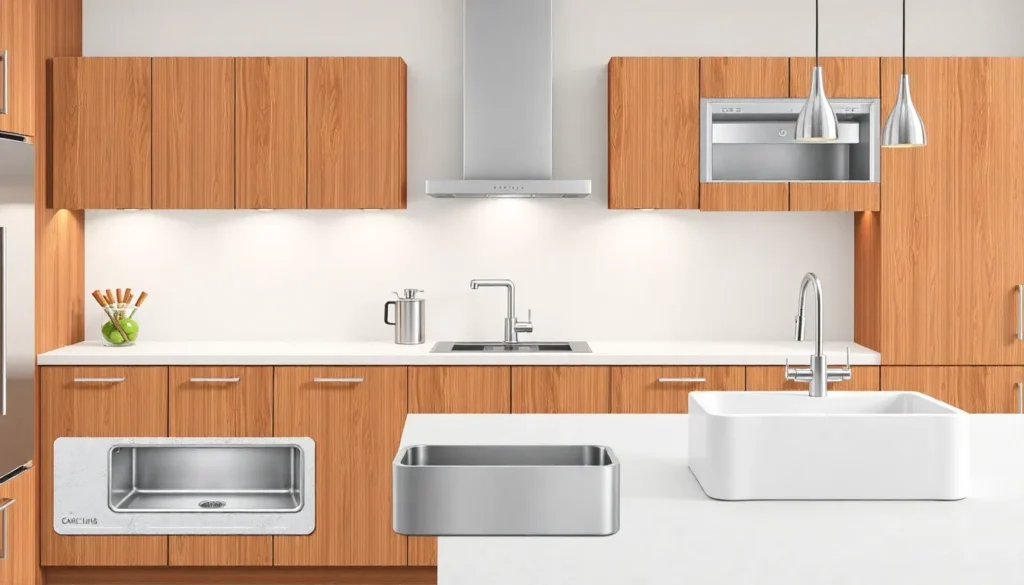
Various kitchen sink types exist, each offering unique features and aesthetics. Selecting the right sink can impact both functionality and design.
Undermount Sinks
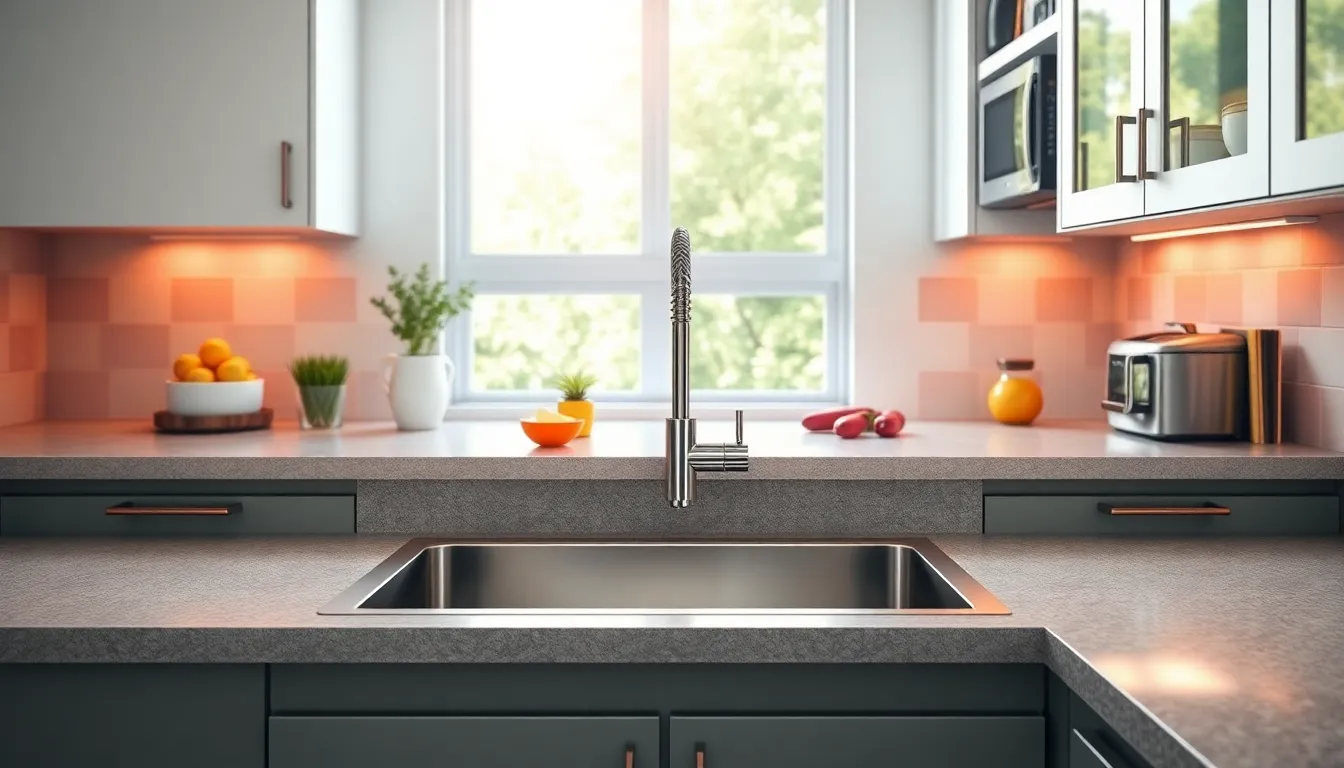
Undermount sinks attach beneath the countertop, providing a sleek, seamless look. Cleaning becomes easier since there are no edges trapping food debris. Granite and Quartz countertops commonly enhance the visual appeal of these sinks. Durability stands out as a key benefit, making them ideal for high-use kitchens. They may require professional installation, ensuring the proper fit and finish.
Top-Mount Sinks
Top-mount sinks sit on the countertop, with edges resting on its surface. This design allows for easier installation, suiting DIY enthusiasts well. A variety of materials, including stainless steel and porcelain, showcase different aesthetic options. Homeowners often select top-mount sinks for budget-friendly renovations. Resilience remains one of their major advantages, as they withstand everyday wear and tear effectively.
Farmhouse Sinks
Farmhouse sinks feature a deep, wide basin, ideal for accommodating large pots and pans. Their nostalgic appeal often brings a warm, inviting feel to kitchens. Typically made from materials like fireclay or cast iron, these sinks boast excellent durability. Homeowners appreciate the statement they make in any kitchen design. Space considerations come into play, as these sinks require adequate cabinetry for proper installation.
Double vs. Single Basin Sinks
Double basin sinks offer two separate compartments, enabling multitasking during meal prep and cleanup. Their design allows for efficient washing and rinsing, catering to busy kitchens. In contrast, single basin sinks provide a larger, unobstructed space for larger items. Homeowners often choose based on their cooking habits and kitchen size. Ultimately, both options present distinct advantages depending on users’ needs and preferences.
Materials Used in Kitchen Sink Design
Materials significantly influence both the aesthetic appeal and functionality of kitchen sinks. Each material offers distinct qualities suited for various kitchen designs and uses.
Stainless Steel
Stainless steel remains a top choice for many homeowners. Its durability withstands heavy use without showing wear. Cleaning is straightforward, as stainless steel resists stains and scratches, maintaining a polished appearance. The sleek finish fits modern and traditional kitchens alike. Additionally, it pairs well with a wide range of faucet styles, enhancing overall design continuity.
Composite
Composite sinks combine materials like acrylic and resin, resulting in a robust option. These sinks resist stains and scratches while providing a seamless look. Available in various colors, they allow for customization to match any kitchen theme. Their lightweight nature simplifies installation. Homeowners appreciate the ability to achieve a high-end look without the exorbitant cost.
Porcelain
Porcelain sinks offer a classic appeal, often seen in farmhouse designs. They’re known for their glossy finish, which adds elegance to the kitchen. Resistant to chipping, these sinks maintain their beauty for years. Despite their vulnerability to staining, proper cleaning easily restores their shine. Homeowners enjoy the wide array of colors and styles available, enhancing overall kitchen aesthetics.
Cast Iron
Cast iron sinks feature a solid construction coated in porcelain enamel. This durable material can handle heavy pots and pans without damage. The enamel finish adds a vibrant gloss, retaining color over time. While these sinks are heavier, proper support during installation ensures stability. Homeowners often choose cast iron for its timeless look and robust performance, making it a staple in various kitchen designs.
Trends in Kitchen Sink Design
Current trends in kitchen sink design reflect a blend of functionality and aesthetics that meets modern homeowner needs.
Eco-Friendly Options
Sustainable materials are increasingly popular in kitchen sink design. Sinks made from recycled or composite materials present an eco-conscious choice while maintaining style. Bamboo sinks also offer a natural, renewable alternative. Energy-efficient models that conserve water appeal to environmentally aware consumers. Choosing eco-friendly options not only supports the planet but enhances the kitchen’s overall appeal.
Innovative Features
Today’s kitchen sinks incorporate advanced features that enhance usability. Built-in cutting boards, drying racks, and compost bins are common additions. Some sinks now include integrated soap dispensers and customizable depth options. Smart technology allows for touchless faucets, making cleanup easier and more hygienic. These innovations transform standard sinks into multifunctional workstations.
Color and Finish Choices
Diverse color palettes and finishes redefine kitchen sink aesthetics. Matte black, brushed nickel, and vibrant hues cater to various design tastes. Customizable finishes allow homeowners to match sinks with countertops and cabinetry seamlessly. Polished and textured options provide visual interest and unique character. Selecting a striking color or finish can become a focal point in the kitchen, elevating the entire space.
Choosing the right kitchen sink is essential for blending functionality with style. It can transform a kitchen into a practical and inviting space that meets the needs of any home chef. With a variety of materials and designs available, homeowners can find a sink that complements their kitchen’s aesthetic while enhancing efficiency.
From farmhouse sinks to sleek undermount options, each choice offers unique benefits. Incorporating modern features and eco-friendly materials not only elevates the kitchen’s appeal but also supports sustainable living. Ultimately, investing time in selecting the perfect sink will yield a rewarding return in both utility and visual impact, making it a vital component of kitchen design.