Table of Contents
ToggleSolar LED outdoor lighting has come a long way from the dim, flickering stake lights of a decade ago. Modern solar LEDs deliver real illumination, enough to line a walkway, highlight landscaping, or deter prowlers, without adding a cent to your electric bill or requiring you to trench conduit across your yard. If you’ve avoided solar because you remember those underwhelming early models, it’s time for a second look. Today’s units pack efficient monocrystalline panels, lithium-ion batteries, and LEDs that rival low-voltage wired systems in brightness and color quality.
Key Takeaways
- Modern solar LED outdoor lighting delivers real brightness without wiring, permits, or electrician fees—making it a practical alternative to grid-powered systems.
- Quality solar lights typically pay for themselves within 1–2 years, with lithium-ion batteries lasting 3–5 years and LEDs rated for 25,000–50,000 hours.
- Choose fixtures based on lumens (not watts): pathway lights need 15+ lumens, while security floods require 800–1,500 lumens for effective coverage.
- Panel placement is critical—aim for 4–6 hours of direct daily sun; even partial shade can reduce output by 40–60%, so south-facing locations perform best.
- Invest in quality solar outdoor lighting with monocrystalline panels, stainless steel housings, and IP65+ ratings to avoid brittle plastic and premature failure.
- Proper installation includes cleaning panels before use, allowing full battery charge before first use, and testing motion sensors at dusk to verify coverage.
Why Solar LED Outdoor Lighting Is the Smart Choice for Your Home
Zero wiring is the headline benefit. No transformer, no low-voltage cable buried in conduit or stapled along fence rails, and no need to tap into your home’s electrical system. That means no permit headaches in most jurisdictions and no electrician call-out fee. You plant the stake or mount the fixture, and you’re done.
Operating cost is effectively zero once installed. A quality solar LED fixture pays for itself within a year or two compared to wired equivalents running on grid power, especially if you’re lighting a long driveway or perimeter. Lithium batteries in modern units typically last 3–5 years before replacement, and the LEDs themselves are rated for 25,000–50,000 hours.
Flexibility is another win. Want to add a row of lights along a new flower bed? Move a spotlight when you replant a tree? Solar fixtures go where the sun hits, no circuit planning required. This makes them ideal for renters, seasonal setups, or phased landscape projects where you’re still dialing in the design.
Solar also shines, literally, during power outages. While your wired landscape lighting goes dark, solar units keep running on stored battery charge. For security and safety lighting, that’s a real advantage.
The trade-off: performance depends on sunlight. If your yard is heavily shaded by mature trees or your region sees weeks of overcast winter weather, solar output drops. Panels need 4–6 hours of direct sun daily to fully charge most fixtures. Partial shade, dirt buildup, or snow cover all cut efficiency. It’s physics, not a product flaw.
Types of Solar LED Outdoor Lights and Where to Use Them
Pathway and Landscape Solar Lights
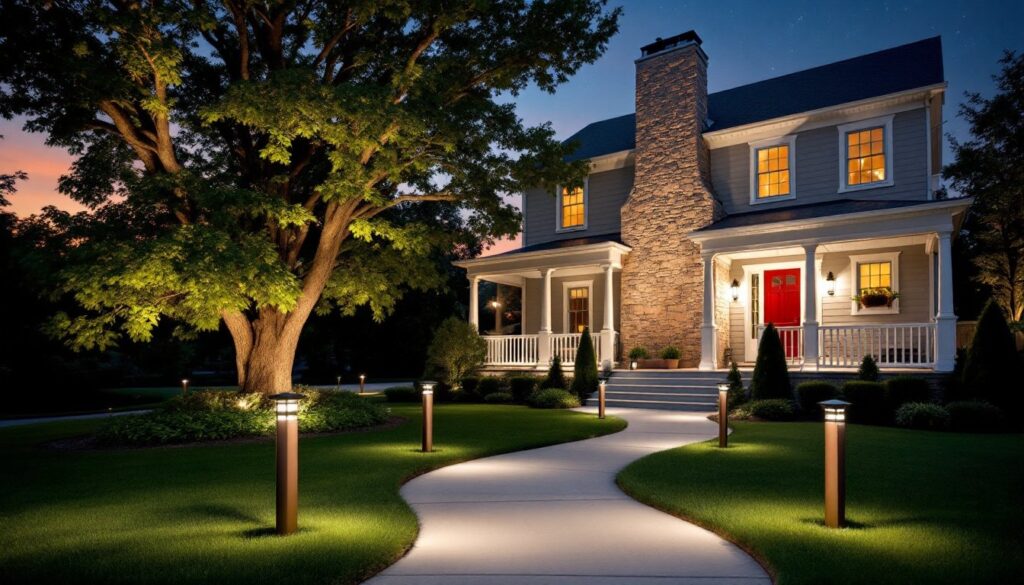
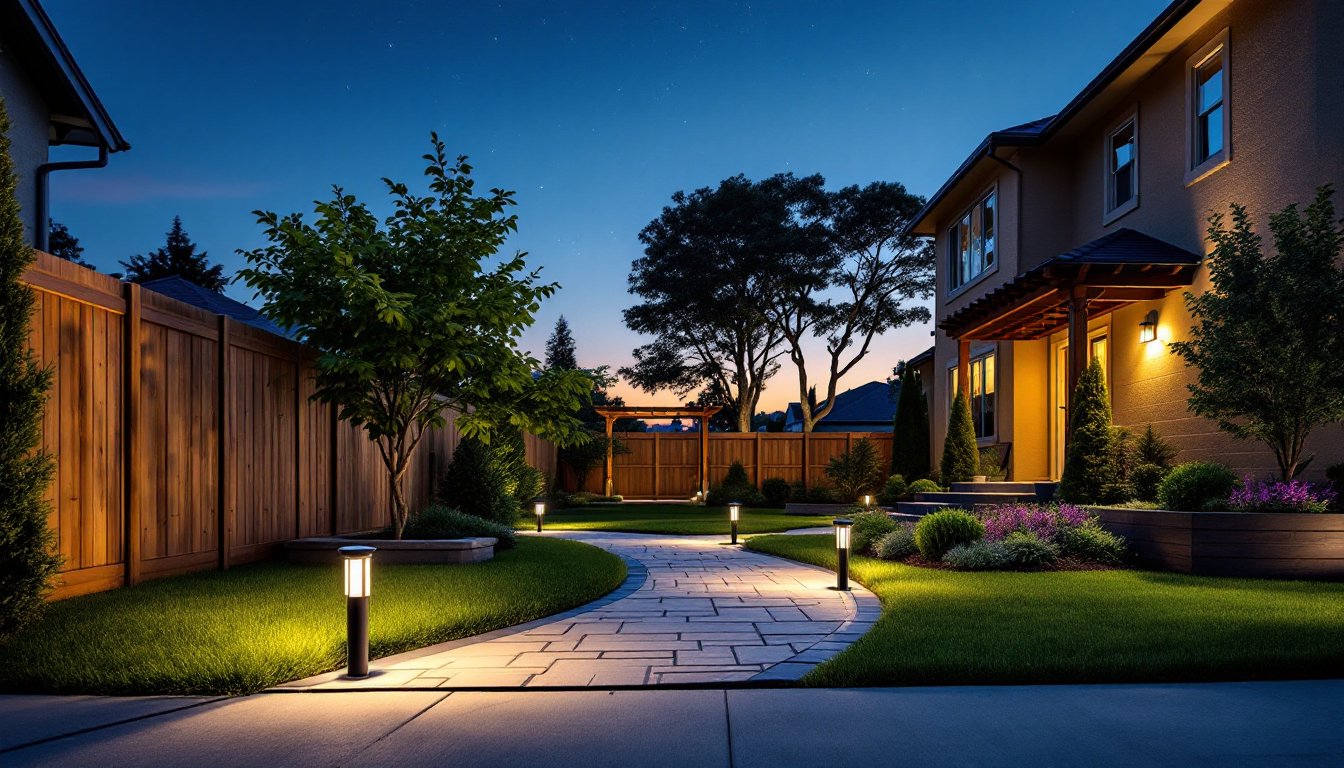
Stake lights are the workhorse of solar landscape lighting. You’ll find them in two main styles: low-profile path markers (usually 10–15 lumens per fixture) and taller accent lights (25–50 lumens). Low-profile units work well for edging walkways, driveways, or garden beds where you want subtle guidance without glare. Taller models can uplight shrubs, ornamental grasses, or architectural features.
Look for fixtures with adjustable heads if you’re lighting uneven terrain or want to angle the beam. Stainless steel or heavy-duty ABS plastic housings hold up better than thin polymer shells, which crack in freeze-thaw cycles. Expect to space path lights every 6–8 feet for continuous illumination, closer if you’re working with lower-lumen units.
String lights and decorative lanterns add ambiance to patios, pergolas, and fences. These typically run 1–2 watts per bulb and aren’t bright enough for task lighting, but they’re perfect for entertaining spaces. Check the total string length and battery capacity, longer runs need bigger panels and batteries to maintain runtime through the night.
Spotlights and floodlights deliver focused beams (15–30° spread) or wide washes (90–120°) for trees, facades, or yard features. Better models hit 200–800 lumens and include separate solar panels on 10–15-foot cables, letting you mount the panel in full sun while placing the light in shade. This flexibility is critical for under-eave or north-facing installations.
Security and Motion-Sensor Solar Lights
Motion-activated floodlights are the go-to for driveways, side yards, and entry points. Quality units produce 800–1,500 lumens on activation, enough to illuminate a two-car driveway or backyard deck. Most default to a dim “dusk-to-dawn” mode (10–20% brightness) and ramp to full power when the passive infrared (PIR) sensor detects movement within 20–30 feet.
Mount these 8–10 feet high for best sensor coverage and to avoid triggering from small animals. Adjust the sensitivity and timer settings during installation: many units default to overly sensitive factory settings that drain the battery by lighting up for every passing cat. A 30–60 second timer is usually sufficient.
Some security models include dual-head adjustable panels to cover wide areas like garage aprons or fence lines. If you’re comparing options, independent testing from sources like CNET’s solar light roundups can help separate marketing hype from real-world performance.
Always wear safety glasses and gloves when mounting overhead fixtures, especially if you’re drilling into masonry or working from a ladder. Use corrosion-resistant stainless screws and anchors rated for outdoor exposure.
How to Choose the Best Solar LED Outdoor Lights for Your Needs
Lumens, not watts, are the metric that matters. A pathway light might be fine at 15 lumens, but a security flood needs 800+. Don’t rely on vague claims like “super bright”, check the spec sheet. For reference, a standard 60-watt incandescent bulb produces about 800 lumens: a decent solar security light should hit that ballpark.
Battery type and capacity directly affect runtime and lifespan. Lithium-ion or LiFePO₄ (lithium iron phosphate) batteries outperform older NiMH or NiCd cells in every category: charge cycles, temperature tolerance, and energy density. Look for capacities of 2,000–5,000 mAh for pathway lights and 5,000–10,000 mAh for security floods. Higher capacity means longer runtime and better performance during short winter days.
Panel wattage and efficiency matter more than panel size. Monocrystalline panels (recognizable by their uniform black color) convert sunlight more efficiently than polycrystalline (bluish, speckled) panels of the same size. A 2–5 watt monocrystalline panel is typical for path lights: security floods may use 10–15 watts or separate panels.
Color temperature is measured in Kelvin (K). 2700–3000K (warm white) mimics incandescent bulbs and suits accent lighting for plantings or architectural features. 4000–5000K (cool or daylight white) provides crisper visibility for pathways and security applications. Some fixtures offer adjustable color temperature, handy if you’re not sure which you’ll prefer.
IP rating (Ingress Protection) tells you how well a fixture handles dust and water. IP65 is the baseline for outdoor use (dust-tight, resistant to water jets). IP67 is better for ground-level lights that might sit in puddles or snow. Anything below IP65 will fail within a season if exposed to weather.
Build quality is where you get what you pay for. Thin plastic housings turn brittle and crack after a year of UV exposure and freeze-thaw. Die-cast aluminum, stainless steel, and impact-resistant polycarbonate lenses last. Check reviews, preferably from independent testers at sites like Tom’s Guide, for long-term durability feedback, not just out-of-box impressions.
If you’re integrating solar lights into a broader smart home setup, some models now offer wireless connectivity for scheduling and remote control. Digital Trends regularly covers new smart outdoor lighting options as they hit the market.
Installation Tips and Best Practices for Maximum Performance
Site the panel for maximum sun exposure. South-facing locations (in the Northern Hemisphere) get the most direct light year-round. Even a few hours of shade cuts charge capacity significantly, dappled shade from a tree can reduce output by 40–60%. Use a sun path app or just observe your yard at different times of day before committing to a location.
Clean the panel surface before installation and every few months thereafter. Dust, pollen, bird droppings, and leaf debris all block light. A damp microfiber cloth is usually enough: avoid abrasive cleaners that scratch the panel coating.
Let batteries fully charge before first use. Most manufacturers recommend placing the fixture in direct sun for 2–3 full days with the light switched off to condition the battery. Skipping this step often leads to “DOA” complaints that are really just undercharged cells.
Angle adjustable panels toward the sun, not straight up. In summer, a steeper angle (closer to vertical) works: in winter, tilt toward the lower sun angle. Some units include a tilt bracket: if yours doesn’t and you’re mounting on a post or wall, use shims or adjustable mounts to dial it in.
Bury cable runs for separate-panel fixtures if they cross walkways or lawn areas. While these cables are low-voltage and safe, a surface-laid wire is a trip hazard and gets damaged by mowers and trimmers. Use a flat spade to cut a shallow slit, tuck the wire, and press the sod back. No conduit needed for low-voltage DC lines unless local code says otherwise.
Space fixtures to avoid light pollution and glare. Overlapping pools of light waste battery power and create harsh shadows. Path lights should define edges, not floodlight them. Security lights should illuminate entry points and high-traffic zones, not the entire yard.
Test motion sensors at dusk after installation. Walk the coverage area from different angles to verify the sensor range and adjust sensitivity. Many PIR sensors have a detection “cone” that’s narrower than you’d expect, positioning the fixture too high or angled wrong leaves dead zones.
Seasonal maintenance is minimal but necessary. In fall, clear leaves and debris from around ground-level fixtures. In winter, brush snow off panels after storms (even an inch of snow blocks nearly all light). In spring, check battery performance, if runtime has dropped noticeably, the cells may need replacement.
Permit requirements for outdoor lighting are rare, but check local code if you’re installing high-lumen floods near property lines or in a historic district. HOA rules sometimes restrict fixture style, height, or color temperature. Better to ask first than reinstall later.
Conclusion
Solar LED outdoor lighting has evolved into a legitimate alternative to wired systems for most residential applications. Modern panels, batteries, and LEDs deliver reliable performance without the complexity and cost of running circuits across your property. Match the fixture type to the job, path lights for walkways, motion floods for security, adjustable spotlights for features, and site the panels where they’ll get real sun. Skip the bargain-bin units with vague specs and flimsy housings: quality fixtures pay back their modest premium in durability and actual light output. With thoughtful placement and basic maintenance, solar LEDs will keep your landscape lit for years.