Table of Contents
ToggleVintage copper outdoor lighting brings warmth, character, and architectural interest to any home exterior. Unlike generic fixtures that blend into the background, copper develops a natural patina over time, shifting from bright penny tones to rich bronze and eventually soft verdigris green, creating a living finish that tells a story. Whether someone’s renovating a Craftsman bungalow, adding period-appropriate details to a Colonial, or simply seeking durable fixtures with authentic charm, copper delivers both form and function. This guide walks through selecting, installing, and maintaining vintage copper lighting to maximize curb appeal and longevity.
Key Takeaways
- Vintage copper outdoor lighting develops a protective patina over time, shifting from bright penny tones to rich bronze and verdigris green, making it more durable than aluminum or steel in coastal and humid environments.
- Solid copper fixtures cost 3–5 times more than copper-plated alternatives but last indefinitely, while plated versions may expose base metal within 5–10 years in harsh climates.
- Proper fixture scale matters: fixture height should be one-quarter to one-third the height of the door it illuminates, and mounting at least 7 feet above floor level prevents head strikes.
- Vintage copper lighting works across all architectural styles—from Arts and Crafts lanterns to Colonial post lamps to modern farmhouse barn lights—offering authentic warmth that contemporary finishes struggle to replicate.
- Maintenance depends on your preferred finish: preserve bright copper with monthly vinegar-water wipes and clear lacquer, or let nature create patina by rinsing fixtures annually with a garden hose.
- Use 2700K warm white LED bulbs for vintage copper fixtures to mimic incandescent glow, and always verify wet-location ratings for fixtures exposed to direct rain or irrigation spray.
Why Vintage Copper Outdoor Lighting Never Goes Out of Style
Copper’s enduring appeal stems from its unique combination of durability, aesthetics, and natural aging process. Unlike aluminum or steel fixtures that corrode, solid copper develops a protective oxidized layer that actually shields the metal beneath from further degradation. This makes it ideal for coastal environments, high-humidity regions, or anywhere moisture and salt air would quickly damage lesser materials.
The patina evolution is a major draw. New copper gleams bright and reflective, but within months, it darkens to a warm chocolate brown. Over several years, exposure to the elements produces the signature blue-green verdigris seen on historic buildings and monuments. Homeowners can accelerate or halt this process with specific treatments, more on that in the maintenance section.
From an architectural standpoint, copper complements nearly every home style. Arts and Crafts homes pair beautifully with hammered copper lanterns featuring mica panels. Colonial and Federal-style homes benefit from simple, clean-lined copper post lamps. Even modern farmhouse exteriors gain authenticity with copper barn lights or gooseneck fixtures. The material reads as high-quality without being flashy, and vintage copper lanterns create a warm, nostalgic glow that modern finishes struggle to replicate.
Copper also offers excellent thermal conductivity, meaning fixtures dissipate heat efficiently, a practical advantage when using higher-wattage incandescent or halogen bulbs in enclosed housings. LED retrofits work equally well and extend fixture life by reducing internal heat buildup.
Types of Vintage Copper Outdoor Lighting Fixtures
Wall Sconces and Lanterns
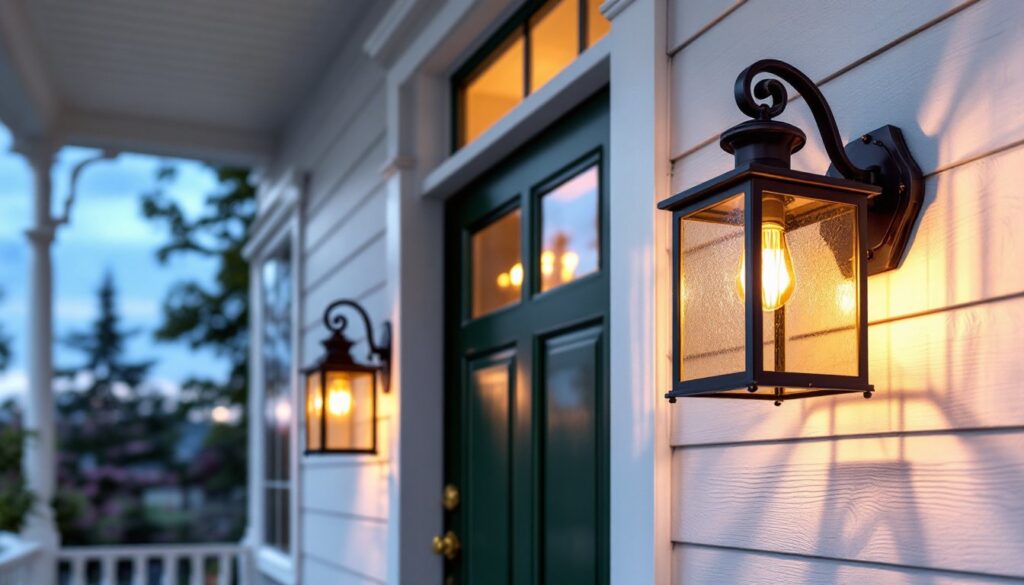
Wall-mounted fixtures are the workhorses of outdoor lighting, flanking entry doors, illuminating garage entrances, or defining pathways along a home’s facade. Vintage copper sconces range from minimalist Arts and Crafts designs with clean geometric lines to ornate Victorian reproductions featuring scrollwork and beveled glass.
Key considerations:
- Backplate size and shape: Measure the mounting surface. A backplate that’s too small looks lost on a wide garage door: oversized fixtures overwhelm a narrow side entrance.
- Projection depth: Sconces extend 6–14 inches from the wall. Deeper fixtures provide more downlight but may interfere with foot traffic on narrow walkways.
- Glass type: Clear seeded glass mimics antique imperfections and maximizes light output. Frosted or amber glass softens glare but reduces brightness by 15–25%.
- Electrical box compatibility: Most vintage-style fixtures mount to a standard 4-inch round or octagonal junction box. Verify the fixture’s mounting bracket matches the box type before purchasing.
For a cohesive look, designers often recommend matching the finish of door hardware, house numbers, and mailboxes to the lighting fixtures’ eventual patina stage. If the goal is to maintain bright copper, that means polished brass or bronze accents. For aged verdigris, oil-rubbed bronze or black hardware provides better visual harmony.
Hanging Pendants and Chandeliers
Covered porches, pergolas, and entryway overhangs gain instant character with hanging copper pendants or multi-arm chandeliers. These fixtures require more planning than wall sconces due to mounting height, chain length, and clearance requirements.
Installation notes:
- Minimum clearance: Hang fixtures at least 7 feet above finished floor level to prevent head strikes. On porches with ceiling fans, maintain 30 inches of separation between blades and fixture perimeter.
- Chain vs. rigid downrod: Chain allows easy length adjustment and suits period aesthetics. Rigid downrods provide cleaner lines for modern applications and perform better in high-wind areas.
- Ceiling box rating: Hanging fixtures require a fan-rated or heavy-duty electrical box rated for the fixture’s weight. Standard “new work” plastic boxes aren’t sufficient for most copper chandeliers, which can weigh 15–40 pounds. Use a metal pancake box screwed directly into a ceiling joist or a retrofit fan brace for between-joist installations.
Many vintage-inspired outdoor lighting fixtures incorporate candelabra-base bulbs. These require either flame-tip LEDs (3–5 watts, 300–400 lumens each) for ambiance or higher-output bulbs (60-watt equivalent) for task lighting.
How to Choose the Right Vintage Copper Fixtures for Your Exterior
Matching fixtures to architecture and function requires balancing aesthetic preferences with practical lighting needs.
Scale and proportion matter. A general rule: fixture height should be roughly one-quarter to one-third the height of the door or opening it illuminates. For an 8-foot-tall entry door, look for sconces 20–30 inches tall. Smaller doors and side entrances take 12–18-inch fixtures.
Light output requirements depend on placement and purpose:
- Entry doors and steps: 600–1,200 lumens total (split between two fixtures) provides safe navigation and face recognition at night.
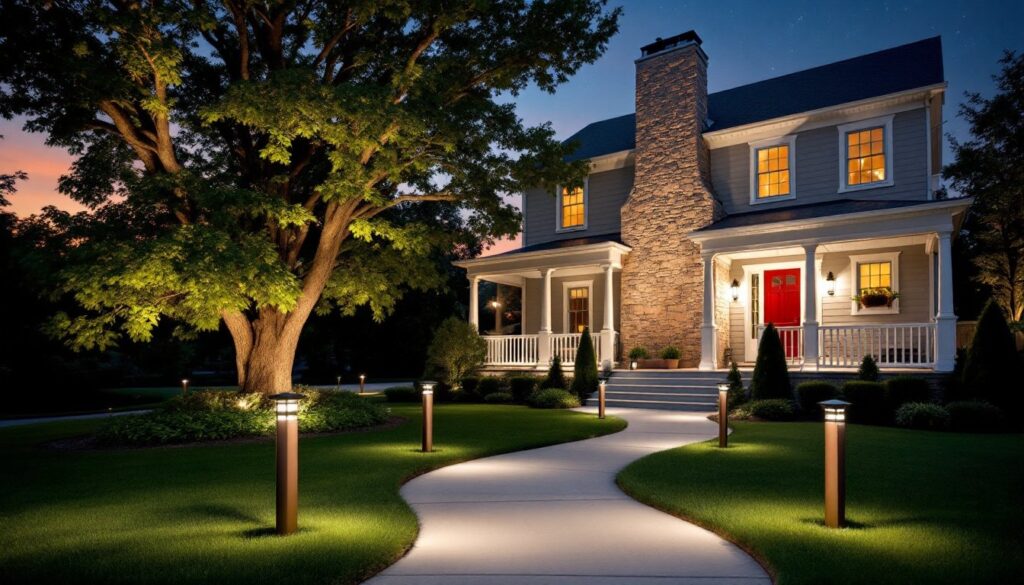
- Pathway and accent lighting: 100–300 lumens per fixture creates ambiance without glare.
- Security and task areas: 1,500+ lumens for driveways, garages, or workspaces.
Most vintage fixtures weren’t designed for LED bulbs, but retrofitting is straightforward. The challenge lies in color temperature, 2700K warm white LEDs most closely mimic incandescent glow, while 3000K starts to look sterile in copper housings. Avoid anything above 3000K unless the goal is clinical brightness.
Solid copper vs. copper-plated fixtures differ significantly in longevity and price. Solid copper costs 3–5 times more but lasts indefinitely. Plated fixtures (typically copper over steel or aluminum) develop patina unevenly and may expose the base metal within 5–10 years, especially in harsh climates. Check product specs for gauge thickness, 16-gauge or thicker copper indicates solid construction. Anything thinner is likely plated.
For curated vintage copper outdoor lights from various retailers, evaluate shipping costs and return policies alongside fixture specs. Copper is heavy, and freight charges can add 20–30% to the purchase price.
Finally, verify wet-location rating for any fixture exposed to direct rain or irrigation spray. UL-listed “damp location” fixtures work under covered eaves but will fail if water pools in the housing.
Installation and Maintenance Tips for Long-Lasting Beauty
Safety first: Outdoor electrical work requires cutting power at the breaker, not just flipping the wall switch. Use a non-contact voltage tester to confirm wiring is dead before touching anything. Most jurisdictions require a permit for new fixture installations or circuit extensions, though replacing an existing fixture on the same circuit typically doesn’t.
Basic installation steps:
- Mount the electrical box securely. For new installations in wood siding, locate a stud with a stud finder and screw a weather-resistant box directly into solid framing. Use caulk around the box perimeter to seal gaps.
- Run wire if needed. 14/2 or 12/2 NM-B (Romex) works for interior walls: UF-B cable is required for underground or exterior runs. Follow NEC spacing requirements for staples and supports.
- Connect fixture wiring. Match black (hot) to black, white (neutral) to white, and bare copper (ground) to the green screw or bare wire. Use waterproof wire nuts rated for outdoor use, standard twist-on connectors don’t provide adequate moisture protection.
- Seal and test. Apply a bead of silicone caulk where the backplate meets the siding. Restore power and verify operation before final tightening.
Tool checklist:
- Non-contact voltage tester
- Wire strippers (14–12 AWG)
- Screwdriver set (flathead and Phillips)
- Drill with masonry or wood bits (depending on substrate)
- Caulk gun and exterior-grade silicone
- Ladder or scaffold rated for user weight plus tools
Wear safety glasses whenever drilling overhead or working with wire ends, copper shards and metal filings can cause serious eye injuries.
Maintenance varies based on desired patina:
- To preserve bright copper: Wipe fixtures monthly with a soft cloth dampened in a 1:1 solution of white vinegar and water, then apply Renaissance Wax or a clear lacquer designed for outdoor metal. Reapply every 6–12 months.
- To accelerate patina: Spray new copper with a 1:1 mix of vinegar and salt water, let sit for 2–4 hours, then rinse. Repeat weekly until the desired color develops. For faster verdigris, use commercial patina solutions containing ammonium chloride.
- To maintain existing patina: Let nature do the work. Rinse fixtures annually with a garden hose to remove dirt and pollen. Avoid abrasive cleaners or scrubbing, which strip the protective oxide layer.
Bulb replacement: Always let fixtures cool for 10–15 minutes after turning them off. Hot copper transfers heat rapidly and can cause burns. For hard-to-reach pendants, use a bulb changer pole rather than overreaching from a ladder.
Conclusion
Vintage copper outdoor lighting combines durability, timeless aesthetics, and low-maintenance performance, qualities that justify the higher upfront cost for homeowners committed to long-term curb appeal. Proper fixture selection, code-compliant installation, and minimal upkeep ensure these pieces enhance a home’s exterior for decades. Whether preserving the bright penny finish or embracing the evolving patina, copper fixtures remain one of the few exterior upgrades that genuinely improve with age.