Table of Contents
ToggleOutdoor lighting separates a functional yard from one you’ll actually use after sunset. While big-box stores stock plenty of solar stakes and string lights, professional-grade fixtures deliver reliability, control, and longevity that consumer products can’t match. WAC Lighting has built a reputation in architectural and commercial lighting, their landscape line brings that same engineering to residential outdoor spaces. If you’re tired of replacing corroded fixtures or dealing with inconsistent light output, understanding what sets WAC apart matters before you dig trenches or pull wire.
Key Takeaways
- WAC landscape lighting uses marine-grade materials, sealed optics, and thermal management systems that deliver 50,000+ hours of durability—roughly 15-20 years of residential use—far outlasting mass-market alternatives.
- Professional WAC fixtures offer dimming compatibility with home automation systems and multi-year warranties, enabling smart integration and reliable performance in challenging outdoor conditions where plastic-housed lights fail.
- Proper planning requires calculating transformer wattage (multiply total fixture load by 1.2), using appropriate wire gauge (12 AWG under 100 feet, 10 AWG beyond), and testing placement during evening hours to eliminate glare and balance brightness.
- Architectural optical engineering in WAC landscape lighting controls beam spread and minimizes glare, reducing the number of fixtures needed while avoiding the over-lit stadium effect common in poorly designed installations.
- Color temperature selection—3000K for warm ambiance, 4000K for accurate color rendering—impacts mood and plant appearance and cannot be changed after installation, so choose before ordering.
- Seasonal maintenance of WAC landscape lighting—including lens cleaning, connection inspection, and gasket replacement—takes minimal effort but prevents the degradation that undermines professional installations over time.
What Is WAC Landscape Lighting?
WAC Lighting manufactures architectural-grade lighting fixtures for both commercial and residential applications. Their landscape lighting division focuses on low-voltage LED systems designed for durability in outdoor conditions. Unlike mass-market options, WAC outdoor lighting uses marine-grade materials, sealed optics, and thermal management systems borrowed from their indoor commercial products.
Most WAC landscape fixtures operate on 12-volt or 24-volt systems, requiring a transformer to step down standard 120-volt household current. This approach reduces shock hazards and simplifies DIY installation compared to line-voltage systems. The fixtures use integrated or replaceable LED modules, typically rated for 50,000+ hours of operation, roughly 15-20 years under typical residential use patterns.
WAC designs these products for lighting designers and architects, so you’ll find photometric data, beam angle specifications, and lumen output clearly documented. That technical transparency helps during planning stages when you need to calculate fixture spacing or ensure adequate illumination levels for specific tasks like pathway navigation or tree uplighting.
Why Choose WAC for Your Outdoor Lighting Needs
Build quality matters outdoors. WAC fixtures use powder-coated die-cast aluminum or copper housings with stainless steel hardware. Gaskets seal critical junctions against moisture intrusion, important because condensation inside a fixture degrades reflectors and LED drivers. Cheaper alternatives often use plastic housings that crack during freeze-thaw cycles or corrode in coastal or high-humidity climates.
The optical engineering sets these fixtures apart. WAC designs reflectors and lenses specific to each fixture type, controlling beam spread and minimizing glare. A well-designed uplight illuminates a tree canopy without creating hot spots or blinding neighbors. Path lights with shielded optics direct light downward instead of horizontally into eyes. This level of control reduces the number of fixtures needed and avoids the over-lit, stadium effect common in poorly planned installations.
WAC’s dimming compatibility provides flexibility most landscape lighting lacks. Their LED drivers work with standard low-voltage dimmers and many home automation systems. Modern smart home technology often integrates outdoor lighting into scenes, dimming pathway lights at midnight or brightening entry areas when motion is detected. This integration requires fixtures designed for electronic dimming rather than simple on-off switching.
Warranty coverage reflects manufacturer confidence. WAC offers multi-year warranties covering both fixtures and LED modules, with specific terms varying by product line. This matters for fixtures buried in planting beds or mounted 20 feet up a tree, replacements involve labor, not just parts.
Popular WAC Landscape Lighting Fixtures and Styles
Path Lights and Bollards
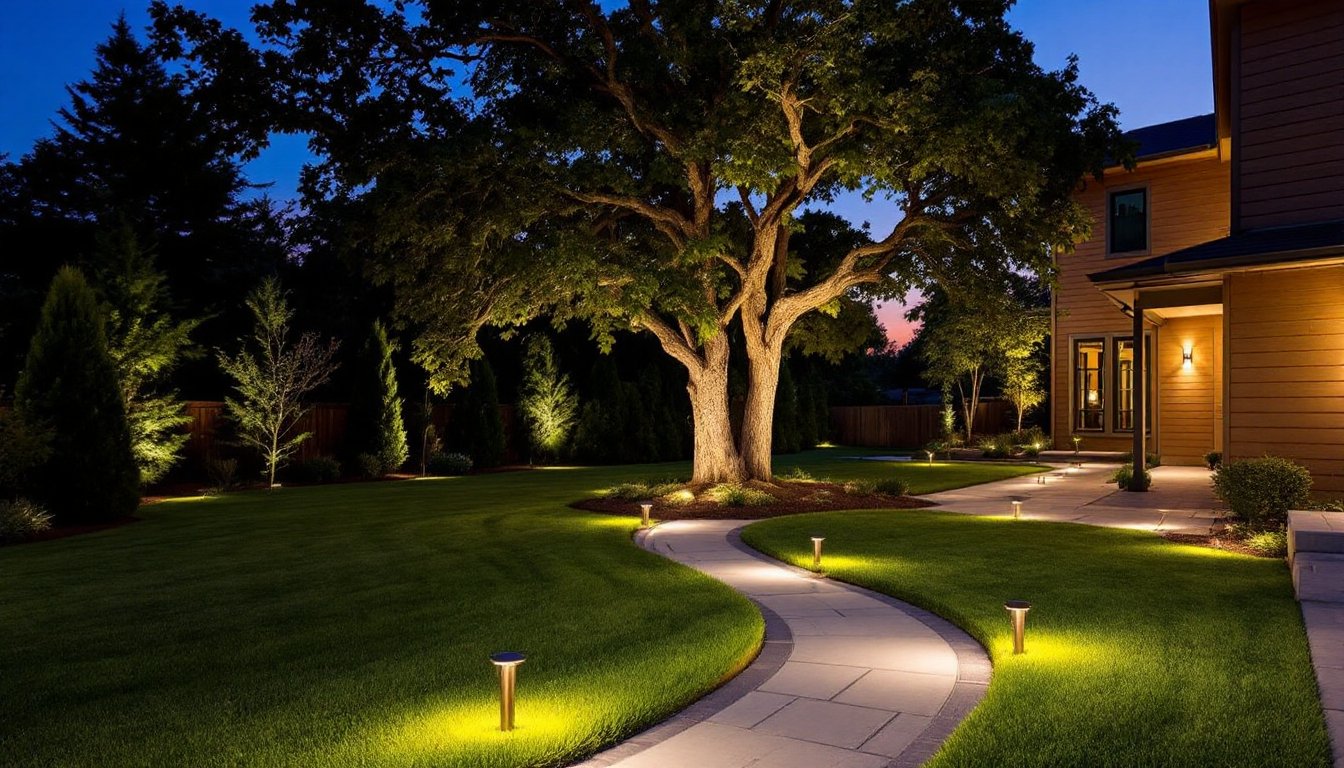
Path lights serve dual purposes: marking walkways for safe navigation and creating visual rhythm through repetition. WAC’s path lights range from compact 3-4 inch diameter heads on short stakes to substantial bollard-style fixtures reaching 24-30 inches tall. The compact models suit narrow pathways where larger fixtures would feel intrusive: bollards work better along driveways or wide garden paths where their presence reinforces boundaries.
Key specification: lumen output and beam angle. A typical WAC path light delivers 50-150 lumens with a 40-60 degree spread. Spacing fixtures 8-12 feet apart provides even illumination without creating bright pools separated by dark gaps. Fixtures with integrated shields or louvered heads prevent light from shining horizontally into windows or outdoor seating areas.
Installation depth matters. Stake-mounted fixtures need 6-8 inches of insertion into stable soil. In loose or sandy conditions, pour a small concrete collar around the stake to prevent shifting. Bollards typically require burial of the base and may need a 4-6 inch diameter post hole filled with gravel for drainage. Always call 811 before digging to locate buried utilities.
Spotlights and Uplights
Spotlights and uplights create drama through directional emphasis. WAC manufactures adjustable fixtures with 20-60 degree beam spreads and fixed-position models for permanent installations. Narrow beams (15-25 degrees) work for tall trees or architectural features where you need focused light traveling 20+ feet. Wide floods (40-60 degrees) suit shorter plantings, walls, or broad surfaces.
Many outdoor lighting designs layer different beam angles to create depth. A narrow uplight might emphasize a tree trunk while a wider flood washes across the canopy. WAC’s adjustable fixtures use knuckle mounts or trunnion brackets that lock into position after aiming, important because vibration from lawn equipment or settling can shift poorly secured lights over time.
Burial-rated fixtures mount at or below grade, hiding the fixture body in planting beds while the lens remains visible. These require careful attention to drainage, even sealed fixtures fail if submerged in standing water. Create a 2-3 inch gravel bed beneath burial fixtures and slope surrounding soil away from the lens. Some WAC models include drainage ports that must remain unobstructed.
Color temperature selection impacts mood and plant appearance. 3000K (warm white) complements most architectural materials and broadleaf plants. 2700K creates a warmer, more intimate feel but can make some greens appear yellowish. 4000K (neutral white) renders colors more accurately but feels clinical in residential settings. WAC offers most fixtures in multiple color temperatures, choose before ordering, as LED color can’t be changed after installation.
Planning Your WAC Landscape Lighting Installation
Start with a site plan drawn to scale. Mark existing structures, mature plants, pathways, and areas you use after dark. Identify three lighting goals: safety (stairs, grade changes, pathway edges), security (entry points, dark corners), and aesthetics (focal plants, architectural features). Safety fixtures are non-negotiable: aesthetic lighting can be phased over time.
Transformer sizing determines system capacity. Calculate total wattage by adding all fixture loads, then multiply by 1.2 to account for voltage drop and future expansion. A 300-watt transformer comfortably handles 250 watts of connected fixtures. WAC fixtures typically draw 3-10 watts each, so a mid-sized residential system with 20-30 fixtures needs a 200-300 watt transformer. Locate the transformer near the power source and central to the lighting zones to minimize wire runs.
Wire gauge matters more than most DIYers realize. 12 AWG landscape wire is standard for runs under 100 feet: longer distances need 10 AWG to prevent voltage drop that dims fixtures farthest from the transformer. Bury wire 6-12 inches deep in conduit or direct-burial rated cable. Many codes require conduit under driveways or anywhere subject to digging. Check local requirements, some jurisdictions classify even low-voltage landscape lighting as electrical work requiring permits.
Layout fixtures before digging. Use stakes and temporary connections to test placement during evening hours. What looks right on paper often needs adjustment when you see actual light distribution. Move fixtures until you eliminate glare, balance brightness between zones, and avoid lighting areas better left dark (bedroom windows, neighbors’ yards).
Photocell or timer control automates operation. Basic timers turn lights on/off at set times but require seasonal adjustment as sunset shifts. Photocells sense ambient light and activate automatically, more convenient but sensitive to placement. Install photocells where they receive natural light, not artificial light from the fixtures they control. Smart home systems offer the most flexibility, allowing scheduling, dimming, and zoning through apps or voice control, though they require compatible transformers and network connectivity.
Maintenance Tips for Long-Lasting Performance
Clean lenses twice yearly. Dirt, pollen, and mineral deposits from irrigation reduce light output by 30-50% over a season. Use a soft cloth and mild detergent, abrasive cleaners scratch polycarbonate lenses. Inspect gaskets during cleaning and replace any that show cracking or compression set.
Check connections annually. Corrosion at wire splices causes voltage drop and fixture failure. WAC systems use silicone-filled wire connectors that seal out moisture, verify these remain intact and haven’t been disturbed by landscape work. Re-crimp or replace any suspect connections. Oxidized copper wire should be cut back to clean metal and re-stripped.
Trim plant growth around fixtures. Overgrown shrubs block light output and trap moisture against housings, accelerating corrosion. Plants grown since installation may now obscure intended lighting effects. Repositioning a fixture takes less time than fighting seasonal growth.
Monitor transformer operation. Modern LED systems run cool, but transformers generate heat during operation. Ensure ventilation openings remain clear of debris and vegetation. Listen for buzzing or humming, normal transformers operate nearly silently. Audible noise suggests failing components or overloading.
Document your system. Photograph fixture locations before mulch or plant growth obscures them. Keep a simple map showing wire routes and connection points. When a fixture fails or you need to expand the system, accurate records save hours of exploratory digging. Note fixture models and color temperatures for consistent replacement.
WAC’s sealed construction minimizes maintenance compared to consumer-grade fixtures, but no outdoor product is maintenance-free. An hour of seasonal attention prevents the slow degradation that turns a professional installation into a collection of dim, mismatched lights within a few years.