Table of Contents
ToggleA well-lit front yard doesn’t just help guests find the doorbell, it completely changes how a home looks after dark. Landscape lighting adds security, highlights architectural details, and makes evening curb appeal as strong as midday. The right setup balances function with atmosphere, guiding visitors along pathways while showcasing trees, plantings, and key design features. With 2026 bringing smarter controls and more efficient LED options, homeowners have more flexibility than ever to design a lighting scheme that fits their style and budget without running up the electric bill.
Key Takeaways
- Landscape lighting for the front of your house enhances security, prevents tripping hazards, and extends curb appeal beyond daylight hours while adding perceived home value.
- Pathway lighting should use low-voltage LED path lights spaced 6 to 8 feet apart, with warm white LEDs at 2700K to 3000K for a welcoming glow without harsh blue tinting.
- Architectural accent lighting techniques like uplighting, downlighting, and grazing add dimension to key features such as columns, stonework, and siding without over-illuminating.
- Entryway and porch lighting requires layered functionality with ceiling fixtures, flanking sconces at eye level, and step lights to prevent falls and guide visitors safely to the door.
- LED technology uses 75% less energy than incandescent bulbs and lasts up to 25,000 hours, making low-voltage or solar-powered systems cost-effective choices for modern landscape lighting.
- Smart lighting controls with motion sensors and photocells allow automated scheduling and motion-activated illumination, reducing energy costs while maintaining security and convenience.
Why Front Yard Landscape Lighting Matters
Front yard lighting serves three main purposes: safety, security, and aesthetics. Poorly lit walkways are tripping hazards, especially in winter or when steps are involved. Illuminating entries and pathways reduces liability and makes the home more accessible for everyone, including delivery drivers and evening guests.
From a security standpoint, dark corners around a home invite trouble. Motion-activated fixtures or consistent low-level lighting deters opportunistic theft and vandalism. Studies show that well-lit properties are passed over more often than dark ones.
Aesthetically, landscape lighting extends the visual appeal of a home beyond daylight hours. It creates depth, highlights textures, and draws the eye to focal points like mature trees, stone facades, or architectural trim. A thoughtfully designed lighting plan can add perceived value and make a home stand out in the neighborhood.
Before installing anything, homeowners should walk the front yard at dusk with a flashlight to identify dark spots, highlight features, and plan fixture placement. Sketching a rough layout helps avoid over- or under-lighting.
Pathway and Walkway Lighting Solutions
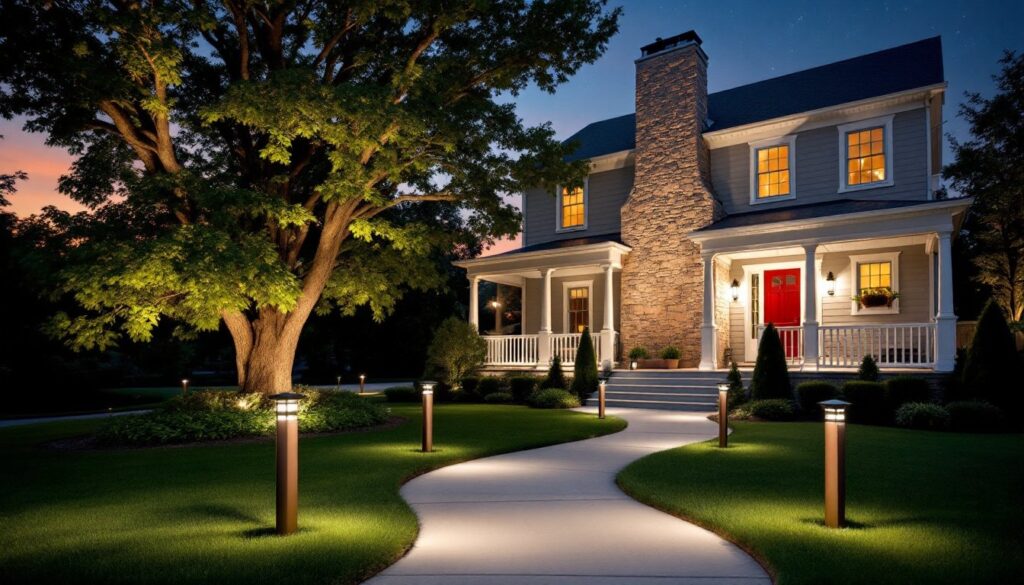
Pathway lighting guides foot traffic from the street or driveway to the front door. The most common approach uses low-voltage LED path lights spaced 6 to 8 feet apart along both sides of the walk. This spacing prevents harsh pools of light while maintaining even visibility.
Bollard lights (12 to 24 inches tall) work well for wider walkways or when a more contemporary look is desired. They’re sturdier than stake-mounted fixtures and stand up better to lawnmowers and snow removal. For a subtler effect, recessed in-ground lights (also called well lights) can be set flush with pavers or along the edge of a concrete path. These require a stable base and proper drainage to prevent water intrusion.
Material choice matters. Cast aluminum and powder-coated steel hold up to weather better than plastic. Look for fixtures rated IP65 or higher for moisture and dust resistance. Warm white LEDs (2700K to 3000K) create a welcoming glow without the harsh blue tint of cooler color temperatures.
For curved or irregular pathways, adjustable-head fixtures allow each light to be aimed precisely. Some homeowners prefer luxury lighting designs that incorporate architectural details into pathway fixtures for a cohesive look. Always bury low-voltage cable 6 inches deep and use direct-burial-rated wire to meet code and avoid future failures.
Architectural Accent Lighting Techniques
Accent lighting showcases a home’s best features, columns, stonework, trim, gables, or unique siding. The goal is to add dimension and drama without turning the house into a floodlit stadium.
Uplighting is the most popular technique. Bullet or spot fixtures are placed at ground level, angled upward to wash light across a facade. For brick or stone, a narrow beam (15 to 25 degrees) emphasizes texture. For smooth siding or stucco, a wider flood beam (40 to 60 degrees) provides even coverage. Position fixtures 2 to 4 feet from the wall to avoid hot spots and shadowing.
Downlighting (also called moonlighting) involves mounting fixtures in eaves or high on exterior walls to cast light downward, mimicking natural light. This works especially well near entries and porches. When discussing outdoor entry lighting, experts often recommend pairing downlights with sconces for a layered effect.
Grazing uses fixtures mounted close to a textured surface (within 6 to 12 inches) to exaggerate shadows and highlight materials like stacked stone or wood paneling. Silhouetting places a light behind an object (like a decorative trellis or architectural detail) to create a dark outline against a lit background.
Always check local electrical codes. Some jurisdictions require a licensed electrician for line-voltage (120V) exterior installations, while low-voltage (12V or 24V) systems are often DIY-friendly. Use GFCI-protected outlets for all outdoor lighting.
Tree and Garden Bed Illumination
Trees and plantings add natural beauty to a front yard, and proper lighting makes them stand out after dark. The technique depends on the size and structure of the plant.
For mature trees, use upward-facing well lights or bullet fixtures placed at the base of the trunk. A single 10-watt LED can light a tree up to 20 feet tall. For larger specimens, two or three fixtures spaced around the trunk create fuller coverage. Aim lights to graze the bark and highlight branching structure. Avoid placing fixtures so close that they scorch bark or interfere with root growth.
Ornamental shrubs and perennials in garden beds benefit from low-level wash lighting. Small flood fixtures tucked behind plantings cast soft light forward without glare. Use fixtures with adjustable heads to redirect light as plants grow or get pruned back. For seasonal color beds, consider movable stake lights that can be repositioned.
Moonlighting for trees involves mounting fixtures high in the canopy to cast dappled light downward through branches, simulating natural moonlight. This requires climbing and secure mounting, hire a professional if the tree is tall or access is tricky. The effect works best with trees that have interesting branching, like oaks or maples.
When planning garden lighting, avoid creating light pollution. Fixtures should be shielded or aimed to prevent upward light spill, which washes out stars and annoys neighbors. Many municipalities now have dark sky ordinances that restrict light trespass and glare.
Entryway and Porch Lighting Ideas
The front door is the focal point of any home’s exterior, and it deserves layered, functional lighting. Start with a porch ceiling fixture or flush mount for general illumination. Choose a fixture scaled to the door size, a 12- to 16-inch diameter works for standard single doors, while double doors or tall entries need larger fixtures.
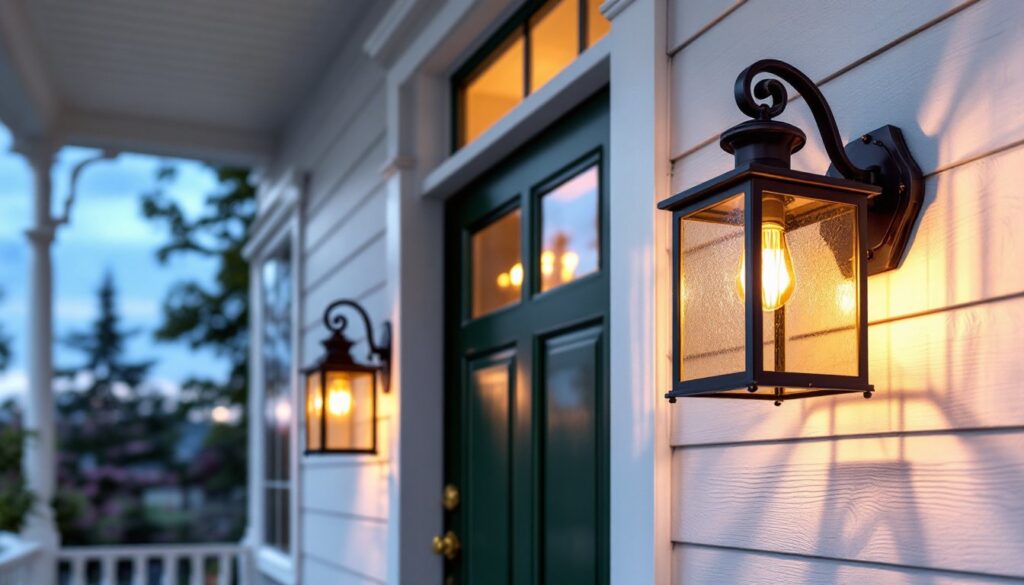
Sconces flanking the door add symmetry and fill in shadows. Mount them at eye level (roughly 66 inches from the porch floor) and space them so the light overlaps slightly at the door. For covered porches, sconces should be exterior-rated but don’t necessarily need full weatherproof housings. Exposed entries require wet-rated fixtures.
If the porch has steps, add step lights or small recessed fixtures in risers or along the edge of treads. This prevents trips and falls, especially critical for homes with elderly visitors or deliveries. LED tape lighting under railings or beneath the porch overhang creates a modern, subtle glow.
For a traditional look, lantern-style fixtures in black or bronze complement colonial or craftsman architecture. Contemporary homes pair well with geometric sconces and cube-style pendants. Homeowners interested in coordinating interior and exterior design often explore various styles of lighting to maintain visual consistency.
Porch lighting should be on a separate switch or timer from landscape lighting for flexibility. Consider a dimmer for evenings when full brightness isn’t needed. Install all porch fixtures on GFCI circuits per NEC Article 210.8.
Smart and Energy-Efficient Lighting Options
Modern landscape lighting leans heavily on LED technology for efficiency and longevity. LEDs use 75% less energy than incandescent bulbs and last up to 25,000 hours, reducing both electric bills and maintenance. When selecting fixtures, check the lumens output rather than wattage, 50 to 150 lumens is typical for path lights, while accent fixtures may go up to 400 lumens or more.
Low-voltage systems (12V or 24V) are the DIY-friendly standard. They require a transformer to step down household 120V power. Size the transformer with 20% overhead beyond the total wattage of connected fixtures to avoid overload. For example, 300 watts of lighting needs a 360-watt transformer. Place transformers in weatherproof enclosures near GFCI outlets.
Solar-powered fixtures have improved significantly but still work best as supplemental lighting rather than primary illumination. They’re ideal for areas without electrical access, like remote garden beds or the end of a long driveway. Look for models with monocrystalline solar panels and replaceable rechargeable batteries.
Smart lighting controls allow scheduling, dimming, and color tuning via smartphone apps or voice assistants. Systems like Philips Hue Outdoor, LIFX, or Kasa Smart integrate with existing smart home platforms. Homeowners exploring automation often research track lighting and other adaptable interior systems that share similar control features.
Motion sensors and photocells add convenience and save energy. Photocells turn lights on at dusk and off at dawn automatically. Motion sensors activate lights only when needed, ideal for side yards or driveways. Combining both creates a system that’s hands-off and efficient.
Always use fixtures and transformers rated for outdoor use. Check for UL or ETL listings to ensure safety standards are met. If installing line-voltage fixtures or running new circuits, hire a licensed electrician, DIY line-voltage work often voids homeowner’s insurance and violates local codes.
Conclusion
A thoughtful landscape lighting plan makes a front yard safer, more secure, and far more attractive after dark. By combining pathway lights, architectural accents, garden illumination, and smart controls, homeowners can create a cohesive design that works year-round. Start with the essentials, pathways and entries, then layer in accent lighting as budget allows. Test fixtures before final installation, and don’t be afraid to adjust placement once everything’s powered up. The result is curb appeal that lasts well past sunset.