Table of Contents
ToggleSmall dining rooms demand smarter lighting choices than their sprawling counterparts. The right fixtures can make a cramped 8×10 space feel airy and inviting, while poor lighting turns it into a cave where no one wants to linger. This isn’t about slapping up any old chandelier and calling it done, it’s about understanding how layered light sources, proper fixture sizing, and strategic placement work together to open up tight quarters. Whether you’re working with a galley-style eat-in kitchen or a dedicated dining nook, these eleven lighting strategies will help maximize both function and ambiance without overwhelming the room.
Key Takeaways
- Small dining room lighting ideas rely on layered lighting combining ambient, task, and accent sources to expand visual space and eliminate harsh shadows.
- Pendant lights are ideal for small dining rooms, requiring a single 12–18-inch fixture for tables under 48 inches wide and positioned 30–34 inches above the tabletop for optimal light distribution.
- Properly scaled chandeliers work in compact spaces when measured using the formula of room length plus width converted to inches, with mini-chandeliers offering elegant alternatives in 15–20-inch diameters.
- Wall sconces mounted at 60–66 inches above the floor add ambient lighting without occupying floor space, and pairing them with dimmers enables flexible ambiance control.
- Dimmable lighting systems—whether smart bulbs, dimmer switches, or track lighting—are essential for small dining rooms to transition between task lighting and intimate dinner atmospheres.
- Warm white bulbs at 2700K–3000K color temperature prevent small spaces from feeling cramped, while maintaining the recommended 30-inch clearance between hanging fixtures and the table.
Why Lighting Is Critical in Small Dining Rooms
In compact dining spaces, lighting does triple duty: it defines the zone, creates atmosphere, and visually expands the room. A single overhead fixture might meet code requirements, but it won’t give you the flexibility to shift from bright task lighting during game night to softer ambient glow for dinner parties.
Layered lighting is the goal here. That means combining ambient (general overhead), task (focused on the table), and accent (wall sconces, picture lights) sources. Small rooms benefit from this approach because it eliminates harsh shadows and flat, uninviting light that makes walls feel closer than they are.
Pay attention to color temperature as well. Warm white bulbs (2700K–3000K) make small spaces feel cozy without feeling cramped, while cool white (3500K+) can render a tight room sterile. Stick with LEDs rated for dimming if you want flexibility, not all LED bulbs play nicely with dimmer switches, so check compatibility before you buy.
Finally, consider the ceiling height. Standard 8-foot ceilings limit your options compared to 9- or 10-foot heights, particularly with pendant and chandelier drop lengths. Most building codes require a minimum of 30 inches of clearance between the bottom of a hanging fixture and the tabletop to avoid head-banging incidents and maintain proper light distribution.
Pendant Lights: The Space-Saving Overhead Solution
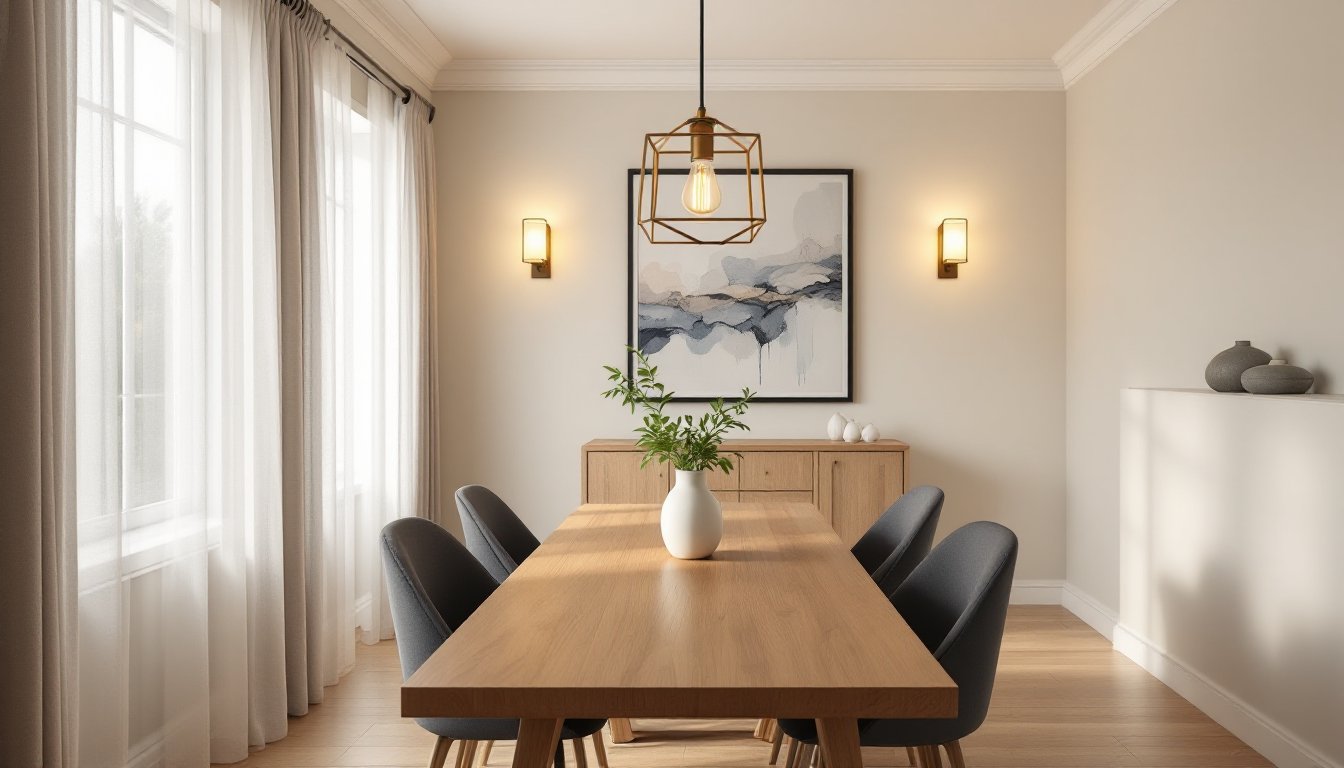
Pendant lights are the workhorse of small dining room lighting. They deliver focused light exactly where you need it, over the table, without eating up floor space or requiring a wide ceiling footprint.
For tables under 48 inches wide, a single 12- to 18-inch diameter pendant typically provides adequate coverage. Wider tables (60–72 inches) often look better with two or three smaller pendants spaced evenly. A good rule of thumb: leave roughly 30–36 inches between multiple pendants to avoid a cluttered look.
Hang the fixture so the bottom sits 30–34 inches above the tabletop. Any lower and you’re staring into a bulb during dinner: any higher and you lose the intimate pool of light that makes a dining space feel purposeful. Adjustable-height pendants with a pulley or adjustable cord give you room to tweak after installation.
Glass or open-frame pendants work well in small rooms because they don’t visually block sightlines across the space. Solid metal drum shades can feel heavy if the room’s already tight. If you’re installing pendants yourself, verify your electrical box is rated for the fixture weight, most standard plastic boxes max out around 50 pounds, and heavier fixtures require a ceiling fan-rated or metal support box.
Don’t forget the dimmer. Pendants over dining tables get used for everything from assignments to holiday meals, and fixed brightness rarely suits every occasion. Install a standard rotary or slide dimmer compatible with LED bulbs if that’s what you’re using. CFL bulbs generally don’t dim well and aren’t worth the hassle.
Chandeliers That Work in Compact Spaces
Chandeliers aren’t off-limits in small dining rooms, you just need to scale them correctly. A fixture that’s too large overwhelms the space and makes the room feel even smaller: too small, and it looks like an afterthought.
Measure your room’s length and width in feet, add those two numbers together, and convert to inches, that’s a reasonable maximum diameter for your chandelier. Example: a 10×12 room works with a fixture up to about 22 inches wide. Go smaller if the table itself is narrow or if the room has low ceilings.
Mini-chandeliers (sometimes called “chandelier pendants”) are a smart middle ground. These fixtures borrow the elegance of traditional chandeliers but scale down to 15–20 inches in diameter, making them ideal for breakfast nooks and compact dining zones. Many feature exposed bulbs, so choose filament-style LEDs if you want that vintage Edison look without the energy waste.
For rooms with 8-foot ceilings, look for flush-mount or semi-flush chandeliers that sit close to the ceiling rather than dangling on a long chain. These styles still offer the decorative appeal of a chandelier without sacrificing headroom. Verify the fixture’s overall height (including any decorative finial or canopy) won’t leave you with less than the recommended 30 inches of clearance above the table.
Installation is straightforward if you’re replacing an existing overhead fixture. Turn off the breaker, remove the old fixture, and connect the new chandelier’s wiring per the manufacturer’s instructions, typically black to black (hot), white to white (neutral), and green or bare copper to ground. If the chandelier is particularly heavy or if you’re moving the junction box location, that’s a job for a licensed electrician.
Wall Sconces for Layered Ambiance Without Floor Space
Wall sconces add ambient and accent lighting without claiming an inch of floor or table space, a huge win in small dining rooms. They’re also a practical way to create layered lighting effects that make a room feel larger and more dynamic.
Mount sconces at 60–66 inches above the finished floor (AFF) in most dining rooms. This height keeps them at eye level when standing and prevents glare when seated. If you’re flanking a buffet, sideboard, or artwork, adjust the height so the sconces frame the feature symmetrically.
Hardwired sconces require cutting into drywall and running 14/2 or 12/2 Romex from a junction box or switch, so this becomes a more involved project if there’s no existing electrical box in the wall. Plug-in sconces are an easier retrofit, modern designs with fabric-wrapped cords or decorative covers look intentional rather than makeshift. According to Apartment Therapy, plug-in sconces are increasingly popular in rentals and quick-refresh projects where hardwiring isn’t feasible.
Pair sconces with a dimmer for the best effect. Lutron and Leviton both make reliable dimmer switches compatible with LED bulbs: just confirm the switch’s wattage capacity matches your total fixture load. If you’re installing multiple sconces on one switch, add up the wattage, most residential dimmers handle up to 150 watts LED or 600 watts incandescent.
Glass or perforated metal shades diffuse light more gently than solid shades, which is ideal for creating ambient glow. Sconces with upward- and downward-facing light (called “up-down” sconces) bounce light off the ceiling and floor, making the room feel taller.
Recessed and Track Lighting for Minimalist Appeal
Recessed lighting (also called can lights or downlights) delivers clean, unobtrusive illumination, perfect for modern or minimalist dining rooms where you want the architecture and furniture to take center stage. Track lighting offers similar benefits with added flexibility to aim individual heads.
For recessed lights, 4-inch cans are typically sufficient in small dining rooms, though 6-inch recessed fixtures provide broader light spread if the room is part of an open floor plan. Space fixtures 4–6 feet apart in a grid pattern, and keep them at least 18 inches from walls to avoid harsh shadows.
Retrofit LED recessed kits are the easiest DIY option if you already have existing cans. These units twist or clip into the old housing and connect via a simple plug or wire-nut connection, no need to replace the entire fixture. Brands like Halo and Commercial Electric offer reliable retrofit kits with color-selectable temperature (toggle between 2700K, 3000K, and 4000K to find what works best).
Track lighting works well in dining rooms where you want adjustable task lighting. Install a track parallel to the table’s long axis and position heads to aim light downward at 30–45 degree angles. This setup minimizes glare and highlights the table without washing out faces.
Installing new recessed lights in an existing ceiling involves cutting holes with a hole saw, running cable between joists, and connecting fixtures to a switch. It’s manageable for experienced DIYers, but if you’re working in a room below an attic or second floor, verify you’re not hitting joists, ductwork, or plumbing. If the ceiling is already finished and you don’t want to patch drywall, surface-mount track lighting is the better call.
Recessed and track lighting should be on separate dimmers or switches from decorative fixtures like chandeliers or pendants. This gives you the ability to use bright recessed lights for cleaning and meal prep, then switch to softer pendant or sconce lighting for dining.
Smart Lighting and Dimmer Controls for Flexibility
Smart bulbs and dimmer switches turn fixed lighting into a flexible system that adapts to how the room is used throughout the day. In a small dining room that doubles as a assignments station or home office nook, that flexibility is especially valuable.
Smart bulbs like Philips Hue, LIFX, or Wyze Bulbs screw into standard sockets and connect to your home Wi-Fi or a hub. You control brightness, color temperature, and scheduling via a smartphone app, no need to replace switches or hire an electrician. Many designs from Homedit showcase how smart lighting can shift a dining space from energizing daylight tones during breakfast to warm amber hues for evening dinners.
If you prefer traditional switches, install a smart dimmer switch like those from Lutron Caséta or Leviton Decora Smart. These work with standard dumb bulbs and integrate with voice assistants (Alexa, Google Assistant, Apple HomeKit) for voice or app control. Smart dimmers typically require a neutral wire in the switch box, older homes sometimes lack this, so check before buying. If there’s no neutral, look for dimmer models specifically designed for two-wire installations, though options are more limited.
Dimming capability is non-negotiable for dining rooms. Homes utilizing dimmable lighting systems can shift ambiance instantly, and you’ll use far less energy by running lights at 50–70% brightness during casual meals. Most LED bulbs are dimmable, but verify packaging, non-dimmable LEDs will flicker or hum when used with a dimmer.
For renters or anyone avoiding electrical work, smart plugs paired with plug-in lamps or sconces offer similar control. Just plug the fixture into the smart plug, connect the plug to your Wi-Fi, and control it through an app or voice command. This setup won’t dim lights unless the bulb itself is smart and dimmable, but it does give you on/off scheduling and remote control.
Conclusion
Small dining rooms don’t have to settle for boring or inadequate lighting. By combining properly scaled fixtures, layered light sources, and modern dimming or smart controls, even the tightest space can feel open, flexible, and welcoming. Measure carefully, respect clearances, and don’t skip the dimmer, your dining room will thank you every time you sit down to eat.