Table of Contents
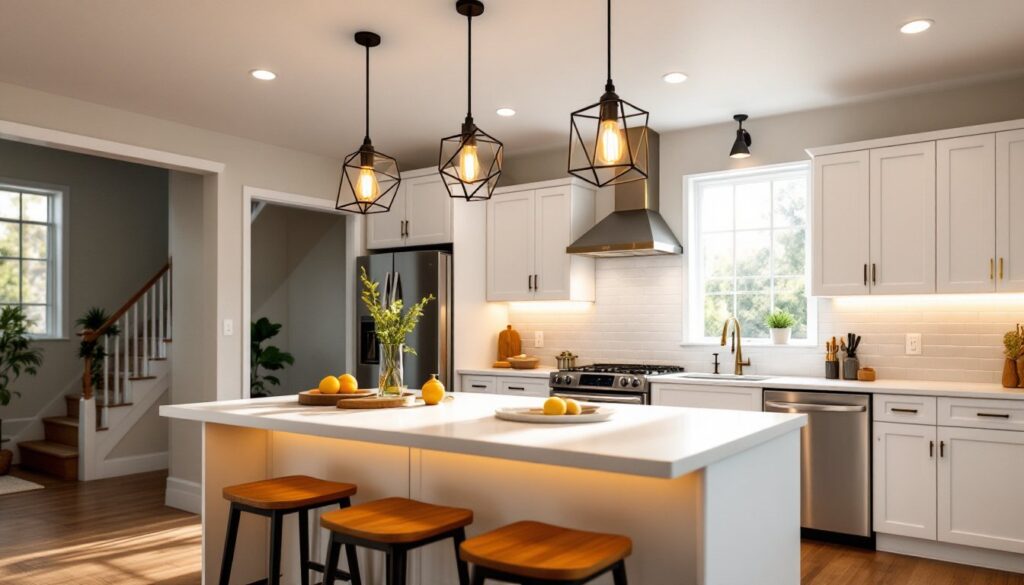
ToggleUnder cabinet lighting transforms a kitchen from functional to exceptional. It eliminates shadows on countertops, makes food prep safer, and adds ambiance without the hassle of a full electrical remodel. Whether you’re chopping vegetables at 6 a.m. or setting the mood for dinner guests, the right lighting strip delivers both task illumination and visual appeal. This guide walks through everything from picking the right type and color temperature to running low-voltage wire and avoiding the mistakes that trip up most first-timers.
Key Takeaways
- Under cabinet lighting strips eliminate shadows on countertops, improve food prep safety, and add ambiance while requiring no major electrical remodel.
- LED technology dominates under cabinet lighting installations, offering 25,000–50,000 hour lifespans, minimal heat output, and flexible mounting options at $15–$60 per strip.
- Proper color temperature matching (staying within 500K of existing fixtures) prevents a disjointed kitchen appearance and ensures cohesive lighting design.
- Pre-installation surface preparation—cleaning with degreaser and alcohol—is critical for adhesive strips; skipping this step is the leading cause of mounting failure.
- Hardwired under cabinet lighting systems require permits and licensed electrician installation in most jurisdictions to ensure code compliance and prevent circuit overload.
- Smart dimming, motion sensors, and voice-control integration transform under cabinet lighting into a versatile home automation feature that saves energy and extends LED lifespan.
What Are Under Cabinet Lighting Strips and Why Install Them?
Under cabinet lighting strips are low-profile fixtures mounted to the underside of wall cabinets to illuminate countertops below. They come in rigid bars or flexible tapes, typically measuring 12 to 48 inches in length, and run on 120V AC (hardwired) or 12V/24V DC (plug-in or battery). Most modern strips use LED technology, offering long lifespans (25,000–50,000 hours) and minimal heat output.
Installing them solves three common kitchen problems. First, overhead lighting casts shadows when you’re standing at the counter, turning knife work into guesswork. Second, dim workspaces strain eyes and slow prep. Third, builder-grade kitchens often lack layered lighting, leaving the room flat and uninviting.
Beyond function, these strips add resale value. Kitchens with task lighting photograph better and feel more finished during showings. Installation ranges from 30 minutes for plug-in strips to 2–4 hours for hardwired runs, depending on whether you’re fishing wire through walls or using surface-mounted raceways. If you’re tapping into existing circuits, verify the load capacity and consult NEC Article 210.52(C) for countertop receptacle spacing, some jurisdictions require a dedicated 20-amp circuit for kitchen small appliances, and you can’t overload it with lighting.
Types of Under Cabinet Lighting Strips to Consider
Choosing the right strip means matching the technology to your budget, kitchen layout, and how much heat you’re willing to tolerate.
LED vs. Fluorescent vs. Xenon Strips
LED strips dominate the market for good reason. They draw 4–10 watts per foot, produce negligible heat, and last decades. Flexible tape versions (like those found in many DIY project tutorials) peel and stick to cabinet undersides, making them ideal for renters or anyone avoiding permanent modifications. Rigid LED bars deliver more even light distribution and come with integrated diffusers to eliminate hot spots. Expect to pay $15–$60 per strip, depending on length and features.
Fluorescent strips (T5 or T8 bulbs) were the standard a decade ago. They’re cheaper upfront, $10–$25 per fixture, but bulbs dim over time, flicker in cold garages, and contain trace mercury. Replacement bulbs add recurring cost, and the 1- to 2-inch fixture depth can feel bulky under shallow cabinets.
Xenon (halogen) strips offer the warmest, most color-accurate light, prized by home cooks who want to see true produce colors. They run hotter than LEDs (a 12-inch xenon strip can hit 150°F on the housing), shorten bulb life to around 10,000 hours, and pull 18–25 watts per foot. Use them if you value color rendering over efficiency, and install them with at least ½ inch clearance from combustible surfaces to meet fire codes.
For most DIYers, LED is the sweet spot: low operating cost, minimal maintenance, and plug-and-play or hardwired options. Xenon suits specialty applications, and fluorescent has largely been phased out except in budget remodels.
Choosing the Right Color Temperature and Brightness
Color temperature (measured in Kelvin) and brightness (measured in lumens) determine whether your kitchen feels clinical or cozy.
2700K–3000K (warm white) mimics incandescent bulbs, casting a soft, yellowish glow that flatters wood cabinetry and creates a relaxed vibe. It’s ideal for kitchens that double as gathering spaces. 4000K–5000K (cool white or daylight) skews blue, enhancing contrast and making it easier to spot food details. Chefs and serious home cooks often prefer this range for prep zones. 5000K+ veers into hospital-lighting territory and can feel harsh in residential settings.
For brightness, aim for 200–400 lumens per linear foot of countertop. A standard 24-inch strip should output 400–800 lumens total. Too little, and you’re squinting at recipe cards: too much, and you’ll create glare on polished granite or quartz. If your countertop has a high-gloss finish, choose strips with diffuser lenses to scatter light evenly and reduce hot spots.
Mixing color temperatures is a common mistake. If your overhead recessed lights run at 3000K, don’t pair them with 5000K under cabinet strips, the clash will make the kitchen look disjointed. Stick within 500K of your existing fixtures. Many manufacturers now offer tunable white LEDs that shift from 2700K to 5000K via remote or app, giving flexibility without committing to a single tone.
How to Install Under Cabinet Lighting Strips: Step-by-Step
Installation difficulty depends on whether you’re going plug-in, hardwired, or low-voltage. Here’s a general roadmap for a plug-in LED strip install, the most DIY-friendly option.
Materials:
- LED lighting strips (measure cabinet runs first)
- Mounting clips or adhesive backing
- Extension cables or connectors (if linking multiple strips)
- Cable raceways or cord covers (optional, for clean routing)
- Wire strippers, screwdriver, drill with bits
Steps:
- Turn off power at the breaker if working near outlets. Even plug-in installs can cross paths with existing wiring.
- Clean cabinet undersides with isopropyl alcohol. Grease and dust kill adhesive bonds. Let dry completely.
- Mock up placement. Position strips 2–3 inches from the front edge to avoid glare in your eyes when standing at the counter. If cabinets have a face frame, mount strips just behind it.
- Run a test fit. Plug in the strip and check brightness and color before committing to adhesive. Some interior cabinet lighting setups use sensors that might interfere with placement.
- Peel and stick (or screw in mounting clips if adhesive isn’t an option). Press firmly for 30 seconds along the entire length. For rigid bars, drill pilot holes into the cabinet bottom, #6 x ½-inch screws work for most particleboard or plywood.
- Route power cables along cabinet edges or inside the cabinet frame. Use adhesive-backed raceways to hide cords running to outlets. If drilling through cabinet sides to daisy-chain strips, use a ⅜-inch spade bit and grommet bushings to prevent chafing.
- Plug in and test. Check each section for even illumination and secure connections.
Hardwired installs require fishing 14/2 NM-B Romex from a junction box or switched circuit, installing a transformer (for low-voltage LED), and making wire connections inside a covered junction box. This crosses into electrical work, if you’re not comfortable with wire nuts, voltage testers, and code compliance, hire a licensed electrician. Many jurisdictions require permits for hardwired lighting tied to new circuits.
Low-voltage DC systems (common with tape strips) use a plug-in transformer rated for the total wattage. Add up the wattage of all connected strips and choose a transformer with 20% overhead to prevent overheating. A 60-watt transformer safely powers up to 48 watts of LED tape.
Safety note: Wear safety glasses when drilling overhead, and use a non-contact voltage tester before handling any existing wiring. Aluminum cabinets or metal studs can conduct electricity if wiring is nicked.
Smart Features and Dimming Options for Modern Kitchens
Modern under cabinet lighting strips integrate with home automation systems and offer dimming, scheduling, and voice control.
Dimming is non-negotiable for versatility. Standard incandescent dimmers don’t work with most LED strips, they cause flickering or buzzing. Look for strips labeled 0–10V dimmable or PWM (pulse-width modulation) dimmable, and pair them with a compatible dimmer switch. Leading-edge (TRIAC) dimmers work with some AC-powered LED strips, but trailing-edge dimmers handle low wattages better and reduce flicker.
Smart strips connect via Wi-Fi, Zigbee, or Z-Wave. Popular models integrate with Google Home, Amazon Alexa, or Apple HomeKit, letting users adjust brightness or color temperature by voice or smartphone app. Motion sensors add another layer, strips turn on when you approach the counter and shut off after a set delay, saving energy and extending LED life.
Some DIYers pair under cabinet lighting with **recessed overhead fixtures](https://chef-speak.com/recessed-lights-for-living-room/) on the same smart circuit, creating scenes like “Cooking” (bright task lighting) or “Entertaining” (dimmed ambiance). Scheduling also helps: set strips to warm up at sunset for dinner prep, then dim to 10% after hours as a nightlight.
RGB color-changing strips are gimmicky for most kitchens but useful in spaces doubling as home bars or entertainment zones. Stick with tunable white unless you genuinely need party mode. High-quality systems from brands like Lutron Caséta or Philips Hue cost more ($60–$150 per controller plus strips) but offer smoother dimming and better app interfaces than budget imports.
Common Mistakes to Avoid When Installing Lighting Strips
Even straightforward installs go sideways when DIYers skip planning or rush through prep.
Skipping surface prep is the top culprit. Adhesive won’t stick to greasy cabinets. Clean with a degreaser, then alcohol, and let dry. If adhesive still fails (common on textured laminate), use mounting clips or double-sided VHB tape rated for 10+ pounds.
Overloading transformers kills low-voltage systems. A 30-watt transformer can’t safely power 40 watts of LED tape. Always add 20% headroom to your wattage calculation. If the math doesn’t work, split the run across two transformers.
Placing strips too far forward creates glare. Mount them 2–3 inches back from the cabinet edge. Too far back, and you’ll cast shadows onto the backsplash. Test placement before final mounting.
Ignoring color temperature mismatches makes kitchens look chaotic. Match your under cabinet strips to within 500K of existing overhead lighting. Many of the best under-cabinet lighting systems reviewed offer tunable options to solve this.
Mixing fixture types (LED tape on one run, fluorescent on another) creates uneven brightness and color. Stick with one technology across the entire kitchen.
Not using a licensed electrician for hardwired runs is risky if you lack experience. Incorrectly splicing into existing circuits can overload breakers, trip GFCI outlets, or fail inspection. If your project involves adding a new circuit, pulling wire through walls, or tapping into a junction box, the permit and electrician fees are worth it.
Forgetting to check cabinet construction: particle board crumbles when you screw into the edge grain. Drill pilot holes and use toggle anchors if screwing into hollow sections. Solid wood or plywood handles screws better.