Table of Contents
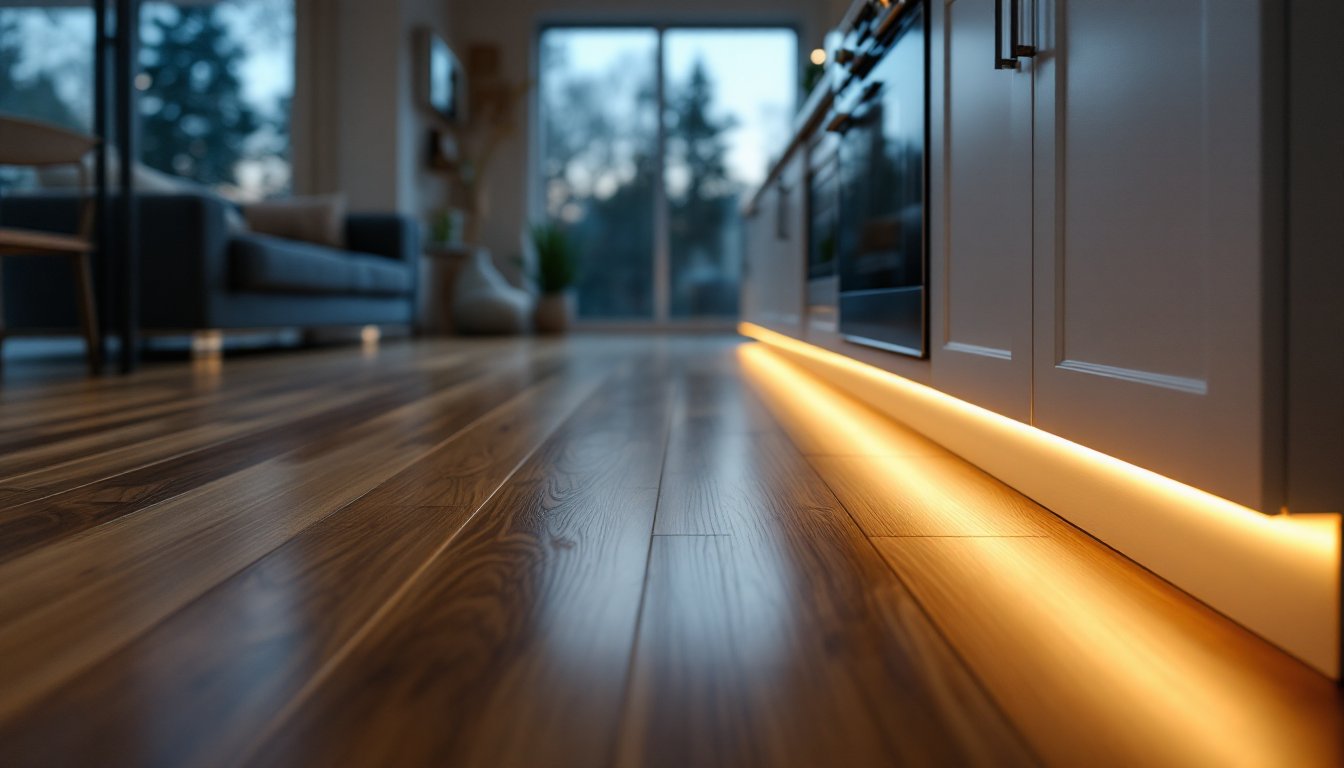
ToggleToe kick lighting doesn’t just add ambiance, it’s one of the most practical upgrades a kitchen can get. That 3-4 inch recessed space at the base of your cabinets? It’s prime real estate for accent lighting that guides midnight snack runs, highlights flooring, and gives the whole room a floating, modern look. Installation takes a few hours, requires minimal tools, and delivers immediate results. Whether you’re prepping for a full remodel or just looking to refresh your kitchen on a weekend, toe kick lighting offers big visual impact without the complexity of rewiring overhead fixtures.
Key Takeaways
- Kitchen toe kick lighting installs in the 3-4 inch recessed space beneath base cabinets to provide nighttime safety, modern aesthetics, and an illusion of floating cabinetry.
- LED strip lights offer seamless, continuous coverage for easier installation, while LED puck lights provide more flexibility for multiple cabinet sections and individual control.
- A typical toe kick lighting project takes just a few hours with basic tools and can be powered via hardwired circuits, plug-in transformers, or smart controllers with motion sensors for added convenience.
- Warm white (2700-3000K) LEDs work best for most kitchens, with brightness levels of 100-200 lumens per foot delivering subtle illumination that highlights flooring without overwhelming the space.
- Motion-sensor and smart home integration options let you automate your kitchen toe kick lighting for energy efficiency and hands-free operation during nighttime visits.
- This low-cost, high-impact upgrade requires minimal electrical knowledge for DIY installation and can increase home value by signaling thoughtful, modern design choices to potential buyers.
What Is Toe Kick Lighting and Why Install It?
Toe kick lighting refers to low-voltage LED strips or individual puck lights installed in the recessed void beneath base cabinets, the toe kick or toe space. Standard cabinet construction leaves a 3.5 to 4-inch gap between the floor and the bottom of the cabinet box, set back about 3 inches from the front edge. This creates a natural channel for running low-profile lighting.
Unlike under-cabinet task lighting that illuminates countertops, toe kick lighting casts a soft glow downward and outward. It serves three main functions: nighttime navigation without overhead lights, visual depth that makes cabinetry appear to float, and accent lighting that highlights flooring materials like tile or hardwood.
Homeowners install it for safety (no stumbling in the dark), aesthetics (modern, high-end look), and energy efficiency (low-wattage LEDs cost pennies per month to run). It’s also a gateway project, if you can measure, drill a few holes, and connect basic wiring, you can handle this upgrade without hiring an electrician.
Benefits of Adding Toe Kick Lighting to Your Kitchen
Toe kick lighting delivers benefits that go beyond looks. Here’s what you gain:
- Nighttime safety: Soft, low-level lighting prevents stumbles during late-night kitchen trips. No need to flip on blinding overhead lights.
- Enhanced ambiance: Creates a warm, layered lighting scheme. Designers use toe kick lights to add depth and dimension, especially in open-concept spaces.
- Illusion of space: Cabinets appear to hover above the floor, making smaller kitchens feel larger and more open.
- Highlighting flooring: If you’ve invested in quality tile, hardwood, or luxury vinyl, toe kick lighting showcases the material and grout lines.
- Energy efficiency: LED strips draw 1-2 watts per foot, far less than recessed ceiling cans or pendant lights.
- Increased home value: Modern lighting upgrades signal attention to detail. Prospective buyers notice thoughtful touches like this.
According to Fine Home Building’s kitchen lighting guide, toe kick lighting is particularly effective for task-oriented kitchens where layered lighting improves both function and aesthetics. It’s a relatively low-cost addition that punches above its weight in visual impact.
Types of Toe Kick Lighting: LED Strips vs. Puck Lights
You’ve got two main options: LED strip lights and LED puck lights. Each has trade-offs.
LED Strip Lights
- Form: Flexible ribbon with adhesive backing, available in 12V or 24V versions.
- Coverage: Continuous, even glow along the entire toe kick.
- Installation: Peel-and-stick application, cut to length at marked intervals (usually every 3 inches).
- Best for: Long, uninterrupted cabinet runs. Minimal shadowing.
- Brightness: Measured in lumens per foot: 150-200 lumens/ft is typical for ambient toe kick use.
- Cost: $15-$40 per 16-foot reel, plus a transformer/driver.
LED Puck Lights
- Form: Small, round fixtures (2-3 inches diameter) installed at intervals.
- Coverage: Pools of light with gaps between fixtures: creates a more dramatic, dotted effect.
- Installation: Surface-mount or recessed into the toe kick board. Requires drilling small holes for wiring.
- Best for: Kitchens with multiple cabinet sections or where you want adjustable spacing.
- Brightness: Each puck typically outputs 40-80 lumens.
- Cost: $5-$15 per puck: you’ll need 4-6 pucks for an average 10-foot run.
Which to choose? For a seamless, modern look and easier installation, go with LED strips. If you want individual control or are retrofitting around existing obstacles, puck lights offer more flexibility. Both options are low-voltage and safe for DIY installation.
How to Choose the Right Toe Kick Lighting for Your Kitchen
Picking the right system means matching the lighting to your kitchen layout, power source, and aesthetic goals.
Color Temperature
- Warm white (2700-3000K): Cozy, inviting. Matches incandescent bulbs and complements wood tones.
- Neutral white (3500-4100K): Crisp, clean. Works well in contemporary kitchens with white or gray cabinetry.
- Cool white (5000K+): Bright, clinical. Rarely used for toe kicks unless you want a ultra-modern look.
Most installers opt for 2700-3000K to blend with other ambient lighting.
Brightness and Dimming
Toe kick lighting should provide subtle illumination, not flood the floor. Look for strips rated 100-200 lumens per foot or pucks at 40-60 lumens each. If you want adjustable brightness, choose a dimmable system. You’ll need a compatible 12V or 24V dimmer and a power supply that supports dimming.
Power Options
- Hardwired: Taps into an existing circuit (outlet or switch-controlled). Requires basic electrical knowledge or an electrician. More permanent and seamless.
- Plug-in: LED kit plugs into a standard 120V outlet. Simplest option, but you’ll need an accessible outlet inside a cabinet or behind the toe kick.
- Battery-powered: Wireless, but impractical for permanent installs. Batteries die quickly under continuous use.
Water Resistance
Kitchens see spills. Choose IP65-rated LED strips if your toe kick is near the sink or dishwasher. Standard IP20 strips work fine for dry areas.
Smart Features
If you’re investing in home automation, consider systems compatible with motion sensors or smart home platforms. More on that in a later section.
Step-by-Step Installation Guide for Kitchen Toe Kick Lighting
Installing toe kick lighting is a manageable weekend project. Here’s the process.
Tools & Materials
- LED strip lights or puck lights (measure your total toe kick length first)
- Power supply/transformer (12V or 24V, matched to LED voltage)
- Wire connectors or solderless clips
- Adhesive clips or mounting brackets (if not using self-adhesive strips)
- Drill with 1/8-inch and 1/2-inch bits
- Wire stripper and electrical tape
- Measuring tape, pencil
- Safety gear: safety glasses, dust mask if drilling into tile or hardwood
Step 1: Plan the Layout
Measure the total linear feet of toe kick. Sketch which cabinet runs you’ll light. Decide on power source location, typically inside a corner base cabinet or under the sink where an outlet is accessible.
Step 2: Prep the Toe Kick Surface
Clean the recessed area with degreaser or rubbing alcohol. Dust, grease, and moisture prevent adhesive from sticking. If your toe kick has a removable panel (common in frameless cabinets), pull it off for easier access.
Step 3: Run the Wiring
For hardwired installs: Drill a 1/2-inch hole through the cabinet side or back near the toe kick. Route low-voltage wire from your power supply location to the starting point of your LED run. Secure wire with staples or clips, keeping it out of the way of plumbing or drawer mechanisms.
For plug-in kits: Position the transformer inside a cabinet with access to an outlet. Run the low-voltage lead out through a small drilled hole.
Step 4: Install the LED Strips or Puck Lights
- LED strips: Peel backing and press firmly along the toe kick recess, starting from the power source end. Cut strips to length only at designated cut marks (usually marked with scissor icons every 3 inches). Use solderless connectors to join sections or turn corners.
- Puck lights: Mark spacing (typically 18-24 inches apart). Drill pilot holes if surface-mounting with screws. Connect each puck’s lead wire in series or parallel (check manufacturer instructions). Secure with screws or adhesive pads.
Step 5: Connect to Power
Strip 1/4 inch of insulation from wire ends. Connect LED leads to the transformer output terminals, red to positive (+), black to negative (–). Tighten screw terminals or use push-in connectors. Plug transformer into outlet or connect to house circuit via junction box (hardwired installs may require a permit and licensed electrician, check local codes).
Step 6: Test and Secure
Power on and verify all sections light up evenly. If using dimmers or controllers, test functionality. Once confirmed, secure any loose wiring with zip ties or adhesive clips. Replace toe kick panels if removed.
Safety Note: Always turn off power at the breaker before working on hardwired circuits. Low-voltage systems (12V/24V) are safer to handle but still require proper connections to avoid shorts.
The project mirrors techniques used in inside cabinet lighting, where low-voltage LED strips are similarly routed and powered.
Smart Toe Kick Lighting: Motion Sensors and Automation Options
Upgrading to smart toe kick lighting adds convenience and energy savings. Here’s what’s possible.
Motion Sensors
Install a passive infrared (PIR) motion sensor inline between the power supply and LED strips. When someone enters the kitchen, lights turn on automatically and shut off after a set delay (usually 30-90 seconds). Position sensors low, 6-12 inches off the floor, so they detect foot traffic, not pets or airflow.
Motion-activated systems are ideal for nighttime use. No fumbling for switches when you’re half-asleep. Cost: $15-$40 for a basic PIR module.
Smart Home Integration
For full control, use smart LED controllers compatible with platforms like Amazon Alexa, Google Assistant, or Apple HomeKit. Options include:
- Wi-Fi-enabled controllers: Connect directly to your home network. Control brightness, color (if using RGB strips), and schedules via smartphone app.
- Zigbee/Z-Wave controllers: Integrate with hubs like SmartThings or Hubitat for advanced automation.
You can create routines, “Good Morning” turns on toe kick lights at 6 a.m., “Goodnight” fades them out at 11 p.m. Pair with other lighting styles for a cohesive smart lighting ecosystem throughout your home.
Dimming and Color Control
Dimmable controllers let you adjust brightness for different times of day. Some systems support tunable white LEDs, shifting from warm to cool tones. RGB+W strips add colored accent lighting, fun for parties or holidays, though most homeowners stick with warm white for everyday use.
Power Considerations
Smart controllers and sensors add minimal load (1-5 watts). Ensure your power supply has adequate capacity, add 10-20% headroom beyond your LED strip’s total wattage. A 30-watt power supply comfortably handles a 20-watt LED run plus a smart controller.
For more detailed guidance on integrating smart lighting throughout different areas, explore resources like The Kitchn for design inspiration and Popular Mechanics for hands-on DIY tutorials.
Conclusion
Toe kick lighting transforms a kitchen’s look and functionality with minimal effort and cost. Whether you choose LED strips for seamless coverage or puck lights for targeted accents, the project remains accessible to most DIYers. Measure carefully, prep surfaces thoroughly, and don’t skip testing before securing everything in place. Add motion sensors or smart controls if you want the convenience of automation. The result? A kitchen that feels modern, safe, and thoughtfully designed, no contractor required.